Back in early 2013, I was doing my part. I was an advocate. My cause was futile, but I refused to give up.
I was a freshman in college, just starting my second semester. It was one of the most tumultuous and difficult times in my life. Not the least of which because I’d done a piss-poor job of picking friends. But there was one thing that kept me going. A sitcom. The sitcom. The best sitcom on network television at the time, and maybe of the decade.
The show was called Happy Endings. Everyone who watched it loved it. All eight of us.
But again, I was doing my part. Every time there was a new episode, whether it was a Friday, Tuesday, Wednesday or Sunday, I would turn it on in my dorm, open up the door to the hallway and invite in anyone and everyone who was willing to watch with me.
My plan worked a few times. Much to my chagrin, my (bad) friends were weirdly more interested in the show that often came on afterwards, the bizarre and inexplicable Dan Fogelman comedy about aliens titled “The Neighbors.”
(Side note: No one had a weirder 2010s than Fogelman. He wrote one of the best romcoms of the decade — Crazy, Stupid, Love — before writing one of the least necessary ones, The Guilt Trip. He also wrote Me and Earl and the Dying Girl and then wrote and directed Life Itself. On top of all that, he created The Neighbors, Galavant and Pitch, wrote for the short-lived John Stamos show Grandfathered and then found time to create This Is Us, one of the biggest shows of the decade. I do not understand how Dan Fogelman’s brain operates. But one day maybe I’ll understand all of this weirdness.)
But I’ll never forget the one episode of Happy Endings that transcended my (again, bad) friends’ misunderstood misappreciation for good things. It was called Ordinary Extraordinary Love, written by Daniel Chun. (Who if I’m not mistaken also created Grandfathered. FOGELMAN!) The title comes from a fake pop song written for this episode, sang by a fake pop star whose life Penny ruins and then capitalizes on for profit at Xela, Alex’s clothing store that somehow is still in business.
The part of the episode that matters, however, is the Max and Jane subplot. (And the part of the episode where Dave declares Val Kilmer to be his spirit animal. Oh, and Alex checking out of the music-listening game after Smash Mouth.) Max is bummed to learn he isn’t a twink, because apparently twink doesn’t mean “gay man who likes twinkies.” So he enlists Jane and recurring gay stereotype Derrick to help him find which gay subculture he belongs to.
Spoiler: the answer is none. In a wink to the camera, Max doesn’t even fit in with the “sitcom gays.” So Max decides to invent his own gay subculture. He deems himself an “Optimistic Red Velvet Walrus” and decides to throw a party at the local bar called “Optimistic Red Velvet Walrus Night.” (He puts an ad in the Sacramento Bee to promote the party. The bar, of course, is in Chicago.) After waiting and waiting, eventually a nice young man comes in and asks if he’s at Optimistic Red Velvet Walrus Night. Max says yes. Max and the stranger bond over not knowing what gay subculture they belong to. Everything seems right.
Then an older gentleman in a red velvet suit with magnificent white sideburns that combine into a mustache emerges through the bar doors. Everyone turns.
“Oh man, this place is empty,” the man grumbles. He doesn’t walk with a cane, but he has the gait and demeanor of someone who would. He takes a few steps through the threshold of the bar and raises a finger. “But I bet it’s all gonna work out!”
At the sight of this man, at the sight of a literal, come-to-life depiction of an optimistic, red velvet walrus, the few friends straggling in my room laughed at a volume I hadn’t heard since the last time I watched Dennis the Menace with my dad. I was laughing too, naturally. But not nearly as hard as these guys were. The only other time I can remember seeing friends laugh like that at something I’d shown them was the time in middle school I exposed all my friends to Celebrity Jeopardy with Will Ferrell.
To me, the beautiful thing about sitcoms is shared laughter. Say what you want about laugh-track shows, or even live-studio-audience shows. I know canned laughs are cheesy. I know that being told when to laugh is lame.
But the only thing better than laughing is laughing with others. It’s a good thing that laughter is more or less contagious. Sharing a laugh is one of the most beautiful feelings in the world. And in that moment, while my favorite show was riding a magnificent hot streak and about 20 days away from hitting its biggest peak yet, I got to share a guttural, ugly laugh with some friends who I abandoned about eight months later.
As someone prone to hyperbole, I’m not afraid to call this gag my favorite joke of the decade. And I’m not afraid to say this, almost seven full years after Happy Endings went off the air: We always deserved more of this show. And maybe we’ll get it.
By trade, it’s my job to write about college football. By passion, it’s my job to obsessively recount my favorite moments, quotes and sketches from Saturday Night Live. And weirdly enough, I think the best parts of SNL and the best parts of major college football are essentially the same thing.
Your average college football player has two goals: win college football games and make the NFL. In a perfect world, you can achieve both goals at the same time without having to put one over the other. But ultimately, the college football players we remember are either defined by being “great college football players who never made it in the pros” or “great college football players who made it in the pros.”
I think of SNL the same way. Obviously, the goal of being on SNL is to be a great cast member on Saturday Night Live. To be the next John Belushi or Eddie Murphy or Will Ferrell or Kristen Wiig. But what do Belushi and Murphy and Ferrell and Wiig all have in common? They weren’t great SNL cast members. They were great SNL cast members who made it big in the pros.
Much like college football, SNL is a breeding ground for bigger and more fruitful pursuits. It’s possible to be remembered as a great college football player or a great SNL cast member without making it in the big-time. Just ask Tim Tebow or Dana Carvey. But the truly revered? The transcendent ones? They’re the players who turned success on the prove-yourself stage into success as superstars.
For most of the 40-plus year history of SNL, that meant going from Studio 8H to the silver screen. Whether you were Belushi, Dan Aykroyd, Chevy Chase, Bill Murray, Murphy, Mike Myers, Adam Sandler, Chris Farley or Ferrell, the route to fame from being an SNL standout was through movies. Or you could be Chris Rock and be the most successful stand-up comedian in the planet.
But what about television? Isn’t going from SNL to a sitcom a natural transition? SNL is a TV show, so stars should be able to transfer their talents to TV, right? Here’s the thing: Prior to 2009, that didn’t really happen. Like, ever. Especially not for people who were considered “stars” on SNL.
Let’s go chronologically, starting with the first cast of Not Ready for Primetime Players and making our way to 2009. Here’s a comprehensive list of SNL performers that went on to have a starring or recurring role in at least 50 episodes of a sitcom after they were on SNL:
Jane Curtin (Kate & Allie, 122 episodes; 3rd Rock from the Sun, 137 episodes)
Julia Louis-Dreyfus (Seinfeld, 178 episodes; The New Adventures of Old Christine, 88 episodes)
Jim Belushi (According to Jim, 182 episodes)
Damon Wayans* (My Wife and Kids, 123 episodes)
Phil Hartman (NewsRadio, 75 episodes)
Kevin Nealon (Weeds, 99 episodes)
David Spade (Just Shoot Me, 149 episodes)
Norm Macdonald (Norm, 54 episodes)
Tracy Morgan (30 Rock, 138 episodes)
Tina Fey (30 Rock, 138 episodes)
That’s not a bad list of sitcoms. I’ll admit I’ve never heard of Duet and probably don’t care to follow up on what the hell it is. But other than that, it’s a pretty solid grouping of shows. Still, we sort of need to eliminate some shows from the group.
Laurie Metcalf only appeared on one episode of SNL and wasn’t asked back. So we probably shouldn’t count her starring role on Roseanne. The same pretty much goes for Damon Wayans, who lasted 11 episodes on SNL.
Even if you leave those actors in, it’s hard to say they got their shows because of what they did on SNL. With three or four pretty notable exceptions, it’s hard to call any of these people “SNL stars.” If you use the 2015 Rolling Stone ranking of every SNL cast member ever, the median ranking of a player on this list is 59th. The average ranking is 71st, and that’s with two performers who ranked in the top 10!
All of this is a roundabout way of saying that before Tina Fey, SNL stars didn’t aspire to be TV stars. With all the respect in the world belonging to Curtin and Louis-Dreyfus, they were never the stars of the show when they were on SNL. Spade and Nealon were always the straight man for their funnier friends, Norm was never appreciated in his time and Hartman was too important as the glue guy to ever be the star.
Then 30 Rock happened. Of all the lasting legacies of 30 Rock, of which there should be millions, I think its most important legacy might be the bridge it crafted from SNL to the sitcom world. Because since 2009, right around when 30 Rock was hitting its creative and critical peak, nearly every SNL cast member who left the show chose to go the sitcom route instead of the movie route. And in more cases than not, it’s worked.
First, there are the obvious ones. Amy Poehler to Parks and Recreation starting in 2009. Andy Samberg to Brooklyn Nine-Nine starting in 2013. Will Forte to The Last Man on Earth starting in 2015. Bill Hader to Barry starting in 2018. Maya Rudolph (who had already starred in Up All Night) and Fred Armisen (who already did sitcom-adjacent work in Portlandia and Documentary Now) teaming up for Forever. That’s the better part of a generation of SNL all taking the sitcom route.
Now let’s expand the list. We’re not restricting ourselves to one generation of SNL stars or to starring roles on sitcoms. Just major or recurring roles of note from former SNL cast members after 2009:
Chevy Chase (Community)
Mark McKinney (Superstore)
Ana Gasteyer and Chris Parnell (Suburgatory)
Chris Kattan (The Middle)
Horatio Sanz (Great News)
Michaela Watkins (Trophy Wife and Casual)
Casey Wilson (Happy Endings)
Abby Elliott (Odd Mom Out)
Taran Killam (Single Parents)
We can also include failed attempts to cash in on the SNL-to-sitcom pipeline from Jason Sudeikis (Son of Zorn), Bobby Moynihan (Me, Myself and I) Jay Pharoah (White Famous) and Nasim Pedrad (Mulaney, also recurring on New Girl), not to mention Tim Robinson’s magnificent show Detroiters or A.P. Bio, which was created by SNL alum Mike O’Brien.
To put this in perspective, let’s look at the cast of SNL from the 09-10 season at the start of this decade. Of the 12 full-time or featured cast members from that season, the only four names not mentioned in either of the lists above are: Seth Meyers, Kenan Thompson, Kristen Wiig and Jenny Slate. Seth has his own TV show that isn’t a sitcom. Kenan is still on SNL, and famously had his own sitcom before SNL. Wiig is an international movie star. And Slate stars on Big Mouth, is a cameo machine in everything from Parks and Rec to Brooklyn Nine-Nine and from Girls to Lady Dynamite. And frankly I should’ve included Slate in the list above because she starred in the short-lived FX sitcom Married.
These aren’t just good sitcoms. These are some of the best sitcoms of our time. And in all fairness, I left two more shows out because they would’ve appeared on the pre-09 list and the post-09 list. I left out 2 Broke Girls, which starred Garrett Morris. Which is fine. No one would’ve complained if I didn’t bring up 2 Broke Girls. But I also left out Veep! The most decorated sitcom of the decade! A third Julia Louis-Dreyfus starring vehicle to just add to SNL’s ridiculous dominance of the sitcom landscape in the 2010s.
At the last 10 Emmy Awards, 18 of the 66 shows nominated for Best Comedy either starred or were created by an SNL alum. There were also 18 times an SNL alum was nominated for Best Actress in a Comedy and four times an SNL alum was nominated for Best Actor in Comedy. Not to mention the times Jimmy Fallon, Seth Meyers, Andy Samberg and Colin Jost and Michael Che, you know, hosted the Emmys.
Call it yet another side effect of peak TV. More networks and streaming platforms mean more opportunities for creators to tell their stories. It’s hard to imagine shows like Barry or Forever or even The Last Man on Earth being greenlit 15 years ago.
But let’s also chalk it up to a perfect marriage. As Fey showed with 30 Rock, and everyone from Poehler and Samberg to Wilson and Watkins have shown since, the transition from character acting on SNL to character development in sitcoms isn’t a hard bridge to cross, even on the more-censored world of network sitcoms. Heck, if Chevy Chase could do it for about five seasons, I’m going to venture a guess that just about anyone can deal with the limitations of television.
The endgame of working at SNL will always be to be a star. No one shows up at SNL wanting to be a pretty good role player. Everyone wants to achieve the level of superstar fame that Eddie Murphy and Mike Myers and Adam Sandler and Will Ferrell have. But as we head into 2020, the best way to do that might be through sitcoms.
Part of me thinks I should’ve started this off with more of a profound statement. But at the end of the day, that’s the thought I really want to express.
Over the last 10 years, I’ve watched a lot of TV comedies. Like, way too many. Example: I watched at least two episodes of Work It. If you don’t know what that is, consider yourself lucky.
There’s a part of me that thinks I’ve spent too much time watching sitcoms. Heck, I’ve seen more episodes of Bob Hearts Abishola than of Breaking Bad, Mad Men, Game of Thrones, The Sopranos and The Wire combined. I have informed opinions about Wilfred. I have a favorite joke from Life in Pieces. I once wrote a college assignment about ABC’s new crop of sitcoms for the 2013 season and remember being extremely disappointed by how bad Super Fun Night was.
But there’s another, much smarter part of me that knows I haven’t wasted any time watching these shows. In the 2010s, sitcoms became more daring, boundary-pushing and downright exceptional than they’ve ever been. The auteur era reinvigorated a stale format. Streaming services and binge-watching transformed the way jokes are delivered and written. Cable networks un-obsessed with ratings allowed shows to gestate longer and tell more specific, audience-targeted stories. And shorter seasons trimmed the fluff out of seasons, allowing tighter jokes and narratives to tell better stories.
This was the decade that gave us more options and more comedy than ever before. And I’m the only dummy with enough free time to rank it all. These are my picks for the 50 best sitcom episodes of the 2010s.
First, some ground rules:
Limit one episode per show. It’s more fun that way.
Sitcoms only. This will not include episodes of sketch comedies, talk shows, variety shows, unscripted shows or reality shows. I could make a separate top 50 list just using those formats, highlighted by the stellar peaks from the likes of Saturday Night Live, Key & Peele, Inside Amy Schumer, Nathan For You, The Chris Gethard Show, Documentary Now, Joe Pera Talks With You and the dozen or so late-night talk shows that debuted in the last decade.
Live-action only. No disrespect to shows like Big Mouth, Bojack Horseman, Rick and Morty and Bob’s Burgers. They all could’ve had entries on the list. But I had to choose my arbitrary parameters somehow. (And also I didn’t feel like getting yelled at by Rick and Morty fans for rating their show too low. I’m one of you. I watch and like your show. Please don’t yell at me.)
No premieres or finales. I have specifically chosen to exclude the first and last episode of every season from contention here. Those episodes are almost always the most memorable because of plot reasons. But we’re only doing meat-and-potatoes episodes on this list. Mid-season episodes are almost always funnier anyway. Less focus on plot. More focus on jokes and characters.
My definition of sitcom might be different than yours. I didn’t include shows like Orange Is The New Black and Transparent because I classify them as dramas. And there are some shows on this list that might be dramatic in tone, but I picked episodes that are comedic. If you dislike my methodology, that’s fine.
I haven’t seen every show. Trust me, I’ve tried. But there really is too much television. So for those of you who I didn’t include one of your favorites, I’m sorry. I couldn’t get to it. (Or I didn’t like your favorite show and you’re dumb for liking it.)
And that’s pretty much it. Click through the links below to enjoy the list. And be sure to yell at me on Twitter @nicksuss if you have qualms with my choices.
Welcome back to The Sitcomologist’s rankings of the 50 best sitcom episodes of the 2010s. This article ranks episodes 10-1. Congratulations on making it all the way to the end! You did it!
10. The Good Twin — GLOW
S2E8, 2018, Netflix
Here’s my hypocritical pick: I made a big stink at the top about not flooding this list with dramas that include comedy instead of true comedies. Yet here, at the edge of the top 10, I’m including GLOW. Like Orange Is The New Black and Transparent and any of the other half-comedies I’ve discluded, GLOW is a character drama disguised as a comedy thanks to sprinkling a handful of jokes every few scenes.
But the difference (and the justification for my hypocrisy) is the Season 2 episode The Good Twin. Because if this show wasn’t a comedy, it sure as hell wouldn’t have made an episode as campy and intentionally bad as this.
The Good Twin is GLOW’s version of 30 Rock showing an entire episode of TGS or of The Dick Van Dyke Show producing a real-life Alan Brady Show. We see an excruciatingly realistic and painfully corny recreation of what this version of GLOW would’ve looked like on cable in the 80s, complete with cheesy transitions, grainy footage, bizarre film allusions, a music video with a message and storylines that would feel demeaning if they weren’t so absolutely absurd.
The Good Twin probably isn’t the best episode of GLOW. I’m partial to Season 2’s Mother of All Matches and Season 3’s Freaky Tuesday, personally. But the place where The Good Twin differentiates itself is where it leans into its comedic identity. While those other episodes have laugh moments, The Good Twin is built for laughs. It’s played straight, of course. Think of this episode as the Airplane! episode in GLOW’s repertoire. Because the straightness of the performances makes the cheesy 80s ambiance even better.
Of all the hybrid comedy-dramas of this decade, GLOW is probably my favorite. Mainly because of the way it weaves its comedy back into the foreground. Also, it proves my theory that wrestling characters are way more entertaining than actual wrestling.
9. Cooperative Calligraphy — Community
S2E8, 2010, NBC
If you’ll think back to seven months ago when you started reading this too-long countdown, you’ll recall that the first sentence of the post was “I love sitcoms.” So it shouldn’t come as much of a surprise to you that one sitcom I love is Community, a show practically built around loving sitcoms. But also hating them. It’s complicated.
Throughout Community’s storied run, it did a lot of things well. It did the best homages on network television, whether to gangster movies, spaghetti westerns, Star Wars or stop-motion Christmas specials. It played concept episodes as well as any show, devoting entire half-hours to conspiracy theories, Ken Burns documentaries and hating Glee. It played an entire B-plot in the background of an episode. It crossed over with a show on another network for the hell of it. It had a three-season long punchline about Beetlejuice. It produced Remedial Chaos Theory, perhaps the most innovative and unique network sitcom episode of the era.
But the thing Community was truly best at was poking holes in the sitcom tropes and conventions we all know and love. Which is why I picked Cooperative Calligraphy as my Community entry on this countdown. That’s right. We’re talking about bottle episodes.
Some of the best TV episodes ever are bottle episodes. Friends has The One Where No One’s Ready. Seinfeld has The Chinese Restaurant. Fawlty Towers and Frasier and Veep have all gone to the well before. It’s a sitcom tradition as old as sitcoms going over budget and needing to make bottle episodes to save money.
Surprisingly, Abed hates them. The TV character who loves television more than any who came before or after them hates bottle episodes. As he puts it, they’re wall-to-wall facial expressions and nuance, a nightmare for a character like Abed who has trouble reading nuance. But for a viewer, they’re a delight.
Just like later in Community’s second season when the show deconstructs clip shows, Cooperative Calligraphy deconstructs the concept of a bottle episode with ease. What begins as a simple debate about who stole Annie’s pen devolves into a gigantic metaphor about trust, understanding and collective denial. And at the end, we see the nuance Abed can’t: This episode was never about a pen; it was about getting every member of the study group onto the same team to unify the central characters of the show.
Of course, Cooperative Calligraphy is more than a metaphor. It has great jokes that have legs throughout the next couple seasons (Well, well, well…Harvey Keitel) and awesome physical gags that make for big laugh breaks in the moment (Pulling stuff out of Pierce’s leg casts). There’s also a superb amount of character development involved in each character’s reaction to being accused of theft and reluctance to being searched.
Community’s Mount Rushmore of best episodes is a hard one to pick. There’s so much high-quality, deconstructive magic to this show that narrowing down bests doesn’t seem fair. But Cooperative Calligraphy is the whole package. It does everything Community does well, and packages it in one room. Can’t ask for more.
8. ronny/lily — Barry
S2E5, 2019, HBO
I heard a Joss Whedon quote one time where he said the reason his written and directed episodes of his shows turn out more ambitious and creative than those from his staff is because he knows he won’t fire himself. If anyone else on the staff suggested an episode with no dialogue or a Broadway musical episode, they would’ve been laughed at. But he can’t tell himself no.
Bill Hader proved that theory to be applicable to more than just Whedon in 2019 with the phenomenal Barry episode ronny/lily. Directed by Hader and written by Hader and co-creator Alec Berg, ronny/lily is a non-stop, twisting, baffling laugh riot that turns a hit gone wrong into a validation of Barry’s Stockholm Syndrome-esque connection to Fuches.
The laugh moments are iconic visuals. Ronny breaking out his nunchucks. Lily scaling a tree to get on top of a roof. Fuches gluing his hands to the steering wheel. Lily biting Fuches. Ronny roundhouse kicking in the grocery store. Ronny killing Loach on contact. Fuches’ devilish grin.
ronny/lily feels more like a greatest hits album than a TV episode. This many quality jokes and sight gags could’ve made up an eight-episode season of television. But Hader and Berg densely packaged this material into one of the most frantic and surprising TV episodes of the decade.
That density is the magical thing about Barry. Most shows with seasons as short as Barry’s would’ve taken four or five seasons to cover the ground Barry has in two. Loach’s reveal in What?!, the preceding episode, would’ve been a season finale in almost any other show. The same can be said about Fuches’ discovery at the end of The Truth Has a Ring To It, the episode following ronny/lily.
Barry’s breakneck pace allows it to anchor its comedy to the viewer, shocking them with reveals and jokes at the same time. It’s one of the cleverer aspects of this show. While other comedies have gone anthology style or tried to mine jokes out of the smallest, slowest minutiae in life, Barry continues to think big.
Most other shows couldn’t pull this off. But that’s Hader’s vision. Because hey, he knows he can’t fire himself.
First, a disclaimer: Louis C.K. is not a good person. There’s no condoning his alleged actions or their alleged repeated natures. His apologies for said alleged actions have not been sufficient and his choice to continue performing without ever addressing the allegations on stage feels like a bad PR choice. Plus his new material kind of stinks. Which is a shame, because when this guy was at his most creative, he made some of the most excellent comedy I’ve ever seen.
This is why it would be disingenuous to write this list without mentioning Louie. This is the show that launched the auteur era of sitcoms. Everything from Master of None and Girls to Fleabag and Atlanta owes at least some debt to Louie’s style. Andy Samberg once joked at the Emmys that Louie isn’t comedy, it’s jazz. And there’s some truth to that, spiritually. The show feels different than every show that came before it and feels like a grandparent to the more progressive, more inclusive versions of Louie that came afterwards.
Nowhere is this more evident than in Louie’s fourth season, the season of television that changed my perceptions about what TV can be more than any other.
In her stellar book “I Like To Watch,” the New Yorker’s TV critic Emily Nussbaum argues that Louie’s fourth season represents a departure from the show’s earlier high quality because it starts depicting Louie as more of a sympathetic character. On some level, I understand that criticism. Episodes like Pamela and So Did The Fat Lady, while phenomenally moving, cast a different shadow on Louie than standouts from previous seasons like So Old or Daddy’s Girlfriend.
That said, I appreciate Louie’s fourth season for so much more than its lead character’s framing. The six-part Elevator saga was one of the most surreal and ambitious uses of television as a medium that I’ve ever seen, interweaving four unrelated plots to tell one slice-of-life narrative filled with flashbacks and asides. The three-part episode Pamela functions as a 90-minute coda that wraps up the Elevator saga and gives the show a connective narrative thread it had never used or needed before.
And then there’s In The Woods. A two-part episode that I often playfully refer to as the 19th episode of Freaks and Geeks, In The Woods is a detached, sad and distant reflection on Louie’s childhood. It touches on themes of divorce, isolation, the quest to find a place you belong and the adolescent fear of disappointing someone who believes in you all the while telling an oftentimes terrifying story about falling into a bad situation and not knowing how to get out of it.
Jeremy Renner guest stars as a small-time Massachusetts drug dealer and plays his dirtbag role with a charm and elegance you’d expect from an A-list actor slumming it on basic cable. The jokes in this episode aren’t as obvious as they would be in an early-season Louie episode (like in Season 1’s similar flashback episode, God), but they’re there. It’s a subtler form of comedy, one built not around a character farting, but around the relatability of a middle schooler asking his science teacher about farts.
In the end, maybe there’s a part of my conscience that is comfortable including this episode because it barely features Louis C.K. the actor in it at all. Of course, he wrote and directed the episode. And he might’ve edited it too. It’s his show with his name in the title. There’s no ignoring the skeevy feeling you get praising a person you wish you weren’t praising.
I just can’t ignore that In The Woods is a phenomenal hour of television. It communicates the uncomfortable truths of growing up as well as any TV episode this century and it does so gently and with care. When young Louie confesses his misdeeds to his teacher, a little part of the viewer dies along with young Louie’s innocence.
I’ll stop gushing about this episode. Maybe I shouldn’t have gushed about it in the first place. But it exists. There’s no denying that.
6. There Is Not Currently A Problem — You’re The Worst
S2E7, 2015, FXX
If you’re looking for an answer to the question: “Which episode on this list has Nick seen the most times?,” here it is.
I’ve made it no secret that You’re The Worst is my favorite TV show of all-time. Gretchen Cutler is my favorite TV character ever. The third-season premiere Try Real Hard is one of my two favorite TV episodes ever, along with Freaks and Geeks’ Chokin’ and Tokin. It’s hard for me to evaluate this show objectively because it’s so personally symbolic of my journey through early adulthood.
That said, I don’t think I’m being overly biased when I say that There Is Not Currently A Problem belongs in the Mount Olympus of this era’s sitcom episodes. Co-written by creator Stephen Falk, this episode delicately handles Gretchen’s emotional breakdown and spiral into depression, watching her discomfort turn into manic energy that turns into misplaced rage that turns into a resigned acceptance of the truth of her life.
Mining comedy out of such a downward spiral is hard. But Aya Cash’s performance is one of the best I’ve ever seen. Her heckles monologue midway through the second act is so incisive that it only could’ve been written by the man who created these characters. Her tear-soaked admission to Lindsay is so innocent and youthful in its fear of losing Jimmy. And her nonchalant confession to Jimmy in the episode’s final moments set up the next two episodes, also written by Falk, that serves as the most important and compelling trilogy in the show’s run.
There’s a beautiful symmetry to the way You’re The Worst episodes tend to end. In We Were Having Such A Nice Day, the penultimate episode of the series, Gretchen thinks she has made strides in her relationship with her mother and is comfortable in her future with Jimmy. Then she steps barefoot in the broken glass she forgot to clean up, showing her own immaturity and symbolizing her fears and self-doubts manifested.
There Is Not Currently A Problem ends similarly. Jimmy states out loud that he thinks he can fix Gretchen’s depression. (A depression that once caused her to wear a Hoobastank t-shirt for three weeks straight, for what it’s worth.) He knows he can fix her because he caught a mouse. And if he could catch a mouse, he could do anything.
As he says that, he sees a baby mouse crawling across the floor of his garage. He thought he’d solved a problem. But in reality, he’d only just noticed the problem. There was so much more to the problem than he could’ve imagined.
I’ve written too much about this episode and I haven’t mentioned any of the jokes. Like Jimmy’s ignorance to the fact that he’s been quoting The Lion King all day. Or Jimmy’s attraction to female rock stars from the 1960s. Or Lindsay and Vernon addressing Dorothy as “the rando.” Or the startling specificity to Gretchen’s takedown of a writer’s pompousness, likely written by a disillusioned writer.
For such a heavy episode, There Is Not Currently A Problem still has four or five true laugh-out-loud moments. Not exhale-through-your-nose moments. Guffaws. That’s an unbelievable achievement from an unbelievable show.
With those seven words, Happy Endings transformed from merely the best network sitcom of the first half of the 2010s into how history should remember it: one of the greatest single-camera network sitcoms ever made.
Watching any episode from the third season of Happy Endings is my equivalent of listening to one of Mozart’s symphonies. You can tell every note is exactly where it’s supposed to be. I, a peasant, can’t question perfection. And an episode like The Marry Prankster is precisely that. Perfect.
Happy Endings was a mach-speed joke delivery service. This episode breezes by so quickly that you don’t register how tonally bizarre it is for a show to use supporting the Iraq War as a punchline for an impulsive character or how specific it is to lift your climax from a Val Kilmer movie from 1985. (Side note: Val Kilmer is Dave’s spirit animal. We learn this three episodes earlier in Ordinary Extraordinary Love. I have no idea if this reference is a coincidence or a callback, but I’m assuming callback.)
There are too many jokes packed into this Jackie Clarke and Gil Ozeri written episode for me to give a highlight reel. But let’s try: Alex’s confident whisper in the cold open. Max not being able to remember his own name. The implied effort it would’ve taken to mix stripper glitter into Brad’s lotions and creams. The even more implied effort it would’ve taken to rig an exploding waffle in a public restaurant. Brad’s rhyming names song. Pete screaming on the toilet. Diaper fork. Gagging. One last reference to Penny’s giant head. And so, so many more.
By the time The Marry Prankster aired, ABC had already decided to burn off Happy Endings episodes. I was a freshman in college at the time, living in the dorms. Whatever night Happy Endings was on that week, whether it was Tuesday, Wednesday or Friday, I would try to gather as many people onto my crappy futon to watch with me. I knew I couldn’t save the show. But I’d be damned if I wasn’t going to go down trying.
And I don’t think we’ve gotten a show like Happy Endings since. Detroiters captured a lot of the silliness. Unbreakable Kimmy Schmidt captured the delivery speed. But as sitcoms have gotten more and more plot oriented, I think we’ve lost the tradition of young people just hanging out. It’s well-worn territory. In a lot of ways, it’s hubris to think you can reinvent the formula that Friends and How I Met Your Mother and countless other shows from the 1990s and 2000s perfected.
But Happy Endings did reinvent that formula. And joke for joke, it did so by probably being the funniest show of the decade. Mainly because there were so many jokes. But still. Maybe I’m dumb for proselytizing so hard for a silly show about silly people who made terrible decisions but always did so with a smile on their faces.
Honestly though, I don’t think so. As Alex Kerkovich would say: I’m not as dumb as I am.
If you’re going to make mean-spirited comedy, you have to do it right. There aren’t many shows, movies or comedians who can make a career out of punching down without alienating their audiences. Then there’s Veep, a show that reveled in its awfulness and seemed to thrive by one-upping how often it would punch down.
Veep at its core is about the quest for power. Not power itself. Just the all-consuming drive that some people have for seizing power. Along that quest, we see a lot of awful people saying awful things to slightly-less-awful people. And in a Shakespearian fashion, these awful actions usually have consequences. But those consequences don’t detract from the quest for power.
This is why Testimony, the peak episode from Veep’s peak season, is so strong. Format wise, it’s brilliant. Setting an entire episode inside a congressional hearing in a lot of ways neuters the show of its strengths. Characters are forced to remain calm and civil. Thoughts need to be measured. And no one can say any private thoughts. Everything has to be prim and proper.
This tension and dramatic irony create a soaring high point for the show. We watch as career politicians and political strategists showcase their charms and public personas even though we, the viewers, so intimately know how fake and smarmy these facades are. Selina’s almost-pretentious annoyance. Ben’s reservedness. Jonah’s desperation. Dan’s smarm. Amy’s rigidity. Every character choice fits perfectly, and the performative nature of the episode allows these actors to thrive.
Of course, the highlight moment of the episode is the minute-long list of Dan’s nicknames for Jonah, a.k.a. “The Jonad Files.” A scene like this feels like a comedy writer’s dream. Just an opportunity to rattle off a never-stopping parade of insults ranging from brutal to crass to simplistic. I’m partial to “The Cloud Botherer,” which has to be one of the funniest lines in the history of the show. But what about The Pointless Giant? Or The 60-foot Virgin? It all works.
I’m usually not a fan of mean-spirited comedy. I’ll indulge in a roast every once in a while, but my taste tends to skew positive. Maybe that’s why Veep is such an outlier of a show for me. I get the feeling that a lot of people used Veep as an outlet to see and hear things they’d never dare say in their own lives. It’s cathartic, in a way. We’re real people. We can never be this cruel. But Selina and Dan and Amy and Mike and Ben? They can be the cruelest people in the world, as we can be the voyeurs watching along in wish-fulfillment.
Veep has gotten enough praise throughout the years. I can’t shine any light on something new about Veep the way I can about some of the under-praised shows on this list. But let me just say the praise was almost always deserved. And even when it wasn’t, the reputation the show had built justified the unearned praise. It was just that good.
I’ve used the phrase “auter era” a lot in this list, so now might be a good time to explain why I think this style of television has been so successful.
One of the reasons I fell in love with sitcoms is because of how collaborative they are. Especially old-school, four-camera sitcoms. When you have a team of 15 writers collaborating with a rotating team of directors, an ensemble cast, a crew of set designers and lighting staff and sound personnel and all the other jobs that make up the production team, plus the necessity of pleasing a live audience, the product ends up being very broad and appealing. As much as they often didn’t, shows like Friends and Seinfeld and Cheers and The Cosby Show and M*A*S*H* and Mary Tyler Moore tried to appeal to everyone.
There’s no longer a necessity for that. In the era of streaming and premium cable and basic cable and networks all fighting with YouTube and social media and video games and virtual reality and all the stuff I’m not cool enough to know about yet for eyeballs, making a show for mass consumption no longer makes sense. So gone are the days of creative collaboration for the sake of a broad product. In are targeted shows made by one or a few creatives with the goal of being something that a few people will love instead of something that everyone will like.
I don’t think there’s a better example of this type of show than Atlanta. Donald Glover’s masterpiece is unabashedly his. Either Glover or long-time collaborator Hiro Murai has had a hand in writing or directing all but three episodes of the show so far, and this singular vision has resulted in one of the most ambitious, creative, challenging and satisfying sitcoms ever made.
It’s no coincidence, in my mind, that the most stimulating episode of Atlanta, then, is the only episode Glover wrote and directed himself. Midway through the first season, Glover made B.A.N. The episode is stylized as an episode of a cable-access talk show called Montague, on which Paper Boi is a guest. Throughout the episode, Paper Boi and the other guest — a white, female activist — talk about issues of sexism, homophobia and transphobia in hip hop, as well as an exploration into the life of a “trans-racial” teenage boy who identifies as a white man in his 30s.
Throughout the episode, we also get a parade of interstitial fake commercials for cars, cereals, self-help gurus and cigarellos, painstakingly recreated by Glover to continuously trick the viewer into not knowing the line between show and advertisement.
With a lot of other shows on this list, I’ve recapped them by listing off jokes from the episode. But for some reason, I don’t think that would do B.A.N. any service. B.A.N. is so much more conceptual than most other great sitcom episodes. The way Paper Boi shows incredulity and the hyper-specificity of the targeted commercials are only funny because of how singular the comedy is.
Donald Glover made a show for himself and knew it would find the right audience. It has. Episodes like Value, The Club, Helen, Woods, FUBU and of course Teddy Perkins, Atlanta has stood out because of how it feels like it could’ve only been made by the people making it. That’s one of the highest compliments I can give a show. And, well, it’s quite a transition into the next pick on the countdown.
2. Episode #2.04 — Fleabag
S2E4, 2019, BBC One/Amazon
There are only two TV moments of this decade that made me re-evaluate my stale opinions of what sitcoms could be.
The first was in the first half of the Season 2 Louie episode Bummer/Blueberries. Watching Louie get chased down the New York City streets by a deranged stranger for 90 seconds before watching that man get decapitated by oncoming traffic and then seeing Louie go straight from there to a first date with a woman opened my eyes to how brutal and surreal great TV can be.
The second? That would be the fourth episode of Fleabag’s unfathomably perfect second season. Particularly, seeing Andrew Scott’s (Hot) Priest notice Fleabag’s glances into the camera shook me. When I say I actually gasped the first time I saw this happen, I mean a full-on, high-volume gasp. In that moment, the show created a pit in my stomach that I don’t think I’d experienced since the night before I left my parents’ house to move into my college dorm.
There’s something so affectingly beautiful about Fleabag. Explaining subtlety usually ruins the subtlety. But Fleabag (the show) used the camera as a way to show Fleabag (the character’s) discomfort or unease with the situations surrounding her. She always felt distant, alienated by the other people around her. So having a character notice her tics is a way of communicating intimacy and connection unlike any other.
In that moment, Fleabag changed the way I thought about television. I was already well into conceptualizing this list when I started watching Fleabag. But I had to rethink my conceptualization because of the character dynamic between Fleabag and Priest in this episode.
So much of television is about suspension of reality. The best TV shows make the viewer forget their real-life troubles and submit to the reality they’re consuming. Fleabag didn’t bother with that. It’s the first 3-D TV show in a lot of ways because of how the audience was a necessary character.
Of course, this tone and expressivity was cultivated when Fleabag was a stage show, and a lot of that experience is a carry over from Phoebe Waller-Bridge performing this character for a live audience. Still, there’s a difference between engaging with a live audience and engaging with a TV audience. Theatergoers expect to be engaged with. That’s a product of the medium. It’s not discomforting for someone on stage to see you or perform at you.
But in Fleabag, there’s an uncanny valley to being performed at. The show almost feels voyeuristic. When we see Fleabag make bad decisions and rationalize them to our faces, it’s almost as if we (the audience) are functioning as Fleabag’s conscience. And every time she makes a choice that we know she shouldn’t, we feel the pang of self-conscious doubt that Fleabag is supposed to.
This dynamic comes to a beautiful crescendo toward the end of S2E4. In a scene that has launched thousands of Tumblr threads and shipping memes, we see Priest and Fleabag give in to their desires. Starting with Fleabag’s heart-wrenching monologue inside the confessional booth and ending with Priest’s cracked nerve at the sight of what can only be described as divine intervention, the final scenes of this episode are perfect.
As was the case with Atlanta (and Louie, Barry, Master of None, Broad City, Derry Girls, Party Down, Girls, pen15, Episodes and Crashing), the singular vision of Fleabag takes this show from basic to revolutionary. Phoebe Waller-Bridge has written every episode and Harry Bradbeer directed every episode after the pilot. The smallness of the creative team made for a minimalist but perfect vision that was executed the way it was intended to be executed. No interference. No notes. Nothing lost in translation between creative teams. It was a show made by Phoebe Waller-Bridge for the world.
And for the three hours of Fleabag’s transcendent second season, she made us all kneel.
1. Janet(s) — The Good Place
S3E10, 2018, NBC
Remember that time D’Arcy Carden didn’t win an Emmy for turning in the greatest acting performance in sitcom history? Yeah, me too.
The list of network sitcom TV episodes that have reached the creative, visual and comedic heights reached in The Good Place’s third-season episode Janet(s) is very short. At the center was Carden’s career-defining performance as six separate characters. But not just any six characters. In addition to playing her own character and a new character created for this episode, we also see her play four characters we’ve come to know and love for three years, expertly mimicking and exploiting their tics and mannerisms for comedic and dramatic gold.
Making this list has been an exercise in self-doubt and exhaustion. I don’t know if I believe that you can compare what made episodes of The Big Bang Theory great to what made episodes of Atlanta great. They’re different shows with different goals. But from the second I embarked on this project, I knew Janet(s) would be contending for the top spot.
Why? It’s a perfect distillation of everything I love about sitcoms. That’s why. The jokes are memorably hilarious in so many different ways. There are big dumb Jason Mendoza jokes. There are meta-textual jokes in the form of Stephen Merchant’s casting as a David Brent type. There are subtle, fast-talking jokes from Eleanor and there are gut-busting silly jokes from middle managers who have to regulate every weird sex act done by every human on Earth.
There’s also heart. I’ve long said that good sitcoms have funny characters but great sitcoms have characters you’d want to hang out with. The payoff between Chidi and Eleanor at the end of Janet(s) is a tear-jerking mess and a cheer-in-your-seat moment comparable to Rachel getting off the plane or Jim finally asking Pam on a date. For years, Eleanor had balanced Chidi through his panic attacks and meltdowns. Now it was Chidi’s turn (as Janet) to stabilize Eleanor (as everyone else).
There’s also innovation. Few TV episodes ever have taken the creative risks of Janet(s). Not only is there the gimmick-casting of using D’Arcy Carden to play almost every character in the episode. It’s also one episode in the long line of The Good Place episodes that completely blows up everything that has happened so far in the show and resets the narrative with the realization that the scoring system to get into the Good Place might be rigged and that no one on Earth has any chance of getting in despite the intervention of the Soul Squad.
Combine those qualities with the most important one, The Good Place’s uplifting philosophy that people are capable of getting better, and you get an unassailable half-hour of television unlike anything else I’ve ever seen. From Carden’s performance to the writing and directing to the special effects to the set design of Janet’s void and every other factor I’ve never even thought to consider, Janet(s) is a perfect TV moment.
In a decade that seemed to revitalizes and forever change what a sitcom could be, Janet(s) capitalized on the old format and used the new rules to make a half-hour that will be held up against the all-time greats until the sitcom format dies. And when I give sitcoms my Viking funeral in their final moments, I’ll be referencing Janet(s).
The void is crumbling. The world is ending. We’re all falling into crisis mode. But we’ll make it through. Because we have sitcoms.
Welcome back to The Sitcomologist’s rankings of the 50 best sitcom episodes of the 2010s. This article ranks episodes 20-11. Continue through to read the breakdowns that follow.
20. Wednesday Morning, 8 AM — A.P. Bio
S2E3, 2019, NBC
From this point forward, I’d say pretty much every episode I write about is going to belong in the sitcom Hall of Fame. Starting with this stellar Mike O’Brien penned episode of A.P. Bio that feels like the live-action heir to 22 Short Films About Springfield.
Somehow, this episode of A.P. Bio manages to pack about nine plots into 22 minutes and nothing seems rushed or underdeveloped. Mike O’Brien’s writing style balances the zany (dead man’s burrito, I’ll break the deer’s leg, etc.) with the necessary world-building of the episode, establishing Lynette as Jack’s equal and future love interest.
We learn so much about Lynette without her ever really saying anything about herself just based on detail alone. She takes smoke breaks but uses an empty vape pen. She’s versed in philosophy but doesn’t believe in higher education. She keeps lollipops on her desk but uses them to shoo away unwanted guests.
Lynette’s introduction is a standout in the episode. But the real strength of Wednesday Morning, 8 AM comes from the looping side plots. Coach feels guilty that he stole 10 dollars from a dead crossing guard. Victor is sad because a bully ruined his breakfast burrito and stained his shirt. Mary and Stef try to cover up accidentally spitting coffee on a student’s art assignment. And Dale the Janitor finds his zen while flooding the entire school.
The more I think about it, the more I like the comparison of this episode with The Simpsons. Like The Simpsons, the strength of A.P. Bio is its ability to use its supporting cast to flesh out every moment of every scene. There’s never a dull moment in Wednesday Morning, 8 AM. Few episodes of this decade are paced better, and even fewer are as dense with jokes and subplots.
It’s a good thing NBC saved A.P. Bio, because this it’s unlike any other sitcom on network television. A world without it on the air is a world not living up to its full potential.
19. Farmer Zack — Detroiters
S2E5, 2018, Comedy Central
The core conflict when debating the relative merits of comedy, in this decade and any that came before it, is how you weigh silliness against commentary. Weightier comedies that hit on the zeitgeist tend to be remembered as “better,” whether they’re political like All In The Family, trailblazing like Mary Tyler Moore Show, satirical like Larry Sanders Show or controversial like The Simpsons. Sillier comedies, meanwhile, tend to be mischaracterized as low-brow or lowest common denominator, or they have to layer their silliness with commentary like South Park to be taken seriously.
All of this is to say that comedy is subjective and yada yada yada, but Detroiters wasn’t taken as seriously as it deserved to be. Tim Robinson and Sam Richardson’s joke-dense Comedy Central standout probably takes the silliness crown for the decade, packing in more jokes per minute than almost any other show with sight gags, physical comedy and surrealist side characters that create the world inhabited by Tim Cramblin and Sam Duvet.
I could’ve highlighted any number of episodes from Detroiters: Devereux Wigs, Happy Birthday Mr. Duvet, Mort Crim and Little Caesars to name a few. But the second-season episode Farmer Zack is probably the best. Seeing an Amber Ruffin cameo is always a welcomed sight. But this episode also had a grocer obsessed with Blade, a customer cutting glory holes into melons, a newsman who doesn’t normally comment on the commercials and, best of all, a biography about Ty Cobb written by Mr. Al Borland himself titled “Karn on the Cobb.”
Tim and Sam have found success elsewhere. They don’t need Detroiters to thrive. But their easy chemistry and believable, real-life friendship made this silly show about over-dramatic, over-the-top weirdos must-see TV for two summers running.
And yeah, I’ll admit it, Blade is pretty cool.
18. Look, She Made A Hat — The Marvelous Mrs. Maisel
S2E7, 2018, Amazon
Screenshot via Amazon
I want to like The Marvelous Mrs. Maisel a lot more than I actually like it. Don’t get me wrong: I enjoy the show. It’s got beautiful, lavish production and whip-smart dialogue and great side characters and the sweetest tinge of reverence for a bygone era. But even with all that going for it, this is a show I like a lot more than I love.
Maybe it’s because consequences never actually end up consequential. Maybe that’ll change in Season 4 after the way Season 3 ended. But through the first three seasons, Midge has just been too good, too likable and too “spunky” for any of her shortcomings to actually hinder her.
Her husband leaves her? No matter, she finds a new career that she’s amazing at. She needs money? No bother, she’s the most talented make-up artist in New York City. She gets blacklisted from New York City clubs? No matter, she’ll go on tour. She needs a new husband? No worries, the first man she flirts with will propose to her.
Maybe that’s why I gravitate toward the Season 2 episode “Look, She Made A Hat.” It’s one of the few episodes with true consequences. Midge finally outs herself as a comedian in front of her family, ending in a disastrous and hilarious game of Abbott and Costello speak with half a dozen family members chiming in with their opinions and concerns. The episode works , mainly because two seasons of the series had been building up to it.
But even this episode has a bizarre bit included where everyone in the universe is drawn to Midge. A reclusive painter who never shows anyone his work or sells his work to galleries takes a liking to Midge and lets her buy one. There’s no reason to do this. There’s no reason for Midge to be so well-liked that a recluse goes back on his values because of her smiling magnetism.
Anyway, I’m supposed to be talking about why I like this episode. Which I do! But just, like, think of this show as a fantasy if you plan on watching it for the first time. Because somehow it’s the least grounded show on this list. And I included an episode of Angie Tribeca on here.
17. Lee Marvin vs. Derek Jeter — 30 Rock
S4E17, 2010, NBC
Picking any episode as the “best” 30 Rock episode is futile. How can one compare MILF Island to Queen of Jordan? There’s no comparing Succession to TGS Hates Women. It’s a show that took so many risks and juggled so many tones. But I can say with an absurd, unwarranted confidence that if I had to pick one episode as 30 Rock’s best, I’d choose 2010’s Lee Marvin vs. Derek Jeter.
Sorry to sound like Stefon, but this episode has everything. Three’s Company references. Partial competitive jazz dance scholarships. Well-actually conversations about the plot of Avatar. A surprisingly nuanced discussion of race relations in Obama-era America. A 10-second Will Ferrell cameo as the “Bitch Hunter.” A through-joke about the racial identity of Disney princesses. A man with prominent eyebrows who Jenna can’t impress, no matter how much cheese she puts in her mouth. And at the center of it, one of Jack Donaghy’s most humanizing episodes as a man who can’t choose between celebrating his past and chasing his future.
It’s surprising to me that an episode that more or less sidelines Kenneth, Tracy and Jenna can be such a standout episode. Elizabeth Banks’ confidence and Julianne Moore’s charm do a lot to blanket over that. But the real strength of this Tina Fey and Kay Cannon-penned episode is the writing itself, which is as specific and smart as any in the series.
It shouldn’t come as a shock to anyone that I love this episode, given that it’s so rooted in and referential to sitcom lore. Any show can do a “guy tries to juggle two dates at once” episode. Most fail. Heck, even Community failed. And its juggling episode had a Brie Larson cameo.
Not 30 Rock. 30 Rock did it right. Even if Liz had to be pelted by a dozen dodgeballs to make it work.
Between Jan. 21, 2015 and Feb. 11, 2015, Broad City completed what I believe to be the strongest and funniest four-episode run of any TV show this decade. Between Mochalatta Chills, Wisdom Teeth, Knockoffs and #FOMO, Broad City made a perfect month of sitcoms. We met Bingo Bronson and Val. Ilana accidentally became a slave-pusher. Bevers goes to Soulstice. Abbi pushes herself to the freaking Edge of Glory for goodness sake! Everything is perfect.
But nothing is more perfect than Knockoffs, the third episode in this stretch in which Abbi pegs Jeremy. I mean, that’s it. That’s the premise. And it works for hilarity in every scene. Strutting around the apartment. In the sex shop. In Chinatown. At Grandma Esther’s shiva. In small moments with Bob Balaban and Susie Essman.
I don’t have too much added commentary on this episode other than it’s staggeringly funny. Peak Broad City has such a calming effect. Abbi and Ilana should probably be remembered as the most important comedy duo of this decade, playing off each other as comic foils better than just about anybody.
Especially in this episode. We see Ilana’s perky positivity and Abbi’s downbeat reservedness bounce off each other in every conversation, with all the other characters in the show rotating in the gravitational orbit of their friendship. As it should be.
15. All Signs Point to Josh… Or Is It Josh’s Friend? — Crazy Ex-Girlfriend
S2E3, 2016, The CW
There’s a beautiful irony to the fact that the best episode of Crazy Ex-Girlfriends usually have the fewest musical numbers. Like Season 3’s Josh’s Ex-Girlfriend Is Crazy. Or Season 4’s I’m Almost Over You. Or, especially, Season 2’s All Signs Point to Josh… Or Is It Josh’s Friend?
There’s only one full song in All Signs Point to Josh… Naturally, it’s a top-five song in the entire series, The Math of Love Triangles. But I’ve written way more about The Math of Love Triangles elsewhere. It’s impossible to separate this episode from its centerpiece song. But let’s try to. Because there’s a lot more going on in here than just a Marilyn Monroe impression.
No show should ever have to lose Santino Fontana. It’s not fair to lose his charm or comedy chops. But if you have to lose Santino Fontana, do it the way Crazy Ex-Girlfriend did. Tear out the guts of all your fans by having two relationships blow up in your main characters’ face at the same time, all the while highlighting the struggle with mental illness central to your character’s journey and hinting at the self-involvement of a single-minded character who can’t see anyone other than herself and the men she’s pursuing.
All Signs Point to Josh… is the episode that the rest of the series hinges on. Combine it with the first half of the following episode, When Will Josh and His Friend Leave Me Alone?, and you get a stirring portrayal of denial, grief and isolation. That said, the jokes never take a backseat. The first reference to Period Sex in All Signs Point to Josh…, is one of the best winks to the camera the series ever indulges in. And none of this is mentioning the equal parts harrow and cringe-comedy of the Paula and Darryl subplot.
But back to The Math of Love Triangles. Is there a better pun from this decade than “That’s astute, so I need to decide which man’s more acute?” Probably not. Ok. Gush over.
Master of None might be the most hit-or-miss show of the decade. When Master of None missed, it missed wide. There are episodes so self-flagellating that I can’t begin to describe how hard I roll my eyes at them. Then there are episodes like Parents, Religion or the transcendent Thanksgiving. There’s also Mornings, a sweet, tender and sad look at a relationship like no other show or movie could’ve done.
The episode function as a half-hour-long montage, telling the story of about a year of a relationship in one apartment. Just like the other Alan Yang episode on the countdown, Forever’s Andre and Sarah, this episode uses time to tinge our characters’ emotions. Dev and Rachel’s cute quirks slowly start to wear on one another and their quibbles turn into full arguments. The strain of living with someone is shown in excruciating detail, as debates about cleanliness and honesty take the form of high drama.
Sprinkled in between the character development and moments of tension, we get little releases of comedy told in Aziz Ansari’s signature style. It’s big. But somehow the big comedy feels down-to-earth because of the charm that Ansari and Yang layer into the script, and because of Eric Wareheim’s subtle but cool direction choices.
Master of None might’ve been better if it was a true anthology series. The plot episodes seem to murk up the storytelling. But when we get an episode like Mornings that’s much more concerned about telling a confined story than conforming to a season arc, we approach perfection.
13. Flu Season — Parks and Recreation
S3E2, 2011, NBC
If there’s one thing I want you to take away from this mini-review, it’s that Chris Traeger is like a microchip. And the flu is like a grain of sand.
I’ve mentioned a few “sick episodes” throughout this countdown, but there’s no sick episode that out-sicks Parks and Rec’s best episode: Flu Season. No one plays delirious quite like Amy Poehler, and her performance as Leslie Knope refusing to admit she has the flu is darn near perfect. Still, it somehow gets overshadowed by Rob Lowe’s career-defining comedy moment: staring into a mirror and demanding himself to stop pooping.
Flu Season is the episode of Parks and Rec I usually start at when I’m considering a rewatch. There are a handful of good episodes before it. But the show doesn’t start to feel uniquely like Parks and Recreation until the early third season. This episode in particular, which includes Ron and Andy’s burgeoning friendship, April’s first moment of respect towards Ann and, most crucially, the first seedling of Leslie and Ben’s love and appreciation for one another.
Parks and Recreation is a defining show of this era. The fingerprints of this Mike Schur masterpiece permeate through every other single-cam network TV show, and will reverberate through workplace sitcoms until the format dies. Flu Season was the start of that, and it stays great from there.
12. Kimmy Is A Feminist! — Unbreakable Kimmy Schmidt
S3E6, 2017, Netflix
Screenshot via Netflix
The formula for Unbreakable Kimmy Schmidt was pretty simple: Talk so fast that audiences would overstand about 50 percent of your jokes and not notice the bleakness of your premise.
The first season of UKS is a marvel of storytelling. The second season didn’t live up, in my mind. But the third season becomes exactly what the show should’ve been all along, and that manifests itself best in Kimmy Is A Feminist!
I think of Kimmy Is A Feminist!, the same way I think of 30 Rock’s TGS Hates Women. It’s hard for writers to satirize the side of the political spectrum they agree with, but Tina Fey and Robert Carlock’s shows never seem to have a problem with it. Kimmy Is A Feminsit!, is the best example, with the show poking fun at college and prep school liberalism with shocking specificity. The way Kimmy comes to her realization that college students are really just babies in adult bodies, her own innocence is both justified and compromised.
None of this is mentioning the bizarre side plot including Jacqueline, Tituss, Lillian and Duke that involves more double-crosses and erotic wrestling demonstrations than any episode deserves. But Unbreakable Kimmy Schmidt pulls it off because of the lightning-fast delivery and tight writing in every episode.
As someone who has spent the last eight years of his life living on or adjacent to college campuses, I’m probably biased toward the college-lampoonery in this episode. But when you combine that with three seasons worth of inside jokes and intertextuality, you get a breathing document of an episode that satirizes modern gender roles and status symbols without sacrificing the absurd and silly jokes that are hallmarks of this show.
11. Falling Slowly — The Last Man On Earth
S2E16, 2016, FOX
I knew The Last Man On Earth wouldn’t be a show in it for the long haul the day after the pilot episode aired. I remember watching the superb pilot, Alive in Tucson, live on FOX and thinking it was the best network premiere since Modern Family, or maybe Arrested Development. Then the next day I got a call from my dad who told me it was one of the worst and dumbest hours of television he’d ever seen.
That’s the duality of The Last Man on Earth. To some, it was a breathtaking and wondrous show about isolation, grief, growth and fresh starts. To others, it was a stupid show about farts, alcohoilic debautery and a little too much self-pleasuring. Just like MacGruber, Will Forte’s other underappreciated cult gem, The Last Man on Earth catered to a specific audience. An audience I happen to be a member of.
The back half of Last Man’s second season is a masterclass in tension and release. Starting with Phil’s appendectomy and Mike’s return mission all the way through the jar of farts in the finale, every moment is layered with an indescribable distance, an awareness from the characters that life is limited, and being a survivor is as much about moving forward as it is about remember what you’ve lost.
All of this is to say that my favorite episode of The Last Man on Earth is an episode that starts with Tandy and Mike doing a duet of Falling Slowly from Once and consists mostly of Tandy trying to decide whether he’d be OK with Mike impregnating Carol, Tandy’s wife. The Last Man on Earth was notorious for filming the least sexy sex scenes in TV history, and Falling Slowly includes perhaps the worst (best?) one, where Mike and Carol fantasize about a picnic to get Carol going.
The Last Man on Earth thrived when it turned extremely minor moments into high-stakes, life-or-death situations. In many ways, the fate of the human race depended on Mike’s ability to impregnate his brother’s eccentric wife. Couple that with Todd’s downward spiral that begins in this episode and Gail noticing the drone hovering over the Malibu house and you have an episode that made something spectacular out of mundanity.
Which, when you really think about it, was the whole point of The Last Man on Earth. Living life with purpose is just about the most mundane thing a person can do. But when done right, it can be spectacular.
(Side note: This episode is my second mention of writer John Solomon, who in addition to co-writing this episode also directed A.P. Bio’s Wednesday Morning 8 AM. I’m fairly certain that joins him with Alan Yang of Forever and Master of None as the only writer/director to factor into two episodes on this list. Might’ve missed someone. But good for these two guys.)
Welcome back to The Sitcomologist’s rankings of the 50 best sitcom episodes of the 2010s. This article ranks episodes 30-21. Continue through to read the breakdowns that follow.
30. Joe Pera Reads You The Church Announcements — Joe Pera Talks With You
S1E6, 2018, Adult Swim
Do you remember the first time you heard your favorite song? The way it energized you? The way you just wanted to listen to it over and over again until the words felt meaningless and your existence ceased to be anything but a warm cocoon of rhythm and melody? The way you wanted to romp around your modest living room with an overweight dog and the pizza delivery guy while calling every radio station in the area and asking them to play the song for you on repeat?
OK, maybe that last part only applies to Joe Pera. Pera’s delightfully bizarre Adult Swim show “Joe Pera Talks With You” is one of the hardest shows in the world to describe. On length alone, it probably shouldn’t qualify as a sitcom. But I put it on here for two reasons: One, this episode is funny as hell and two, I was Joe Pera once.
Between probably seventh grade and my first year or two of college, Baba O’Riley was my favorite song. Every time I heard it, I reacted the way Pera does. Giddy. Excited. Gleeful in my lameness. I once left a comment on a Sporcle game that said Baba O’Riley sounds better backwards than 95 percent of songs sound forwards.
So does my love of this episode reflect some sort of nostalgia? Probably. But this is also some of the best, most heartfelt comedy you’ll find. Set aside the dancing and the cluelessness for a second too. Because while that makes up the bulk of the episode and the bulk of the comedy, the ending is really brilliant too.
In the episode’s final moments, Joe mentions how he doesn’t understand the logic of the violin solo at the end of Baba O’Riley. He says it feels like The Who wrote a perfect song and didn’t know how to end it, so they just slapped a violin on the end and hoped no one would ask why. Then the episode ends with Joe trying and failing to make a three-point turn in the snow for about 90 seconds.
It’s like Joe Pera made a perfect episode of television and didn’t know how to end it, so he slapped an Austin Powers joke on the end and hoped no one would notice.
29. Lemons — Black-ish
S3E12, 2017, ABC
There’s only one show that possibly could’ve produced an episode like Lemons, and it’s the show that did.
After the midpoint of Black-ish’s third season, the show unleashed its most topical (and one of its most polarizing) episodes ever. Set in the days and weeks following the 2016 election, Lemons follows each member of the Johnson family and chronicles how they reacted to the news of the upcoming Trump presidency.
It’s almost impossible to tell the story of the 2010s in America without mentioning the 2016 election, the single most memorable and historically relevant historical event of our time. I’m not here to comment on that outcome though. I just want to talk about this episode as a brilliant display of writing and character building.
Every character reacts in his or her own way. Bow overcompensates with guilt. Junior loses his innocence and nearly becomes radicalized. Zoey tries to do her part in the smallest ways she can. And Dre? He withdraws. He tries to live his life the same way he had before until he can no longer contain his beliefs. He finally unleashes a 90-second speech about the America he knows and loves, releasing the tension of the episode and making writer/director Kenya Barris’ point crystal clear.
Of all the episodes on this countdown, this one has the second-lowest IMDB rating. I understand why. It’s impossible to make a sitcom episode about modern politics and not alienate somebody. So if this episode isn’t for you, that’s fine.
But if you’re willing to meditate on a half dozen different perspectives and reactions to a moment history will be studying for the next century, this might be the most affecting and effective sitcom episode you can explore.
28. The Pants Alternative — The Big Bang Theory
S3E18, 2010, CBS
Get over yourselves.
There’s no doubt that The Big Bang Theory experienced a major dropoff in quality toward its later seasons. The show was a victim of its own popular and the backlash was a product of its own overexposure. But it’s easy to forget that back in 2010, when the show was just a massive hit instead of the biggest show on television, The Big Bang Theory entered a rare sphere alongside shows like Everybody Loves Raymond and How I Met Your Mother to be classified as the best four-cam sitcoms of this century.
I look at an episode like The Pants Alternative and plainly can’t understand how someone can blanket dislike this entire series. The most valid criticism of The Big Bang Theory is the show wrote references instead of punchlines. A lot of the laugh lines throughout the show come when a character says something geeky instead of when a funny thing happens. But I don’t think that’s often the case in this episode.
Instead, we get varying set pieces of characters trying to help Sheldon overcome his stage fright. Leonard’s exercise in psychiatry gets flipped back on him. Raj’s attempt at leading Sheldon through Indian meditation leads to a bizarre and creative journey through Sheldonopolis and its reaction to a Godzilla attack. And Penny’s choice to medicate Sheldon with alcohol leads to a drunken, offensive and discomforting speech loaded with corny jokes, academic criticisms and a song that Jim Parsons will probably never be able to un-memorize.
As I said earlier, get over yourselves. It’s fine to dislike The Big Bang Theory. It’s not a perfect show. There are probably more bad episodes than good ones. But don’t ignore the creative highs that made the show the ratings behemoth and popularity lightning rod it was. At its peak, The Big Bang Theory truly was an all-time great.
Weirdly, this is going to be one of two entries on this list that discusses Richard Karn. You’ve been warned.
Solo, the fourth episode of the wonderfully inexplicable Hulu show pen15, takes weirdness and awkwardness to their furthest extremes. In an attempt to impress her traveling musician father (played awesomely by Karn), high school freshman Maya (played by grown adult woman Maya) improvises a timpani solo in her school jazz band production. It doesn’t go well. Then she vomits.
That’s the climax of the episode. For a show built around two adult women playing teenage versions of themselves alongside a cast made up entirely of real-life teenagers, it’s hard to out-bizarre yourself. But this episode utilizes its weirdness so well. On top of that relatable kid-trying-to-impress-her-dad storyline, we also get Anna just absolutely rocking the teenage expression of overconfidence about something you’re mediocre at. And Karn! Karn’s cameo appearance fits the tone of the show so well, and the joke at the end about being in a Steely Dan cover band is such a great joke at the expense of lame middle-aged dads everywhere.
I have no idea how pen15 will continue one-upping itself in the weirdness department. It’s a show built around awkwardness, and that awkwardness pervades. Its first season was stellar. I can’t wait to see it grow. And if there’s more unprovoked vomiting, I won’t mind.
26. 9 Days — Brooklyn Nine-Nine
S3E12, 2016, FOX
I probably should’ve picked a Halloween episode. Or maybe The Box. Or the episode with the Backstreet Boys cold open. Any of those would’ve been logical choices. But I picked an episode about goiters.
Andy Samberg was my teenage idol. To this day, I still probably have 90 percent of the SNL Digital Shorts he made with his Lonely Island co-conspirators memorized. Which is why I was so excited when Brooklyn Nine-Nine came out, and why I’m often a little disappointed by the character of Jake Peralta.
Jake is hilarious. It’s a great character. But the character lacks some of the zany unpredictability that I adored so much about Samberg on SNL.
Then there’s an episode like 9 Days. Jake and Captain Holt are quarantined with the mumps. It’s some of the finest physical comedy (and yet another example of sick comedy) from the decade. Simon and Balthazar are two of my favorite characters in the show, and they’re facial deformities that only exist for half an episode.
There’s a heart to 9 Days that’s easy to overlook; Jake trying to protect Captain Holt from loneliness by giving him an impossible case to try to solve is sweet. But there’s no sense in fixating on the sweetness when our two main characters are writhing in pain because they poked each others’ goiters. Or because they’re freezing and on fire at the same time.
In order to love an episode like 9 Days, you have to submit to the silly side of comedy. Eschew the high drama of an episode like The Box or the relationship payoff of HalloVeen in favor of slapstick and farce.
It’s easy to forget now, almost a decade later, but Girls is probably the most controversial and zeitgeist-defining show of the front half of the 2010s. No show spawned more thinkpieces about gender, race, class, sexuality and privilege than Lena Dunham’s masterpiece. But what that controversy obscured is that Girls was actually a well-made and deeply funny show about flawed and difficult characters coexisting while trying to become real-life adults.
The best example of this came in the stellar third-season episode Beach House. The quickest way to summarize this episode is that Marnie tries to control everyone and no one listens. What results is a mish-mash of flirtation, dance montages and catharsis in the form of a screaming match that resets the whole show.
Shoshanna’s moment of growth is the most personally gratifying in this episode, and Elijah’s return reinvigorates a season that had kind of floated. I mean that in the best way. The best episodes of Girls make you feel like a listless wanderer, because that’s who the characters usually are.
But there’s something about the pacing and fun of this episode that stands out above the rest. Like so many other great shows, Girls kind of slogged to a finish. The conflicts took too long to resolve. Most fans hated the finale (I didn’t). Even at its best, Girls wasn’t a show for everyone, as evidenced by the aforementioned thinkpieces.
But one of the hallmarks of a great show is being able to pull off a phenomenal road trip episode. Beach House might be the top road trip episode of the decade, and it cements Girls as a thoughtful and challenging piece of sitcom history.
24. Steve Guttenberg’s Birthday — Party Down
S2E5, 2010, STARZ
Of all the shows on this countdown, Party Down is the one that I have the hardest time believing. It doesn’t feel possible that any episodes of Party Down aired in the 2010s. Especially not with the decades that Adam Scott, Lizzy Caplan, Jane Lynch, Megan Mullally, Martin Starr, Ken Marino and Ryan Hansen have had since.
Yet this decade did include Party Down’s spectacular second season. And with respect to the hilarious Draft Day, orgy and community theater episodes, there’s no Season 2 standout quite like Steve Guttenberg’s Birthday.
The cast and creators of Party Down recently reunited for a panel discussion at Vulture Fest, and in that discussion someone mentioned something really cool about Steve Guttenberg’s Birthday: Most of Party Down consisted of characters talking about what they wanted to be. This episode was the first time we actually got to see the characters do what they love.
Adam Scott and Lizzy Caplan give their most compelling performances of the series, Martin Starr reaches peak levels of Martin Starr-ness and Ken Marino plays frantically manic as only he can. That’s not to mention Guttenberg’s over-the-top niceness and encouragement that invades the episode with equal parts positivity and smarminess.
Party Down feels like the spiritual tissue that connects Arrested Development and The Office (UK) to the auteur era of sitcoms that followed. With an episode like Steve Guttenberg’s Birthday, we see that link plainly. The understated and sullen comedy mixes well with the singular vision of the writers to make a bleak but uplifting comedy that mixes its sadness with hope just well enough to make you think your characters have a chance to achieve their dreams.
Then Steve Guttenberg sleeps with their dates.
23. Charlie Work — It’s Always Sunny In Philadelphia
S10E4, 2015, FXX
It’s Always Sunny In Philadelphia was one of the hardest shows on the list to pick a best episode from. Because it’s a show that, at this point late in its run, tends to max out with two extremely memorable episodes per season obscured between about 10 clunkers.
Since Reynolds vs. Reynolds: The Cereal Defense is a season finale and I’ve quoted CharDee MacDennis: The Game of Games too many times for it to actually mean anything anymore, the standout episode I’m picking is Season 10’s Charlie Work.
Charlie Work is one of the few episodes making this list as much because of technical achievements as comedic ones. The second-act long shot is a work of art, especially when you read about the camera tricks the director and crew had to pull off to make it seem like the sets were actually laid out like the bar and to make the on-set alley and on-location alley look the same.
But long shot aside, Charlie Work is a fascinating document to the power of It’s Always Sunny. In some ways, this is a side-character episode, focusing purely on Charlie’s perspective of a plan-gone-awry and what his value is to keeping Paddy’s running. It’s also just a tightly written episode with great jokes.
The TV episode Charlie Work actually reminds me the most of is a season 3 episode of Buffy The Vampire Slayer called The Zeppo. That episode is told from Xander’s point of view, so we get to see all the main characters the way he sees them, and without his comic relief in the mix we see all the other characters become distilled parodies of themselves.
Without Charlie in the gang, the other members of the gang lose their minds. Dennis becomes Matthew McConaghuey for some reason. Frank starts flushing his clothes down the toilet. Mac becomes a jealous id monster. And Dee, well, she’s pretty much the same.
The payoff of Dennis taking credit for Charlie’s stool prank against Dee resets the series. We’ve gotten a glimpse into Charlie’s value. Then the show reinserts Charlie as the underling of the gang. It’s sympathy at its finest, done in the style of a show that refuses to let its characters learn lessons.
22. A Limp Alibi — American Vandal
S1E2, 2017, Netflix
We deserved 100 seasons of American Vandal. It was crude. It was juvenile. It was a show about high school boys for people with the sense of humor of your average high school boy. And it was perfect out the gate.
The second episode of the series, A Limp Alibi, dismantles every trope from the true crime genre with ease. What should be a silly half-hour about kids lying about how much sex they had at camp turns into a masterclass of parody. Our characters recreate a crime in excruciating detail. They try to surveil voicemails from phones to get closer to the truth. They narrate conflicting accounts against each other to layer the conflict, even if the conflicting accounts are about pranking an unsuspecting neighbor.
There was a ping-pong quality to American Vandal that few other shows this decade had. Other shows lampooned the true crime genre (Party Monster!), but none did so with so much love and care to actually weave a coherent and compelling mystery.
I personally think American Vandal’s second season was funnier. That probably has to do with the slapstick inherent to a season about poop. But there’s something fascinating about the first season and the narrative it weaves. From the beginning, this was a show that knew where it was going and what its tone was.
There’s a reason this is the earliest episode of any show on this list in a show’s chronology. Few shows came out with their identity as defined as American Vandal. It’s just a shame we didn’t get to see that identity morph and grow over a few extra seasons.
21. Episode 3 — Derry Girls
S1E3, 2018, Channel 4/Netflix
Of all the shows I’m writing about in this project, I’m pretty sure Derry Girls was the last one I watched. It’s such a small, little, foreign show that it slipped through the cracks. But I’m thankful to the friends of mine who pushed me to watch it because man, is this show hilarious.
I bill it as Freaks and Geeks for Northern Ireland in the 1990s, but that’s probably unfair to Derry Girls. It’s more frenetic than Freaks and Geeks ever was, and has a Seinfeldian emphasis on making sure its characters lose in humiliating ways. Take Episode 3, when our leads are trying to skip school but accidentally end up witnessing what some of them believe to be a miracle in the form of a statue of Mother Mary weeping.
The decade’s second-hottest Hot Priest gets involved and Erin is enamored of him. But Erin also knows she didn’t witness a miracle. Instead, she saw a dog peeing above the statue and urine leaking down its face. Thinking the priest is going to leave the profession and run away with her, Erin confesses and she and her friends get to be on the front page of the newspaper as liars who tried to defraud the Catholic Church.
Derry Girls is a character show. What happens is almost never important. Schemes get hatched and schemes get foiled. But the reactions make the show. Watching how Clare, Orla and Michelle react to what they believe they’ve seen is textbook character development and the injection of Father Peter into the show gives the episode an added dimension of cringe-worthy discomfort.
All I’m going to say is do whatever you can to get past the accents. Because Derry Girls is worth watching, even if you have to do it with subtitles on.
Welcome back to The Sitcomologist’s rankings of the 50 best sitcom episodes of the 2010s. This article ranks episodes 40-31. Continue through to read the breakdowns that follow.
40. Yobogoya! — The League
S3E6, 2011, FX
For some reason, The League feels like the most dated show on this countdown to me. Maybe it’s because the football player cameos feel like they’re from three generations ago. Maybe it’s because fantasy football as a whole has morphed so much in the last decade. Or maybe it’s because tightly-written character dramedies have become the predominant form of comedy this decade, leaving improv-heavy farces like The League to die in the recesses of basic cable.
But I loved The League. It was one of the first non-network sitcoms I ever made appointment viewing. It’s third season was spectacular, with highlights like The Bobbum Man, Carmenjello and the finale, St. Pete. But the highest high was probably Yobogoya!
Sure, the episode ends on a poop joke. (A really well done poop joke!) But the structure of this episode is actually really impressive for a show that relied so much on improvisation. It’s evident that The League’s writers come from the Larry David school of sitcom writing, because the show had a way of weaving all three of its episode plots into one come-uppance moment at the end.
Yobogoya! was a perfect example of this, with Kevin getting sick in traffic because of a grudge Pete had against a traffic cop. Like all great episodes of The League, Yobogoya! ends on a crescendo of failure for our main characters. If you get off on shame and bad people getting what they deserve, check out the third season of The League. It holds up, even if the show feels ancient.
39. Bertie’s Birthday — Love
S3E5, 2018, Netflix
Screenshot via Netflix
One thing I can’t remember happening much in sitcoms before this decade is the side character episode. I know Scrubs did it a few times with its His/Her/Their Story episodes. But it’s not like Friends ever did a Janice episode. Seinfeld never did a Newman episode. And sadly, Arrested Development never gave an entire episode to Gene Parmesan.
This decade, some of the best and most memorable episodes have been focused on sidekicks. Think about You’re the Worst’s “22,” Master of None’s “Thanksgiving,” The Last Man on Earth’s “Pitch Black,” and, of course, Atlanta’s “Teddy Perkins.”
One of the cutest and most endearing examples of this trope came in the third season of Netflix’s Love with Bertie’s Birthday. Love’s biggest problem (and strength, weirdly) was that main characters Gus and Mickey are incredibly unlikable. Side character Bertie, on the other hand, is one of the more likeable characters of the decade. So giving her an entire episode to shine with empathy and compassion makes more a memorable half-hour.
It still has all the hallmarks of an Apatow production. Big set pieces and ambling adventures and young romantics tumbling into love one wrestling match at a time. But it’s also tinged with heart, loneliness and understanding. We learn so much about the lack of functionality in our main relationship by watching a functional, supportive one blossom between Bertie and Chris.
In a show that often shied away from sweetness, Bertie’s birthday is a confection. Forget relationship drama. This episode was about struggling people finding solace in one another. I may be a sap, but I’m a sap who loves this episode.
38. Shoot-Up-Able — The Carmichael Show
S3E6, 2017, NBC
I only had room for one Norman Lear show on this countdown. And as much as I wanted to include One Day At A Time, his actual project, I think it’s better to highlight The Carmichael Show, a program made in the spirit of Lear’s best shows from the 1970s.
Shoot-Up-Able is as good as The Carmichael Show ever got. The episode unfolds like a stage play told in three acts. In the first, Jerrod comes home to his girlfriend and reveals he was in a mall where a mass shooting broke out. In the second act, Jerrod denies his feelings and withdraws when asked about the event. In the third act, Jerrod gives his statement to a police officer and reveals how close he came to being a victim of the massacre.
This is one of the two “message” episodes on the list, and I think there’s value in it. Because Shoot-Up-Able doesn’t just criticize the prevalence of mass shootings in America. It gives commentary on our relationship with social media, racial profiling, police brutality and victim blaming.
Every joke lands (“Do you think you’re wiser than the moon, Maxine?”), but the jokes feel more like barbs. They’re jokes with purpose. And this is true of almost every episode of The Carmichael Show. It’s a contemporary response to All In The Family or The Jeffersons. But it’s also a response to contemporary issues rarely discussed on television.
In a perfect world, the Carmichael Show would’ve lasted for two decades and been the live-action counterpart to South Park. It would’ve been the show that lampooned our own prejudices and shortcomings and generated conversations about those topics.
But last the Carmichael Show couldn’t. So we’re left with this perfect time capsule of how imperfect the back half of this decade was.
37. It Gets Better — Arrested Development
S4E13, 2013, Netflix
Now for the story of a show that lost everything, and the one season that had no choice but to try to put everything back together. This is a defense of Season 4 of Arrested Development.
Arrested Development’s fourth season never had a chance to live up to the hype. Maybe if it had come around three or four years later when high-profile actors became more willing to sign onto short-term TV projects. Maybe if it had a chance to learn from the mistakes of the TV reboots that came after it. Maybe if it was a little less ambitious and a little more formulaic. Maybe. Just maybe.
The unfortunate reality is that the fourth season of Arrested Development was great. It just wasn’t the right kind of great. It’s probably the best example of long-form disjointed narrative storytelling ever filmed and an incredible testament to the power of binge watching. But it’s also really confusing, too dense and tries to pack a few too many storylines into one season.
I’ve watched this season at least four times. The first time I watched it, I watched the entire season in one night. Over the next two years, I revisited the season at a slower pace. I even watched the Fateful Consequences recut to try to see if changing the chronology would make it easier.
It’s still too hard to understand. I love it. But it’s one of the most unnecessarily sitcom seasons I’ve consumed.
Still, when the show hit its peaks, it really peaked. Like in It Gets Better, the first George Michael focused episode of the season. Here we get classic Arrested Development pacing, the brilliant reveal of what FakeBlock really is, the clever, unmentioned but extremely obvious in-joke about Michael Cera’s resemblance to Jesse Eisenberg, some textbook Maeby and George Michael interplay and one of the funniest screwball love triangles ever put on television.
It’s unfortunate that Arrested Development S4 never recaptures the soaring highs of the first three seasons. To be honest, maybe only four or five sitcoms ever have. But in episodes like It Gets Better, we learned that Arrested Development firing at 75% quality can still be pretty darn good.
36. Jimmy’s Fake Girlfriend — Raising Hope
S2E14, 2012, FOX
I’ve said this for years: Raising Hope is the show I’m maddest I never got the chance to write for. It’s not my favorite show of the decade. But it’s the show that I think most directly attacks my sense of humor. It’s borrows Malcolm In The Middle’s sensibility, The Simpsons’ small-town world building and 30 Rock’s frenetic pacing to make one of the better family shows of the era.
One of my favorite parts of Raising Hope is the way the characters never seem to be aware that they’re ripping off schemes from cheesy sitcoms. That’s exactly what happens in Jimmy’s Fake Girlfriend, the fulcrum episode of the show. Virginia hatches a scheme to make Sabrina jealous by making it seem like Jimmy has a girlfriend. The scheme works at Sabrina breaks up with Wyatt, much to Jimmy’s panic, before Jimmy hatches a scheme of his own to win Sabrina with a grand, romantic gesture.
In between, we get cartoon-esque cuts to about a dozen hobbies that Burt and Virginia hate, great physical comedy, a call-back about Bro-gurt, a fascinating cameo performance by Ashley Tisdale and what has to be the most Debbie Gibson references ever in a half-hour of comedy. And none of that mentions Cloris Leachman doing absolute work.
Raising Hope was a show jam-packed with jokes. It also found time to develop what felt like a realistic portrayal of family life. If you can get past the premise (it’s OK if you can’t), it’s a show that you absolutely need to watch the first three seasons of. Then you can stop.
35. Too Good — Crashing (US)
S2E5, 2018, HBO
Did someone say something about the big, ambling adventures of an Apatow production? Well, here we are again. This time, we’re with Pete Holmes and his probably properly-rated sitcom Crashing, produced by Judd Apatow. In the middle of its second season, Crashing aired an episode titled “Too Good,” the best episode of the show and most perfect distillation of the vibe the show was trying to give off.
At its heart, Crashing is a love letter to comedy. If that’s the case, Too Good is a half-hour love poem written in the margins of a lovesick tween’s notebook during science class. This episode shows Pete falling in love with Ali while he’s also falling in love with the different comedy scenes throughout New York.
We get cameos from John Mulaney and the Lucas Brothers, but mostly this episode is about Pete and Ali, about a common bond being forged through a shared passion. More than any episode before it (or any episodes from other shows about industry professionals), this episode highlights just how much love and passion go into pursuing a career in the arts.
I’ll be honest: If I never see another show or movie about a stand-up comedian playing a heightened version of his or herself, I’d be completely fine with it. The genre is over-saturated. But if the genre goes out with this episode of Crashing, I’ll take what I get.
34. How Your Mother Met Me — How I Met Your Mother
S9E16, 2014, CBS
Let’s be realistic: The last season of How I Met Your Mother was a disaster. I’m not talking about the finale, which I’ve written waaaaaay more about here. I’m talking about the whole season. It was a discomforting mix of filler episodes, fan service, diversions, obvious indications that Jason Segel had no interest in being on the show and an entire episode told in nursery rhyme. (I hope I’m misremembering that. That can’t be real, can it?)
But all of that horribleness was worth it for How Your Mother Met Me. When HIMYM was at its best, it was a layered and intertextual narrative about characters who not only lived complicated lives, but had to consistently live with the repercussions and consequences of those complications. Actions that occurred in one episode could ripple throughout seasons, creating fascinating call-backs and in jokes and letting the show function as a bit of a secret language for fans.
How Your Mother Met Me is a nine-year result of that approach. The episode re-tells the emotional arc of the previous nine years from the perspective of the show’s most important but yet-undeveloped character. We see The Mother (Tracy) live through heartbreak and reinvention. We connect her to characters we’ve met in passing (Hi, Naked Guy. Fan service!) and to characters we otherwise wouldn’t have met. We see glimpses of the quirks we’ve spent nearly a decade hearing about. And we fall in love with the pathos of this flawed character who we know without question is perfect for Ted.
I’ve written before that How I Met Your Mother isn’t a show about payoffs, it’s a show about journeys. I stand by that. But I’ll be damned if I don’t cry thinking about the payoff at the end of this episode. It’s beautiful storytelling sandwiched in between the piles of excrement that came before it and the satisfying few episodes that came after.
ABC cemented itself as the family sitcom network this decade. Between Modern Family, The Middle, Blackish, Fresh Off The Boat, The Goldbergs, Roseanne and The Conners, The Real O’Neals and probably about six others I’m missing, ABC broke its sitcom slate down into a formula.
For my money, the best of the bunch was Speechless. Focused on the DiMeo family, Speechless told the story of J.J., a high school student with cerebral palsy, and his overprotective family. Minnie Driver gives my favorite mom performance of the decade as Maya, and John Ross Bowie gives one of my favorite dad performances of the decade as Jimmy. That’s not even mentioning Mason Cook as Ray, who plays cringe to its highest potential.
In season two’s B-I-BIKINI U-N-UNIVERSITY, we see J.J. as more than his disability for one of the first times. He proves to be an adept and smart filmmaker. He also proves to be a liar and a manipulator. You know, like every other teenager. (We also get a subplot where Ray gets to feel cool in front of a bunch of children. A snake is involved. I laughed a lot.)
Speechless is often silly and often mines comedy out of characters yelling or being rude in public. Those aren’t negatives. But it was rare to see the show lean into its bite and make its most sympathetic character a bad guy. Of course, since it was a family show on ABC, we also got a positive payoff of said sympathetic character finding his dream.
I understand why Speechless wasn’t massively popular. It lacked the edge to make it a critical darling and the accessibility (excuse my unintentional pun) to be a mainstream hit. That said, I watched Speechless every week it was on the air because funny is funny. And this show, without a doubt, was F-U-FUNNY.
32. Episode Six — Episodes
S2E6, 2012, Showtime
I think it’s important for y’all to know that in the summer of 2012, there were three things that were important to me: Miguel Cabrera’s triple crown chase, getting ready to start college and obsessively re-binging Friends as a defensive mechanism. Which is why the second season of Episodes hit me at the perfect time.
There are too many TV shows and movies about the TV and film industry. Most of them are kind of meh. By the end of its run, Episodes fit into that category. But in its second season, this show was firing on all cylinders. Tamsin Greig and Stephen Mangan played cynical and disillusioned writers perfectly, balancing their lost integrity and relationship drama against the fame and prestige all around them.
When most people think of Episodes, though, they’ll think of Matt LeBlanc’s heel-turn performance as the darkest timeline version of himself. S2E6 is the shiniest example of this, wherein he’s being forced by the network to try to stage a Friends reunion for sweeps week. He tries and fails to court the other five Friends by phone, as we learn along the way that he’s offended or alienated everyone in the cast with his reprehensible behavior.
The Gunther reveal at the end of the episode made me giddy, just as the long, dramatic scene between Sean and Beverly that preceded it drew me in and made me feel regret. The way this episode toed the line between emotions was superb, and the way it balanced those two main plots with four other narratives (Matt’s stalker, Morning’s botched surgery, Merc’s award, Morning’s brother) to keep the season arc alive was impressive as hell.
The episode felt like it was the wrong kind of nostalgic the way it rewrote history and shaved LeBlanc out of the Friends canon. That’s what made it so strong, though. And what makes it the most memorable episode of the show.
31. Housewarming — Schitt’s Creek
S5E5, 2019, PopTV
I didn’t like the first three seasons of Schitt’s Creek. If this were a show I watched in real-time instead of in the binge-watching age, I would’ve given up on it five or six episodes in. But sticking with it allowed me to see the show mature into what it’s become: a funny, sweet and affecting conversation about growth and maturity in families and relationships.
The strongest showcase of these discussions of growth and maturity comes in Housewarming, a midpoint in the fifth season that I believe is the high mark of the show. David and Patrick have frank conversations about jealousy. Alexis and Ted invert their usual roles, allowing Alexis to grow as a more patient and nurturing partner. Johnny and Moira learn the parenting skills they missed out on when their children were young.
In so many ways, this could’ve been a lessons episode. But Schitt’s Creek avoids feeling preachy by saturing its sweetness with over-the-top silliness. Whether it’s Johnny trying to learn how to change a baby or Ted’s drunken misadventures, the comedy always comes first, and that makes the lessons feel earned.
So much of Schitt’s Creek to me is earned. It’s a slow burn of a show that slowly gets better year after year because the relationships feel real. Nothing about the later seasons of the show feels haphazard or unplanned. More than maybe any other character sitcom of the decade, the character arcs on Schitt’s Creek feel real.
Welcome back to The Sitcomologist’s rankings of the 50 best sitcom episodes of the 2010s. This article ranks episodes 50-41. Continue through to read the breakdowns that follow.
50. Little Bo Bleep — Modern Family
S3E13, 2012, ABC
It’s impossible to tell the story of this decade of sitcoms without talking about Modern Family. I mean, it won the first five Outstanding Comedy Series Emmys of the decade. Probably undeservedly so, but still, this show produced high-quality episodes for at least six or seven seasons before it started to trail off.
And it’s hard to remember this with the hindsight of thinking of this show as stale and formulaic, but there were moments where Modern Family sparked controversy. Take Little Bo Bleep, the phenomenal Season 3 episode that’s capped off by Lily saying the F word in front of the altar at a wedding where she was the flower girl. But the episode was so much more than the controversy that people definitely are still mad about seven years later.
Little Bo Bleep is one of the best and most interesting Claire episodes Modern Family ever produced, with Julie Bowen having to play the oft-hilarious trope of fighting her own facial expressions to seem softer and more likeable. Like her TV mom Shelley Long did on Cheers, Bowen uses every muscle in her face to make comedy happen. And when she played that off awesome performances from Ty Burrell and the trio of actors playing her children, it made magic.
Modern Family didn’t age super well. It’s one of this decade’s few examples of a show staying on the air well past its welcome. But when it was at its peak, Modern Family was one of the best, fastest and most influential network sitcoms on television. For that, I feel like they earned one infant F bomb.
49. Dual Spires — Psych
S5E10, 2010, USA Network
Like so many other great shows of this century, Psych is a show that was at its best when it was paying homage to or referencing great media of the past. Dual Spires is the most specific and well-constructed homage Psych ever pulled off.
For an hour of television, Psych packed as many references to Twin Peaks as possible into a narrative that actually did pretty well to conceal its twists and turns. I’ve seen one claim that there were 724 Twin Peaks references in the last scene of the episode alone. Which is, like, absurd.
But the references wouldn’t work if there wasn’t genuine comedy underneath them. And Dual Spires highlights the undeniable chemistry between James Roday and Dule Hill as well as any other Psych episode from the 2010s. A majority of the episode revolves around Shawn and Gus interacting with increasingly bizarre and off-putting strangers, allowing for their ping-pong dialogue to flourish.
From the bit where a random child asks Gus if he’s Frederick Douglas to its weird, random digs at The Village, this episode is classic Psych. There are definitely better episodes from the early seasons, but this one illustrates Psych’s power of homage better than any other.
48. Andre and Sarah — Forever
S1E6, 2018, Amazon
Alan Yang was involved with quite a few shows on this list. And trust me, he’ll come up again later. But his tenderest and most melancholic turn of the decade came in the sixth episode of his show Forever, the surrealist comedy headlined by Fred Armisen, Maya Rudolph and a crap ton of ennui.
Andre and Sarah is probably the least funny episode in this top 50, and that’s the only reason its so low on the countdown. Because I’ll be damned if this isn’t beautiful storytelling. In the span of 30 minutes, this episode introduces us to and breaks our heart with two characters who seem perfect for each other but just can’t get the timing right. It’s a romantic comedy without the romance, and with long periods absent of comedy.
That said, Andre and Sarah is one of the few episodes on this list I’d describe as saccharine. The time jumps toy with viewer emotions, and the reveal at the end is downright heartbreaking. But in between that we have sweet bits of character development, headlined by the quest to open an unreachable cabinet.
If it feels like I’m being vague about this episode, it’s intentional. Forever is such a specific and bizarre show, and if you haven’t seen it, I don’t want to deprive you of the twists and turns. But if you have, you’ll understand what I mean when I say that this diversion from the season arc strengthened the show more than any other standalone episode of the decade.
Chase Drops His First Album, the penultimate episode of The Other Two’s fascinatingly awesome and weird first season, is, at its core, an episode of television about a man dying because he froze his penis against the roof of his house. This creates a national moment of catharsis, as people all of the country confess to having loved ones who died in the same way.
Former SNL head writers Chris Kelly and Sarah Schneider have created one of the best new shows of 2019, stacked with stellar performances from comedy legends like Molly Shannon, Wanda Sykes and Ken Marino. But this episode takes the cake on surreal stupidity in all the best ways, with the titular other two Dubek siblings having to watch in horror as their international pop star younger brother tries to raise money for cancer charities on a live stream album release party inside an airplane still circling the runway at JFK airport.
This is probably the episode on my countdown with the most bathroom humor. Literally. Most of this episode takes place inside an airplane bathroom. (Plus a few good fart jokes.) But the episode is also surprisingly sweet, which is the way I would describe most of the series. The fact that The Other Two portrays Chase as a sweet, caring kid instead of an egomaniacal child star is where most of the show’s charm comes from, and this episode just oozes charm.
I’m really excited to see where The Other Two takes us in future seasons. It seems built to last a handful more seasons for Comedy Central, and I hope it does. Because Kelly and Schneider have found a winning formula of packing random, absurdist jokes into a slightly off-kilter version of New York City to tell a different version of a story we all thought we knew. I’ll take a show like that any time.
46. Cheesecake To A Fat Man — Everything Sucks!
S1E7, 2018, Netflix
In an era with more TV networks and streaming platforms than you can count, good shows don’t really get cancelled prematurely anymore. Especially on a platform like Netflix where ratings don’t exist. Which is what makes the one-season run of Everything Sucks! all the more painful.
There are obvious comparisons between Everything Sucks!, the 2018 Netflix sitcom about high school kids navigating the perils of growing up unpopular in 1990s Oregon, and Freaks and Geeks, the cult-classic NBC show that I’ve spent my entire adult life proselytizing for. They’re both period pieces. They both focus on the outcasts. They both oscillate between resentment and nostalgia for suburbia. They both thrive with music choices that transport you directly into the moment. And they both got unfairly cancelled after one season.
But I think Everything Sucks! differs from Freaks and Geeks in one major way. Freaks and Geeks was a show about characters growing and changing. In a span of 18 episodes, almost all of the main characters became different people than they were at the start. But in the 10 episodes of Everything Sucks!, the theme has more to do with acceptance; we watch the main characters on this show stay the same in personality, but they come to accept the people they are.
All of this is build-up to say that Cheesecake To A Fat Man, the show’s seventh episode, is a perfect illustration of what this show was able to do in its brief peak. From the lame-dad dance moves to Breakfast at Tiffany’s to the Tori Amos and Fiona Apple inspired nose piercing fiasco to wannabe burnouts trying to get high off nutmeg, this episode is a turning point. Whereas the previous episode, the painfully-affecting Sometimes I Hear My Voice, shifted the show’s plot, this episode re-centered our characters.
Mr. Messner is OK with his selfish pursuit of happiness. Kate ditches her teeny-bopper disguise in favor of a riot grrrl edge. McQuaid and Tyler find older students to idolize and pine after. No one changes. They just become the people they actually want to be.
If only we got to see where this one went. Maybe in the meantime, wait and see.
45. Beach Blanket Sting-O — Angie Tribeca
S2E3, 2016, TBS
The biggest internal debate I have about comedy is how to toe the line between loving satire and loving silly. Because on one hand, I love the bite of a good satire. Deconstruction is necessary for art to progress forward, and satirizing the stale ways of the past is a great way to do that.
On the other hand, silly rules.
Angie Tribeca reveled in its silliness. The 2010s needed a Naked Gun inspired spoof, and Rashida Jones carried this one like a champ. Take this season two episode as an example, an episode I picked mainly because I’m a sucker for anything that spoofs Jaws.
But beyond that, this episode is unflinchingly stupid in all the right ways. The male lead of the show, a character named J. Geils, goes undercover as a beach lifeguard to thwart drug sales. But he goes in too deep and becomes addicted to the very weight-loss drug he was trying to get off the beach. So what started as a Jaws parody also became a Baywatch parody. And then it turns out that literally every lifeguard at the beach was an undercover operative. Even the guy who works for ADT Home Solutions. Which made the murder they committed a little unfortunate.
Satire is great. And we’re gonna have plenty of space for serious comedy later on this list. But silly for the sake of silly? If you’re looking for a couple cheap laughs and misdirections, Angie Tribeca should be in your top 3 shows from this decade to go back and give another try.
Episode 1.04 — Catastrophe
S1E4, 2015, Channel 4/Amazon
Man, I wish more people stateside watched Catastrophe. Because this show, and in particular this season one episode, had everything.
Sex jokes. Family dysfunction. Religious conversations. Problematic pregnancies. A teacher vomiting on her students. A man falling down trying to run away after his best friend’s wife kissed him. Significant others lying to each other for laughs. A single-tear-shedding moment where a woman realizes she’ll be a loving mother. And perhaps the decade’s only laugh-out-loud moment off a joke about a mastectomy. All in 24 minutes.
One of the prevailing trends this decade was auteristic shows with singular perspectives. One man or one woman writing and directing and performing in every episode to make his or her vision clear.
The strength of Catastrophe was that Rob Delaney and Sharon Horgan perfectly split that responsibility. The show wasn’t singularly focused. The focus was always shared between two separate but kindred comedic perspectives. And for four series, that split worked wonders.
Trophy Wife passed through this world like a comet and was never seen again. But for 22 frenetic episodes in 2013-14, we got what might’ve been the least cynical depiction of family life in the 2010s, a welcomed change of pace compared to the layers and layers of irony we’ll discuss later in the countdown.
For those of you who don’t remember (read: 99 percent of you), Trophy Wife was a one-season-wonder on ABC starring Malin Akerman, Bradley Whitford, Marcia Gay Harden and Michaela Watkins. Akerman played Whitford’s third and current wife, but Whitford’s previous two wives, playing by Harden and Watkins, were still around, as were their children.
The premise took ABC’s beloved blended nuclear family trope, but replaced commonplace dysfunction with so, so much passive aggression. That passive aggression was multiplied to its peak in the 15th episode Happy Bert Day, in which Akerman threw a birthday party for youngest child Bert, the adopted son of Whitford and Watkins.
In between Aladdin references, a delightful B plot about cake art and a hilarious C plot about a brother and sister fighting over a potential friend/boyfriend, we get a story about one stepmother spreading rumors about another. Watkins turns in a powerhouse performance, as she always does, bringing her manic energy and zany facial maneuvers to the forefront of a fast-moving and slapstick-heavy episode.
It’s hard to say how Trophy Wife would’ve aged if it got another season or two. In all likelihood, the show would’ve gotten bogged down in adding extra kids and new husbands into the fold, like all other nuclear family shows. But for one season, and for this one episode, we got a near-perfect show about raising children in an era where that type of show doesn’t get made anymore.
42. Virgins — New Girl
S2E23, 2013, FOX
I couldn’t bring myself to rank the best sitcom episodes of the decade without including an old sitcom standard: the flashback episode. And for my money, the most effective and affecting example of the flashback episode in the last 10 years is this offering from New Girl’s second season.
The premise of Virgins is simple: Each main character tells the story of they lost their virginity in a contest to see who has the most embarrassing story. Told in real time and in flashback, we get to see the old sitcom trick of aging down actors to look like teenagers and the even hokier but funnier bits of exaggerating fashion trends from 10-15 years earlier. Not to mention the hokiest but funniest sitcom trope: good looking actor in a fat suit.
But let’s not reduce Virgins to just the tropes it borrows from. Virgins is also a smart, well-written episode that reveals a lot about the characters we’re watching. The second and third seasons of New Girl are two of the best rom-com sitcom seasons of the decade, and the drama between Nick and Jess is as high as its ever been in this episode.
Even if Virgins didn’t have the relationship pay off at the end, though, this episode might still have factored in to the countdown. I’m a sucker for a show that builds off the tropes of the past to make something new and exciting. (Much more on that later.) And even if New Girl did fall off a little bit in the later seasons, this episode makes it all worth it.
41. Threat Level Midnight — The Office
S7E17, 2011, NBC
I have a deeply complicated relationship with The Office. I loved the show as it was airing. I tried my darndest to get people to watch it with me. But only two or three of my friends would. Then the show ended, so I stopped watching it. And suddenly it’s the most popular show in America. Cool. Thanks for listening to me in 2008, jerks.
If I’m being honest, I’ve never given The Office a full rewatch. I don’t really feel the need to. But one episode from the later seasons that I’ll never turn off if I see it on cable is Threat Level Midnight. It has the energy of a clip show that’s replaying all our favorite memories from the past, but they aren’t memories. They’re just wigs.
All the jokes in Threat Level Midnight land for me. The satirical ones picking on the action tentpoles that came to dominate the decade in film. The off-color ones that probably wouldn’t fly today about murder and sexuality. The existential ones of knowing that this episode is functioning as a prolonged goodbye to one of television’s great characters. All of it.
Sure, there are about five good episodes of The Office that ever aired after this one. That’s hella unfortunate. But at least we all learned how to do The Scarn. No one can ever take that away from us.
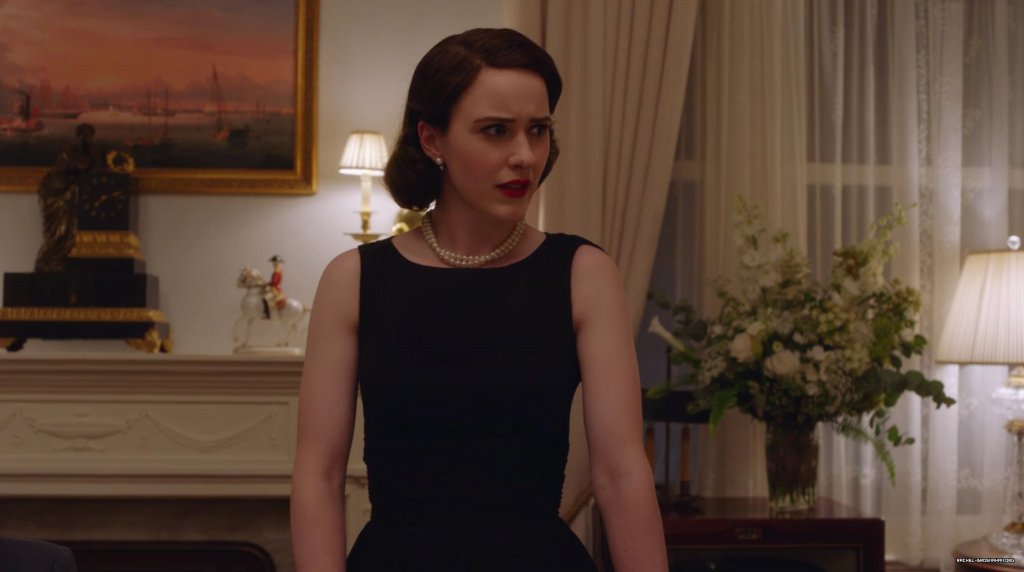
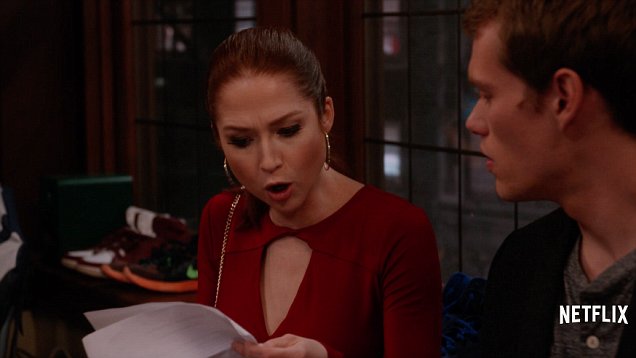
 The Sitcomologist