Featured

I got bored. Here’s a script I wrote for a coronavirus-themed episode of Frasier

I love Frasier.

Obviously I do. It’s great. So I held myself to a challenge.

I’m on furlough from work this week. I’m challenging myself to create something unique and different every day of this furlough week. So, as my first task, I looked at the world around me and decided the only way to get through it would be to imagine how the cast of Frasier would be reacting to a global pandemic.

I don’t want to preamble too much. Below is a fictionalized episode I wrote in less than 24 hours imagining how Frasier, Niles, Daphne, Martin and Roz would be reacting to the world we live in right now.

Enjoy!

FRASIER: Season 12, Episode 1

Anti-social Distancing

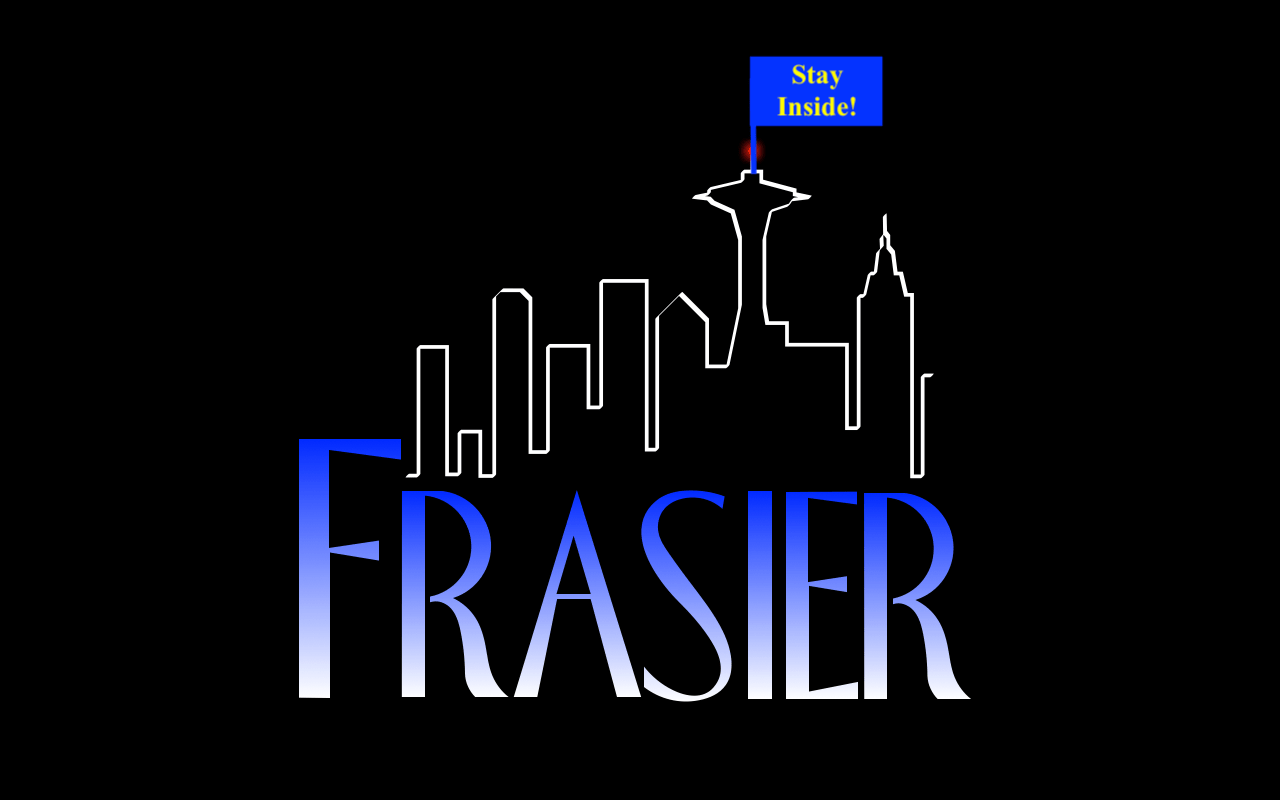
INTRO: Frasier graphic. Opening jingle plays. In the drawing of the Seattle skyline, we see the Space Needle is flying a flag that reads “Stay Inside!” 

FADE IN; SCENE: INT. — Frasier’s dining area. Frasier is sitting at his kitchen table, which has been converted into an at-home podcast studio. He’s wearing headphones and has a laptop set up in front of him. He looks a little irritated, but no more than he usually looks by the end of a show. Roz is connected to Frasier through a video chat on his laptop screen. We can barely see her.

Frasier takes a deep, aggravated inhale.

FRASIER:

Roz, I think we have time for one more caller. Who do we have?

We see Roz more clearly. She has a busted lip. As such, she’s speaking with a bit of a wonky lisp. Can’t really shut her mouth all the way.

ROZ:

Frasier, we have Scott from Spokane. He says he’s having spousal issues.

Frasier winces as Roz lisps her way through “spousal issues,” but he catches his composure.

FRASIER:

Hello Scott. I’m listening.

We hear Scott through voiceover. It’s probably the voice of some trendy celebrity like Adam Driver or John Legend.

SCOTT (v.o.):

Hi Dr. Crane. My husband and I are going through a rough patch. Any tips?

FRASIER:

What sort of problems are you having?

SCOTT (v.o.):

I just think we’re seeing too much of each other. Everywhere I go, he’s there. If I need a snack, he’s in the kitchen. If I need a nap, he’s in the bedroom. If I need to take a shower, he’s on the toilet. I just can’t take it. 

FRASIER:

And when did you start feeling this way?

SCOTT (v.o.):

Oh, I dunno. It’s probably been about eight or nine months now.

FRASIER:

But Scott, we’ve only been in quarantine for about three months.

SCOTT (v.o.):

Who said anything about quarantine?

FRASIER:

Right. Well, Scott. I don’t think we’ll have enough time to solve your myriad marital issues on today’s show. Please stay on the line and we’ll connect you with the counseling help you need.

That’s about all the time we have today on the Frasier Crane Podcast. I’m Dr. Frasier Crane wishing you good mental health.

Frasier frustratedly rips off his headphones and swivels over toward his computer. He huffs toward Roz. He grumpily and lowly delivers his line.

FRASIER:

Oh. I’m sorry. I’m not sure if we’ve met. You see, I’m used to my producer being Roz Doyle, not DAFFY DUCK!

ROZ (still lispy):

Frasier, I’m so sorry.

FRASIER:

What the hell happened to your face, Roz?

ROZ:

So I was at the supermarket and there was only one roll of paper towels left. I saw them first! So what if they were already in her cart?

FRASIER:

Roz, you didn’t.

ROZ:

She had her back turned! I didn’t think she’d notice. But the second I reach in to grab them she turns around and whacks me in the face with her purse.

FRASIER:

Oh, Roz.

ROZ:

At least I was wearing a mask!

FRASIER:

Oh good. Otherwise someone may have noticed you and turned you in as the Bounty Bandit! I heard there’s a $50 reward if anyone finds you dead or alive.

ROZ:

She was hoarding supplies! Who needs 72 rolls of toilet paper?

FRASIER:

I stand corrected. I didn’t know I was in the presence of a noble thief. Clearly you’re the Jean Valjean of all Seattle-area Whole Foods.

ROZ:

I needed them!

FRASIER:

Of course you did. How else will you clean up the blood and spittle pooling on your blouse?

Roz looks down, disgustedly. Frasier grins a satisfied grin. Fade out.

TITLE CARD: GERM WARFARE

SCENE: INT — Niles and Daphne’s living room. We see a row of 10-20 medical-grade masks hanging on a wall. Niles enters wearing a face shield and thick, yellow cleaning gloves and holding a spray bottle filled with disinfectant. He approaches the first mask and spritzes it with two sprays from the bottle. He then pulls out his handkerchief, sprays it twice, then wipes down the mask. He repeats the process on the second and third masks before Daphne walks in and interrupts him.

DAPHNE (concerned):

Niles…

NILES (manic):

Yes, sweetie? 

DAPHNE:

Are you doing OK?

NILES:

I’m doing great! Never better. Just giving the ol’ masks a quick clean again. Why do you ask?

DAPHNE:

Because you cleaned your masks an hour ago. No one’s come in or out of the house since then. So why do they need to be cleaned again?

NILES:

I saw… a fly. 

DAPHNE:

And?

NILES:

Who knows what that fly might have come in contact with, Daphne? Insects are the silent carriers.

DAPHNE:

I think you might need some fresh air. When was the last time you went outside?

NILES:

Don’t be silly. We went on that walk two nights ago.

DAPHNE:

Niles, that was in February.

NILES:

And what is it now?

DAPHNE:

Summer. You missed a whole season.

NILES:

Such is life. I’ve never much cared for spring anyway. Allergies. Baseball. Men in short pants. I didn’t miss much.

DAPHNE:

I just think some sunlight could do you some good.

The phone rings. Niles calmly starts walking toward it to answer.

NILES:

Seriously, I’m fine. You have nothing to worry about.

Niles answers the phone. Panicked dread immediately shoots across his face.

NILES:

What happened? Is this Dr. Singh? Is everyone OK? Do I need to board up the windows? 

We hear Frasier’s voice coming muffledly through the phone.

FRASIER:

It’s me Niles! And this is a FaceTime call. Take me out of your ear you imbecile!

Niles pulls the phone down in front of his face and sees Frasier. He lightens up and smiles a little.

NILES:

Frasier, what a pleasant surprise. How are you?

FRASIER:

Niles take off that mask! You’re indoors for God’s sake.

Niles is hesitant but after a two-second pause he takes off his mask.

FRASIER:

Thank you. Now for why I’m calling. Has the opera house refunded your tickets for Leopold Esposito’s traveling revival of La traviata yet? 

NILES:

Sure, I think I got the check in the mail a couple days ago.

Daphne walks behind the call and chimes in.

DAPHNE:

It was two months ago. Hi Frasier.

Frasier ignores Daphne and bursts into rage.

FRASIER:

Those swindlers! 

NILES:

Have you tried calling them?

FRASIER:

Every day for weeks. I will no longer tolerate this transpicuous extortion. It’s time they feel the full wrath of Dr. Frasier Crane. 

NILES:

Best of luck with that. Anyway, I must be going. My agoraphobics support group is throwing a Christmas party.

FRASIER:

It’s June, Niles.

NILES:

Yes, but this is their Christmas.

Fade out.

TITLE CARD: NEW DELI

SCENE: INT. — Frasier’s living room. Frasier is on the phone. He’s pacing and clearly is still frustrated about his unresolved refund. His voice is elevated as he bellows into the phone.

FRASIER:

This is unacceptable! How many times must I explain I just want my money back? I’m not asking to own the opera house! I just want a refund… Yes. … Yes. … No I will not hold again! Just refund me my money!

Frasier hangs up the phone. He groans and slumps down onto the couch. He rubs his hands over his face and mutters to himself for a few seconds until Martin enters from the kitchen.

MARTIN:

We’re out of ham.

Frasier doesn’t bother to remove his hands from his face. He keeps laying down as he answers.

FRASIER:

I’ll go to the store on Friday.

MARTIN:

But it’s Tuesday!

FRASIER:

So we’ll get more ham in three days.

MARTIN:

What am I supposed to eat for lunch?

Frasier groans. He’s still laying down.

FRASIER:

We have plenty of food in the fridge. It can definitely last us both until Friday.

MARTIN:

But I don’t want any of your fru-fru, girly sandwiches. I want ham. Good, All-American ham. 

Frasier rises like a mummy from out of a tomb. He clearly doesn’t want to dignify his father with any responses.

FRASIER:

If you need ham so badly, have some delivered. 

MARTIN:

What if the delivery boy sneezes on it?

FRASIER:

God forbid he try to improve the taste.

MARTIN:

Frasier, this is serious.

FRASIER:

Either have some delivered or wait until Friday. It’s a pandemic, dad. You’re at high risk. We can’t be putting you in danger every time you run out of sliced pork.

MARTIN:

Fine. Be that way. I guess we can share food for a few days. 

FRASIER:

It’ll do you some good. Who knows what 80 years of ham sandwiches have done to your bloodstream?

MARTIN:

Did you work out everything with your opera tickets?

FRASIER (grumbles):

No…..

MARTIN:

I don’t understand what’s the big deal. Why can’t they just give you your money back.

FRASIER:

Those racketeering, scam artists are trying to convince me the show wasn’t cancelled, but rather I missed it.

MARTIN:

How is that possible?

FRASIER:

Apparently the cast united to put on the show over video call. They say the ticket package I purchased allows me insider access to watch that video call online. Therefore they can’t refund me my ticket because I can still watch the show.

MARTIN:

Well, have you considered just watching the video call?

FRASIER:

I’m not going to watch La traviata alone in my bedroom. That’d be like going to a drive-in movie theater only to learn they’re projecting Casablanca onto the back of a cereal box.

MARTIN:

If they’re not going to give you your money back, what other option do you have?

FRASIER:

They will give me my money back. Mark my words. They will. If it’s the last thing they ever do, they’ll give me back what I am owed. I will not be wronged!

Martin slowly backs away as Frasier starts plotting his revenge. End scene.

TITLE CARD: DELIVER US SOME EVIL

SCENE: INT — Niles’ living room again. Niles is sitting alone on the couch reading a book. He seems more casual than he did when last we saw him, but you can tell he’s still a little on edge. He puts the book down on the coffee table and picks up a rubber glove. He puts on the glove, turns to the next page of his book, then takes the glove off and picks the book back up. Resume reading. A doorbell rings.

NILES:

Daphne?

Niles pauses and waits for an answer. He looks a little panicked as he swivels his head around looking for Daphne. He hears no response.

NILES:

Daph? Daph? There’s someone at the door 

Still no answer. The doorbell rings again.

NILES (shouting):

Just a minute!

Niles sprints over to grab one of the masks he has hanging from the wall. He picks one up, inspects it but finds a speck of dust, flicks the dust, then puts the mask back. He inspects a second one but decides that one isn’t right either. The doorbell rings a third time.

NILES (louder):

I said one minute!

After much consideration, Niles finally chooses a mask. He puts it on, then scurries back over to the coffee table to grab his rubber gloves. He starts heading toward the front door but halfway there he decides to turn around and grab a throw blanket off the couch. He wraps the blanket over his head and shoulders like a shawl, trying to cover up all of his exposed skin. He opens the door.

A delivery man is standing with a tall, narrow cardboard box. The man looks slightly annoyed. Niles takes a big step backward after answering the door when he notices the man isn’t wearing a mask.

DELIVERY GUY:

Are you Niles Crane?

NILES (uneasy):

Yes.

DELIVERY GUY:

Sign here.

The delivery guy reaches out with a clipboard and a pen. His hand is bare. Niles is obviously nervous. Niles extends his arm as far as he can to grab the pen. He pinches the pen with his thumb and pointer finger and scribbles a few indistinguishable inches on the page to call it a signature. He then drops the pen to his feet and kicks it back to the delivery guy, who bends over to pick it up. The delivery guy leans the package against the door and starts to walk away.

Niles kicks into overdrive, sprinting over to retrieve his spray bottle. He sprays down the package thoroughly, then sprays his glove and sprints into the kitchen. When we get into the kitchen, we see that he has a sink basin filled with what appears to be a cleaning solution. He dunks his gloves into the solution, then takes off his mask and dunks that in the solution as well. He picks up a second pair of gloves from a drying rack, puts them on, and sprints back into the living room.

Niles now uses the new gloves to drag the box into the house. He’s panting out of breath. He’s about to fall over. It’s at this point that Daphne walks in from downstairs.

DAPHNE:

Who was at the door?

Niles is still hyperventilating. He holds up one finger as to say ‘gimme a second.’ He catches his breath. 

NILES:

Daphne, it was horrible. He breathed all over me. He almost touched me. I don’t think it’s safe here any longer. We need to find a new house. Now.

DAPHNE:

It’s going to be OK, Niles.

NILES:

How do you know that?

DAPHNE:

Because we get packages from Amazon almost every day. 

NILES:

We what?

Niles’ knees buckle. Daphne runs over to catch him. Niles shies away from her touch. He half-whines, half-cries through his next line.

NILES:

Don’t touch me! I’m contaminated!

Daphne rolls her eyes.

DAPHNE:

At this point, I think I’ll take my chances with the virus.

NILES:

Don’t even joke!

DAPHNE:

What’s in the box anyway?

NILES:

It’s my medical-grade hazmat suit. It’s finally arrived.

DAPHNE:

Shouldn’t we be saving those types of supplies for doctors who need them?

NILES:

I am a doctor Daphne! I need them!

DAPHNE:

You’re a psychiatrist!

NILES:

Mental health is more important now than ever before.

DAPHNE:

You don’t even go outside!

NILES:

I can now. Just think, Daph. You and me. Taking a leisurely stroll through the park. Your medically-sanitized hand holding onto the three inches of thick rubber protecting my medically-sanitized hand. It’s perfect.

DAPHNE:

It’s every girl’s dream.

End scene.

TITLE CARD: REVENGE IS A DISH BEST SERVED SCOLD

SCENE: INT — Frasier’s living room. Martin is at the kitchen table gritting his way through what appears to be a meatless sandwich. He takes a miniscule bite and before he can even chew reaches for his can of beer. He goes to sip and turns it up all the way until it’s upside down. He shakes it a few times but nothing comes out. Panic sets in.

MARTIN (half-yelling):

Frasier!

Frasier comes huffing out from the hallway. He’s a little agitated that his dad is calling him again.

FRASIER:

Yes, dad?

MARTIN:

We’re out of beer.

FRASIER:

Put it on the list.

MARTIN:

But Frais…

FRASIER:

Dad, how many times do I need to tell you? I go to the store on Fridays. It’s Thursday. Can you not go one night without beer?

Martin looks down at his feet for a few seconds.

MARTIN:

It’s bad enough you’ve had me eating vegetarian sandwiches for two days. Now I have to eat them sober too? I think this qualifies as torture in some states.

FRASIER:

You know full well we have other alcohol in the house. There’s nothing stopping you from pouring yourself a glass of wine.

MARTIN:

Great. Just what I need. More of your stuff. I’m out of ham. I’m out of beer. I’m out of jerky. We ran out of the cereal I like five days ago. Can’t you just go to the store today?

FRASIER:

I can’t today, dad. I’m busy.

MARTIN:

How can you be busy? Your show isn’t for another three hours.

FRASIER:

I’m organizing a boycott of the opera.

MARTIN:

You’re still on this?

FRASIER:

Of course I am. I won’t stop until justice has been reached.

MARTIN:

Don’t you think it’s just about time you let this one go?

FRASIER:

Let this one go? Let this one go? Would you have told Thomas Jefferson to just let that whole Declaration of Independence thing slide? Would you have told Martin Luther King to just let his dream stay a dream? This is about doing what’s right. I will not rest until those crooks get what’s coming to them.

MARTIN:

Get what’s coming to them? They’re already closed, Frais. You’ll be boycotting an empty theater. Cut them some slack.

Frasier growls. He turns around and saunters back to his room. Martin walks over to the wine shelf and pours himself a glass. He goes back to his sandwich and takes another small bite. He winces. He grabs the glass of wine and takes an equally small sip. He makes an even bigger wince after the sip. He leans back in his chair resigned to frustration for a few seconds before getting an idea.

MARTIN:

Maybe we still have some Cheetos left.

End scene.

TITLE CARD: BUT WHAT’S PROTECTING HIS SUIT?

SCENE: Ext — Daphne is walking in a park. She looks embarrassed. She waves to a woman running by, trying to keep up appearances but failing. We zoom out ever so slightly and reveal she’s walking side-by-side with Niles, who is grinning from ear to ear under his hazmat suit. He looks a little bit like the Michelin Man with his white, puffy layers protecting him. This is the most gleeful we’ve seen Niles all episode but Daphne looks mortified.

DAPHNE:

Can you at least take off the helmet?

Niles’ head swivels toward Daphne. His voice is booming and echoey out of the hazmat suit.

NILES:

Why would I do that?

DAPHNE:

Aren’t you hot under there?

NILES:

A small price to pay for safety.

DAPHNE:

People are staring, Niles.

NILES:

Staring in awe. Staring in jealousy that they didn’t think of this first.

DAPHNE:

Staring at the poor woman married to the lunatic.

NILES:

I think you’re overreacting just a tad.

A family of four starts walking up toward Daphne and Niles in the opposite direction. The parents are probably in their mid-30s and the two kids can’t be older than 3 and 5. The mom is pushing the 3-year-old in a stroller. The 5-year-old is walking on his own. When he sees Niles, he freezes and stares petrified.

Niles slows down and bends to say hello.

NILES (his voice still echoing):

Hey there little guy.

The child starts screaming and sprints away. His parents look at Niles with disgust.

DAPHNE:

So I’m overreacting, am I?

NILES:

He probably just thought I was one of his favorite comic book characters.

DAPHNE:

You’re some sort of character all right.

A woman starts walking in Niles and Daphne’s direction. She’s not wearing a mask and she’s rearing back as if she’s about to sneeze. Niles is startled.

NILES:

Oh no!

Niles starts backpedaling to get away from the impending sneeze. Everything starts moving in slow motion. He runs backwards and bumps into a tree with his right shoulder. The woman sneezes and keeps walking on her way. Niles fumbles his way back toward Daphne as if he’s just avoided a grenade.

NILES:

That was close. Are you OK, darling?

DAPHNE (dripping with sarcasm):

Yeah, I can’t believe I survived that.

We hear a high-pitched whirring noise. It kind of sounds like a car tire losing air. Daphne looks at Niles puzzled.

DAPHNE:

Niles, do you hear that noise?

Niles perks up and starts looking from side to side like a dog that just heard a squirrel. He looks down at his right shoulder and sees that his suit has been torn by the tree he bumped into. His suit is deflating.

NILES:

I’m breached!

Niles aggressively throws his left hand over his right shoulder to try to cover the hole. As he does that, we hear a ripping noise. He’s moved his left arm with such force that he’s ripped a hole in the back of his suit. When he hears that ripping noise, he throws his right arm under his left arm to try to cover that hole too. It makes the rips even bigger. Niles starts crying out in agony for Daphne to help him. Daphne does nothing. She just slowly starts walking away to leave Niles in his deluded mis-reality. End scene.

TITLE CARD: ALL’S WELL THAT ENDS WASTED

SCENE, INT. — Martin is sitting in his chair. He grabs a bottle of wine from off the end table and pours the last bits of it into a glass. He spills some of the wine on himself trying to sip it up and starts laughing hysterically. We see that there are three or four other empty bottles of wine strewn around Martin’s feet. He reaches for the TV remote that’s on the coffee table and turns up the volume. 

MARTIN (slurring):

This is hilarious. Whatever it is.

Martin starts laughing hysterically again. Frasier walks in from back where his bedroom is.

FRASIER:

Well, that was Daphne. Everything’s OK now. Niles made her hose him down in the backyard and now Niles has locked himself in the bathroom and won’t come out. (Frasier pauses) Sounds like she can finally get some peace and quiet after all.

Frasier notices what Martin is watching on the TV. He looks appalled.

FRASIER:

Dad, are you watching my opera?

MARTIN (slurring more):

Is that what this is? It’s great. 

Frasier is incredulous. He walks over and snatches the remote from out of Martin’s hand and presses pause.

FRASIER:

How could you?

MARTIN:

Easy. I just pressed the play button and it came on.

Martin starts laughing to himself again. Frasier notices the empty wine bottles on the floor.

FRASIER:

Oh dad, how much have you had to drink?

MARTIN:

I told you we were out of beer.

Frasier gets protective and kindly in tone.

FRASIER:

I know dad. I know.

Frasier puts a blanket over Martin.

MARTIN:

Turn that show back on. It’s so good.

Frasier sighs with reluctance. He takes the remote and presses play. Opera music blares through the speakers. Frasier cracks a slight smile. Fade out.

CREDITS SCENE:

Theme song starts playing. Scene is we’re in a supermarket with Roz. She’s pushing her cart, which is practically empty, and wearing a mask. She sees a woman pushing a cart down the same aisle as her. The woman has multiple 24-packs of paper towels and toilet paper and other necessary goods in her cart. Roz squints with rage and starts pushing her cart full speed toward the woman. The woman abandons her cart and runs away. Smiling, Roz scavenges through the woman’s cart for the goods she needs. She drops her new groceries into her cart, wipes her hands a few times like she’s done a good job and pushes her cart away. Fade out. 

Featured

20 Years Later: My Theory on How Malcolm in the Middle predicted millennial attitudes

If there’s one hill I’m willing to die on, it’s that I’m 100 percent not a “90s Kid.”

I was born in 1994. I remember parts of 1998 and most of 1999. But by no means does that make me a “90s Kid.” For the most part, people who call themselves “90s Kids” annoy me. This frustrating phenomenon has definitely faded away since its cultural peak when I was in college. Which is weird. I have no idea why nostalgia for a certain decade peaked 13-15 years after that decade ended. But any time I hear it, I still sort of cringe. 

Because the only people I heard it from were people my own age. And we are most definitely not “90s Kids.” We’re children of the aughts. And we should be proud of it.

Like, one time I was working at the school newspaper when I was in college and Aaron Carter came to town to play a concert. That was kind of cool, because it meant one of my co-workers got to interview Aaron Carter. When my sister and I were younger, we were huge Aaron Carter fans. We kept listening to our CD of Aaron’s Party (Come Get It) for at least three or four years after it came out. I’m not ashamed to admit it. That album had some bops. 

But here was the thing: When the interview with Aaron Carter came out, someone at our paper headlined it “the ultimate 90s Kid nostalgia.” That irked me beyond belief. “Aaron’s Party” came out in 2000! “Oh, Aaron” was 2001! His generation-defining (maybe this is hyperbolic but this is my website so buzz off) guest spot on Lizzie McGuire aired in 2001. Aaron Carter is the aughtsiest teen heartthrob there was. Don’t give him to the 90s. They have enough teeny-boppers. Give us our one.

Anyway, about sitcoms…

You know who was another aughsty teen heartthrob (using the term loosely) who busted onto the scene in 2000? Frankie Muniz.

Twenty years ago today on Jan. 9, 2000, Malcolm in the Middle premiered on the FOX network, introducing 22 million viewers to a family without a last name. (I refuse to call them The Wilkersons.) The show, one of the most realistic depictions of youth and family and one of the most important early examples of single-camera comedy working on network TV, told stories about Malcolm: a genius savant who lives in near-poverty with his strict mother Lois, his overwhelmed father Hal, his sadistic and stupid older brother Reese and his odd-ball younger brother Dewey while rebellious eldest brother Francis romps across the country from military school to Alaska to a dude ranch in the southwest.

Malcolm in the Middle is the closest thing my generation has to a time capsule. In the ranks of classic sitcoms, Malcolm in the Middle is the only one about kids who grew up in my generation. I guess you could argue the Dunphy children in Modern Family are of my generation, but that show has never been about the kids. That’s like saying Everybody Loves Raymond is about people of my generation because the twins were born within a few months of my younger sister. 

I like to think of Malcom in the Middle as the anti-Wonder Years. If The Wonder Years was a show that romanticized youth and innocence in a bleak time, Malcolm in the Middle was a show that emphasized the boredom and mundanity of youth. It was a realistic look at what growing up in that cultural moment was like. And it worked.

So much of the cultural currency about what the kids in that show went through is identical to what I grew up with. Sure, Malcolm and Reese were a few years older than me. But I had friends who were their age. And I was in the same grade as Dewey. So there was always an entrance point for me, even if my mom was nothing like Lois and my dad was nothing like Hal (ok, a little like Hal). I knew parents like Hal and Lois and I knew older brothers like Reese and I related to Malcolm pretty thoroughly as a brainy kid who always felt like an outsider because of it. 

Why am I bringing all of this up? Well, first off, this is a website about sitcoms and I’m using this anniversary as an excuse to write about a show I love. But more importantly, I want to talk about the differences between 90s Kids and 00s Kids. And to do this, we’re going to have to use a term everybody hates: Millennials.

The collective groans of the nation are upon us

I’m definitely a Millennial. And I’m proud of it. Insofar as anyone can or should be proud of being born in between two arbitrary years.

But more important than that, I’m obsessed with generational theory. Because everyone knows generations are BS. The idea that being born in 1965 makes you more like people born in 1947 than 1966 is hilarious. It’s something we’ve made up to categorize people and make blanket statements about people uneasy with. More specifically, we make up generations in order to categorize people younger than us and point out how they’re different.

It’s like Dr. David Finkelhor’s concept of “juvenoia.” In essence, I think we come up with generations because we’re simultaneously intimidated by the progress people younger than us are making and we’re afraid that they’re doing things wrong. In pointing out our differences from the people of a certain age below us, we are showing that we care about the future of the human race. And since older generations successfully repopulated the human race, they think any process that deviated from their generation’s choices is wrong. 

Again: None of this is my idea. I’m regurgitating what I’ve read and what I’ve watched from all sorts of sources. Because, again, I’m obsessed with generational theory. Especially how it pertains to my generation.

There aren’t ironclad parameters for what birth years make someone a millennial. Most people would agree that millennials are people who born at some point between 1984 and 1999. That said, I’ve seen some people go as far back as 1977 and as far forward as 2004. Honestly, it’s probably better to avoid using years and just use personality types as our guide for a generational definition. Here are my three general definitions for what makes an American millennial:

  • 1. The advent, explosion and proliferation of the internet shaped your formative years
  • 2. The attacks on 9/11 and the 2008 economic recession shaped your outlook on society
  • 3. Your parents (either young Baby Boomers or Gen-Xers) were more protective of you than their parents were of them

Of course, as I said earlier, generations are BS. Oftentimes, the cutoff between millennial and Gen Z is 1995. I was born in 1994. My sister was born in 1996. There’s no way we’re not in the same generation. But there’s a pretty good argument that I don’t belong in the same generation as someone who was born in 1984. Still technically a millennial, but that dude is 10 years older than me. He was a sophomore in college when I was in fifth grade. Huge difference in experience.

Which is why some generational theorists (read: bloggers) have posited that there should be a distinction between “old millennials” and “young millennials.” I buy this completely. Using this framework, we’d group people born between the mid and late 1980s together and we’d group people born in the early to mid 1990s together. Which feels more accurate based off my three criteria. Especially the first two. 

People born in 1986 definitely have a different relationship with the internet than I do. We had dial-up in my house until I was eight or nine years old, but most of my internet use was in the post-dial-up era. That’s not the same as someone who used dial-up through high school. And by that same token, I was just shy of my sixth birthday on September 11, and just starting high school when the economy crashed. Those are powder keg memories for me. I’ll never forget 9/11, and I’ll doubly never forget watching late night TV in the summer of 2008 and learning about the economic disaster from Jon Stewart and Stephen Colbert. But being a snotty, pseudo-intellectual eighth grader in suburban Georgia trying to contextualize the housing crisis is a lot different than being fresh out of college and not being able to find a job because of it.

So we can agree: While everyone born in this certain “generation” can be called millennials, there has to be a distinction between young and old. And we can divide them based off some generational traits based on their relationships with those major events. If you were 6 years old like I was at the time of the September 11 attacks, you grew up with a bizarre sense of normalcy, a shaky acceptance of how scary the world is. If you were in middle or high school at the time, though, you had no choice to reevaluate your understanding of the world. You didn’t grow up with the fear, you had to adjust to the fear.

As for the housing crisis and economic recession, people who were in college or finishing college when the markets turned have a natural pessimism about the state of the world. They were promised avenues for success and had it pulled out from underneath them. All the jobs and prosperity they thought would be available were disappearing, and they were bred a sense of resentment because of it. Younger millennials like me, on the other hand, came into the work force as the United States was pulling out of the recession. Because of that, there’s more optimism. We saw the world pull through and we weren’t directly affected by the worst times. So we see the good in the world. Call it naivety or call it pragmatism. But people born within three of four years of me on either side are known as the most collaborative and optimistic the workforce has ever seen.

Which, finally, brings me back to Malcolm in the Middle.

Over the course of the show’s seven-season run, we learn a lot about Malcolm and his four brothers. (Jamie is born in the middle of the show’s run. We know significantly less about him. But there are some pretty good hints.) And of the four oldest brothers – Francis, Reese, Malcolm and Dewey – we can say with certainty that all can be labeled millennials. Based on what we know about the brothers and their respective ages, here are their likely birth years:

  • Francis: 1984
  • Reese: 1987
  • Malcolm: 1989
  • Dewey: 1993

Using the criteria we’ve set up, Francis is definitely an “old millennial” and Dewey is definitely a “young millennial” with Reese and Malcolm fitting somewhere down the middle. Which, if we break down their respective personalities, actually makes a certain intuitive sense based on our descriptions of the micro-generational differences. Let’s start with Francis.

Francis

The oldest of the show’s brothers, Francis is undoubtedly the most negative and the most resentful. Francis blames all of his life’s problems on his upbringing, particularly his relationship with Lois. Lois was strict with Francis and Francis had the type of personality where he constantly had to rebel, even against ideas which were better for him.

One of my favorite examples of the Francis-Lois relationship comes in the Season 1 episode “The Bots and the Bees.” In this one, Lois goes to visit Francis at military school after Francis has a medical emergency. And his first reaction to needing surgery is this:

“This is the single greatest thing that’s ever happened to me. For as long as I can remember, my mom’s been torturing me with guilt. I’ve never been able to fight back, but this is perfect. Her first-born child almost dies and she’s the one who sent me here. She can’t dismiss it. She can’t argue about it. She can’t twist it around and make it my fault. It’s beautiful!”

Much to Francis’ chagrin, when Lois shows up at Marlin Academy, everyone loves her. So naturally, Francis pushes her away. He can’t conceive of a world where his mom acting pleasant isn’t “a trap” she’s ploying to embarrass him. When she’s mean to him, he hates it. When she’s nice to him, he hates it. Francis can’t help but resent any choice made by an authority figure.

Francis’ rebellion against authority stemmed beyond his relationship with his mother. In the first two seasons when he was at Marlin Academy, nearly every Francis storyline dealt with his ongoing struggle against Commandant Spangler. In Alaska, Francis fought his superiors despite the urging of his co-workers, just as happened at Marlin Academy with Spangler.

I think a lot of Francis’ issues with authority can be distilled into an interaction he has with Lois in the Season 2 episode “Hal Quits.”

Francis: I’m working for a moron.

Lois: Of course you are, honey. Your boss is an idiot, your co-workers are incompetent and you’re under-appreciated. Welcome to the working world.

Francis is naturally negative, and when he has his first chance to have a paying job, his negative thoughts are immediately validated. By his mother no less!

As Francis got older, he matured a little bit. His relationship with Otto on the dude ranch was far less contentious than his previous squabbles with authority. But by that time, Francis had taken over as the competent adult. He didn’t have an authority to rebel against because Otto didn’t serve as an authority figure.

The most noteworthy conversation to have about Francis’ status as an elder millennial comes in the series’ fantastic finale Graduation. We’ll talk more about Graduation later, because it really does a great job of wrapping up the characters. But Francis’ wrap-up might be the most fitting.

Home for Malcolm and Reese’s graduation day, Francis is making a big show of complaining to Lois about how he’s still a free-spirit who refuses to bow to authority. He’s his usual, crotchety, big-stinking self and everything he does is an attempt to get Lois’ goat. But Hal sees that Francis has a swipe card for an office building. And Francis confides in his father that he’s been working a 9-to-5 job. And what’s more, he loves it. But he refuses to let Lois know. He has to preserve the illusion that he’s the negative, rebellious type he’s always been.

If there was ever a perfect example of the disdainful attitudes we described in old millennials, it’s Francis. His default attitude is to expect the worst of authority. Authority has let him down and it’s his job to show that that isn’t right. And when confronted with happiness, Francis still doesn’t want to let his guard down. He has to preserve the illusion for the sake of his attitude and, by extension, his generational identity. 

Reese and Malcolm

For the purposes of our discussion, let’s label Malcolm as the default millennial. He is neither old nor young. He is the generally-accepted definition of millennial as prescribed by the juvenoic tendencies of Baby Boomers and Gen Xers. Positive stereotypes, negative stereotypes, whatever. Malcolm is the character in the middle, as the title says. And as the everyman character in this show, it makes sense that he should embody the entire generation.

Reese, meanwhile, is Malcolm’s foil. In a different story about a different family with a different perspective, Reese is the everyman. Reese is the underdog. Reese is the overlooked. Reese is common and flawed and simple and complex in every way, and probably grows as much as Malcolm, if not more, throughout the course of the series.

(When I say “grows,” I mean emotionally. Malcolm and Dewey grow a lot more physically than Reese throughout the show. I mean, a lot more.)

The defining characteristics that made up Malcolm’s character generally revolved around his intelligence and his neuroses. Malcolm was unquestionably the smartest person he knew. In the phenomenal Season 1 episode Krelboyne Picnic, we get our first glimpse of how smart Malcolm really is when he Human Calculators his way through multiplying and dividing credit card numbers against themselves. His intelligence defines how other people see him, regardless of if that’s what he wants. We see Malcolm’s relationship with his intelligence and the superiority he feels because of it best in episodes like Stupid Girl where Malcolm abandons what has made him successful and he proves unable to function. 

The defining characteristics that made up Reese’s character generally revolved around his lack of intelligence and neuroses. Reese was pure id. Think of the Season 3 episode “Reese Drives” when Reese steals a car and ends up in a chase with the cops in the middle of his driver’s test. Reese just kind of acts. Whether he made the right decision of the wrong decision is inconsequential to him. Foresight isn’t his strength.

One word you’ll hear a lot in studies about millennials is “expectations.” Millennials have high expectations for themselves and they grew up with high expectations put on them by their parents.

To me, expectations are the difference between Reese and Malcolm. No one expects anything from Reese and Reese expects nothing from himself. Everyone expects everything from Malcolm and Malcolm expects everything from himself.

Which is funny, because Reese often out-performs his expectations. He’s proven to be a great chef and a generationally-good janitor. He’s also very crafty with schemes (like the time he saved up to buy Dewey a new toy just so he could smash the toy in Dewey’s face), which shows a little bit of an ability to plan.

Malcolm, meanwhile, is often unaware of or overwhelmed by his expectations. Take the last season as a long example. He’s expected to earn scholarship money and grants for college. He’s expected to break the school GPA record (despite the fact that he nearly failed music appreciation). And the battle with expectations hits its peak in Graduation. 

Malcolm is offered a job at a tech company that’ll make him financially stable for life and would mean he wouldn’t have to go to college. He wants to take the job. But Lois and the rest of the family tell him he can’t take it. He has to go to college and work his way through it and pay his dues until he eventually climbs high enough on the ladder to where he’s President of the United States. Because only someone like Malcolm who can think like an elite but has lived the life of an everyman is qualified to lead the country.

Malcolm is stunned to hear this, but everyone in the family shrugs off Lois’ speech, saying they thought he knew. This is his destiny. The expectation is that he’ll be President someday. Anything else is a disappointment.

If you view this through the lens of Malcom’s status as a poster child millennial, there’s definitely a metaphor to explore. More than any generation before us, millennials have grown up with higher and higher expectations put upon us. The world’s problems mount and we’re the ones who will be tasked with fixing them. Between the access to the internet and the prep classes and our country’s disappearing manufacturing sector, millennials have been told from a young age that college is the only route we have to a successful life. And from college, millennials are expected to find jobs in new fields, STEM fields, the fields that will change the world.

Of course, Malcolm is an exaggeration of that ideal. Millennials are taught it’ll be our responsibility to save the world. As a collective, hopefully. But in Malcolm’s case, the idea is almost single-handed. 

Dewey

When people are listing the best traits that define millennials, the idea of collaboration usually comes up. More than any generation before them, studies have shown millennials thrive in collaborative environments. There’s a level of generosity and willingness to work toward a common good inherent to this generation that previous groups haven’t displayed. And Dewey, who is not-so-secretly the most likable child character on Malcolm in the Middle, is a perfect example of this.

As far as intelligence goes, Dewey probably isn’t far behind Malcolm. Dewey is a borderline musical prodigy. He understands sound just as well as Malcolm understands numbers. So it’s not a surprise that Dewey was on the path toward becoming a “Krelboyne” just like Malcolm. But Malcolm didn’t want Dewey to be a social outcast the same way he was.

So in the Season 4 episode “Dewey’s Special Class,” Malcolm forces Reese to take Dewey’s placement test for him. And Reese proves to be so bizarre and incorrect in his test-taking ability that he gets Dewey placed in the “Buseys” class for emotionally disturbed children and those with mental disorders. The class is taught by an overwhelmed and incompetent teacher, so Dewey takes over as the leader of the class and serves as a stabilizing presence in the classroom. When given a chance to escape the Buseys and be a Krelboyne as he had initially wanted, Dewey decides against it and pretends to be emotionally disturbed so he can stay in the class and protect his new friends.

The Busey episodes through the last three seasons are some of my favorites. “Buseys Run Away” and “Buseys Take a Hostage” might be the two best and most memorable episodes in Season 6. And a big reason for that is the dynamic that Dewey has with his classmates. They look to him for guidance and instruction in a naive and respectful way that might be the closest thing this show gets to being sweet. 

I don’t want to belabor the metaphor any further, but I think you can guess where I’m going with this. Dewey is a musical prodigy. A savant, perhaps. But his personality leads him to choosing collaboration instead of personal gain. Whereas past generations were conditioned to put themselves first at all costs, Dewey exhibits the millennial trait of choosing the collective over the individual. And in some ways that makes him strong. But most importantly to him, it makes the whole stronger. Dewey proves through leadership that cooperation makes everyone better. 

And in the grand scheme of millennial ideology, this fits pretty well with the concept of “young millennials.” Far too young to be jaded by the financial crash and not old enough to have had his worldview altered by 9/11, Dewey accepts the world he lives in and works to make it better. He’s also the one character who we haven’t talked about with respect to Graduation. So let’s do that. But let’s actually frame it around the fifth brother.

Jamie

As I said before, we don’t know much about Jamie. He’s barely 3 years old by the time the show ends. But one of the running threads throughout Graduation gives a pretty good indication of the character he would’ve become. It pertains to the “nuclear option.” 

In short, Malcolm, Reese and Dewey did one thing in their youth that was so bad and so unthinkable that they used it as leverage against each other to never turn on their brothers. (They falsified X-rays to make Lois think she had cancer so she wouldn’t ground them for bad report cards. Yep.) With Malcolm and Reese graduating and moving out, the brothers decide they can destroy the evidence and rid themselves of the nuclear option. Malcolm and Reese are thrilled about this, but Dewey finds the occasion to be bittersweet, since this piece of evidence was what connected him to his brothers.

That said, when the episode ends, we see Dewey devise a new nuclear option, this time with Jamie. As a character, Dewey is at his best when he’s interacting with others. Whether it’s the Buseys or his brothers or his phenomenal episodes with Hal, we know Dewey as a person who thrives in the company of others. And in this brief interaction with Jamie, the final appearance on screen for either character, we see Dewey setting up the relationship that will define the next phase of his life.

He’ll be to Jamie what Francis was to him, except he’ll likely learn from the bitterness and resentment that Francis carried and be a more collaborative and positive influence on his Gen Z brother. (Brothers? Lois is pregnant again in the final scene of the show. And we know she’s not going to be lucky enough to have a girl. Despite her imagined sequences in the show’s best episode.)

Let’s end this thing

Ok. So maybe all of this is a bit indulgent. Maybe I’m just a child of the aughts who loves this show because it’s a show about my generation and I’m projecting thoughts and beliefs onto it that maybe aren’t there. But it lines up pretty well.

Before the term millennial broke into the mainstream and before we knew how people of this age would act as adults and, heck, before the recession even began, the characters on Malcolm in the Middle were displaying the traits we’d come to accept and expect as “millennial traits.”

And let’s also make it clear before we’re done talking about Malcolm in the Middle: best sitcom theme song ever. Fight me.

Featured

The 50 Best Sitcom Episodes of the 2010s

I love sitcoms.

Part of me thinks I should’ve started this off with more of a profound statement. But at the end of the day, that’s the thought I really want to express.

Over the last 10 years, I’ve watched a lot of TV comedies. Like, way too many. Example: I watched at least two episodes of Work It. If you don’t know what that is, consider yourself lucky.

There’s a part of me that thinks I’ve spent too much time watching sitcoms. Heck, I’ve seen more episodes of Bob Hearts Abishola than of Breaking Bad, Mad Men, Game of Thrones, The Sopranos and The Wire combined. I have informed opinions about Wilfred. I have a favorite joke from Life in Pieces. I once wrote a college assignment about ABC’s new crop of sitcoms for the 2013 season and remember being extremely disappointed by how bad Super Fun Night was.

But there’s another, much smarter part of me that knows I haven’t wasted any time watching these shows. In the 2010s, sitcoms became more daring, boundary-pushing and downright exceptional than they’ve ever been. The auteur era reinvigorated a stale format. Streaming services and binge-watching transformed the way jokes are delivered and written. Cable networks un-obsessed with ratings allowed shows to gestate longer and tell more specific, audience-targeted stories. And shorter seasons trimmed the fluff out of seasons, allowing tighter jokes and narratives to tell better stories.

This was the decade that gave us more options and more comedy than ever before. And I’m the only dummy with enough free time to rank it all. These are my picks for the 50 best sitcom episodes of the 2010s.

First, some ground rules:

  1. Limit one episode per show. It’s more fun that way.
  2. Sitcoms only. This will not include episodes of sketch comedies, talk shows, variety shows, unscripted shows or reality shows. I could make a separate top 50 list just using those formats, highlighted by the stellar peaks from the likes of Saturday Night Live, Key & Peele, Inside Amy Schumer, Nathan For You, The Chris Gethard Show, Documentary Now, Joe Pera Talks With You and the dozen or so late-night talk shows that debuted in the last decade.
  3. Live-action only. No disrespect to shows like Big Mouth, Bojack Horseman, Rick and Morty and Bob’s Burgers. They all could’ve had entries on the list. But I had to choose my arbitrary parameters somehow. (And also I didn’t feel like getting yelled at by Rick and Morty fans for rating their show too low. I’m one of you. I watch and like your show. Please don’t yell at me.)
  4. No premieres or finales. I have specifically chosen to exclude the first and last episode of every season from contention here. Those episodes are almost always the most memorable because of plot reasons. But we’re only doing meat-and-potatoes episodes on this list. Mid-season episodes are almost always funnier anyway. Less focus on plot. More focus on jokes and characters.
  5. My definition of sitcom might be different than yours. I didn’t include shows like Orange Is The New Black and Transparent because I classify them as dramas. And there are some shows on this list that might be dramatic in tone, but I picked episodes that are comedic. If you dislike my methodology, that’s fine.
  6. I haven’t seen every show. Trust me, I’ve tried. But there really is too much television. So for those of you who I didn’t include one of your favorites, I’m sorry. I couldn’t get to it. (Or I didn’t like your favorite show and you’re dumb for liking it.)

And that’s pretty much it. Click through the links below to enjoy the list. And be sure to yell at me on Twitter @nicksuss if you have qualms with my choices.

The Episode List

6 lessons about video calls from Modern Family’s best episode

This feels like a pretty weird time to be worrying about a TV show ending. But, whatever. Here we are.

After 11 years and 250 episodes on the air, Modern Family is wrapping up Wednesday night. Initially, I wanted to write a big, long retrospective about Modern Family’s staying power and all the awards it won despite never actually being all that innovative or influential. But now doesn’t feel like the time. No one wants to spend their quarantine lockdown reading about all the times Modern Family won awards that Community or Parks and Recreation or Girls or Louie should’ve won instead.

Rather, let’s lean into the times and talk a little bit about video calls.

Zoom and Google Hangouts are having their moment right now. Desperate for human interaction, people all over the country are video calling their friends and relatives from the lockdown safety of their own homes. Which is cool, I guess. I’m mostly neutral on video chatting as a concept. It’s effective for group calls and meetings, but I find it mostly unnecessary for one-on-one communication.

That said, there’s a bizarre symmetry to the fact that Modern Family is ending in the middle of what I’ll heretofore refer to as The Zoom Moment™. Because there’s an argument to be made that Modern Family’s defining episode took place entirely over video chat. And going back and rewatching it now feels like an interesting entry point into discussing the world we’re stuck in.

The highest-rated Modern Family episode according to IMDb user ratings is Season 6’s Connection Lost. It’s sitting at 9.5 stars out of 10 with more than 5,000 reviews. There are only six other episodes of Modern Family with more than 2,000 reviews, and only two other episodes (again, out of 250) with a rating of 9.0 or better.

Still, I’m trying hard not to call Connection Lost the defining episode of Modern Family. Because it’s so unlike every other episode of the show. Modern Family is a pretty rigidly formatted show. It uses its mockumentary style well and the way the show is directed is very distinctively Modern Family with its sleekness and quick pacing and projection of opulence.

Connection Lost doesn’t really do any of that. The episode isn’t shot like a documentary. It’s shot entirely like the viewer is watching a stream of someone’s laptop background. The whole episode exists on Claire’s Macbook, with other characters popping up through FaceTime calls, pre-recorded videos and social media feeds.

The episode works because of how it’s paced. It’s one of the few Modern Family episodes that feels like it was made to be watched on Netflix instead of ABC. Everything moves fast and every event flows into one another. Essentially, it’s a bottle episode occurring in real-time. Except instead of following the rules of episodes like Seinfeld’s “The Chinese Restaurant” or Friends’ “The One Where No One’s Ready,” Modern Family circumvented the rules by filming an episode across multiple sets while preserving the frenetic, naturalistic speed of a bottle episode.

(Probably not coincidentally, one of the two writers of the episode was Megan Ganz, who wrote the Community bottle episode Cooperative Calligraphy. Which, by the way, is my favorite episode of Community.)

Connection Lost is a marvel of an episode. Staging, shooting and editing half an hour of a network sitcom on iPhones and iPads in 2020 would still be a bit of a challenge. But doing so in 2015? At the time, series co-creator and episode co-writer and director Steven Levitan told SlashGear that it was the most labor-intensive episode of Modern Family they’d ever made. By that point, Modern Family had already made an episode on-location in Australia.

The fact that the episode worked is impressive enough. But the way Ganz and Levitan wove an episode with no fewer than six plots intertwining while restricting themselves to one visual location deserves more praise than I can give. If the episode had only rode the momentum of the Claire-Hailey plot with a couple of throwaway jokes from Jay and Phil, it still would’ve been technically impressive. But throwing in bits about Mitchell’s new hat and Cam’s love of Chicagoan popcorn and Alex’s college essay and Luke’s mohawk that continue to pay off throughout the show elevated the episode from a daring format to an intricately-constructed tightrope act.

But let’s talk about the inadvertent subtext. Now more than ever, we need lessons on proper video chat etiquette. (Yes, I learn all my lessons from sitcoms leave me alone.) So here are six lessons I learned about video chatting from Connection Lost.

1. It’s OK to multitask

Don’t feel obligated to have eyes on the other people on the call at all times. Claire doesn’t. If you’re bored listening to someone talk about how they’re staying busy during a shelter-in-place (spoiler alert: it’s the same way all of us are), don’t feel bad about clicking over to Twitter or Facebook or checking the news for a quick sec.

You can listen and scroll at the same time. No one will judge you. Even if you, like Claire, start looking at porn during the call. As long as you, like Claire, consider Pinterest to be porn.

2. Pay attention to perspective

C’mon people. Frame yourself in the shot the right way. Don’t be like Jay. Don’t be too close to the camera or too far away from it. You don’t have to talk louder than you normally would. Nothing has to change. Just treat it like a regular conversation.

(Fun fact: In a Paley Center discussion about the episode, the actors said the framing of Connection Lost was achieved by a trained camera operator holding the phone or iPad in front of the actor and then the actor holding that person’s wrist to make it look like they’re holding the device themselves. Hollywood magic!)

3. Know who is on the call

When you’re on a Zoom chat with 20 other people, it’s easy to not take role of everyone listening. But make sure you have a clock on everybody on the call. Don’t get caught in a tough situation like Phil where you accidentally get caught lying in the background of a call. Or worse, don’t end up like Jay and accidentally say something sincere and sentimental while the subject of your sincerity is listening.

Once someone finds out you’re actually nice, you can’t take it back.

4. Be considerate

The one thing that really bothers me about Connection Lost is it’s evident that Claire isn’t using headphones. She’s in an airport and she’s video chatting for 20 minutes straight, letting the whole world know her family’s business. Don’t be that person.

Of course, you shouldn’t be in an airport at all right now. But if you are in a house with other people, use headphones. No one should have to listen to your family business right now. Because again, I don’t mean to reiterate this too many times but, you’re not special because you’re figuring out ways to stay healthy and keep entertained during quarantine. We are literally all doing the same thing.

If someone doesn’t want to be hearing your conversations, don’t make them.

5. Side chats are encouraged

Sure, it’s great to be on a group call. It’s awesome to catch up with large groups of friends you haven’t seen in a while. But if you have the ability to talk trash about someone on the call behind their back, go for it.

Claire and Mitchell weren’t afraid to text each other to talk about Cam while Cam was listening. You shouldn’t be either. If you have a friend or family member who’s boring you with yet another story about the Wal-Mart being out of ground beef, vent about it. Technology is great like that.

6. Know when to hide

Phil and Luke should’ve heeded this advice. Being seen isn’t always a good thing. If you’re not paying attention on a family call or if you’re not decently dressed on a work call, don’t be afraid to pop that camera off and just be an audio feed for a few seconds.

Go ahead and blame your connection if you need to. No one will be mad if you turn off your camera and run to the kitchen for a minute. Or mute your microphone to play a game with sound on.

Being seen is great. But if there’s one thing I’ve learned from years of watching Monty Python, knowing how not to be seen is an even more valuable skill.

New Show Showdown: High Fidelity vs. Zoey’s Extraordinary Playlist

Sometimes a show comes around that hits all the right chords. Sometimes two shows come around that hit all the right chords. And sometimes two shows that are about hitting all the right chords come around in the same weekend to hit all the right chords together.

I guess what I’m saying is I want to talk a little bit about Hulu’s High Fidelity and NBC’s Zoey’s Extraordinary Playlist. Because I’m pretty sure they’re secretly the same show.

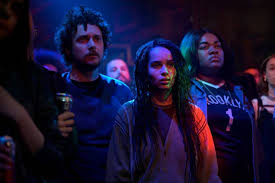
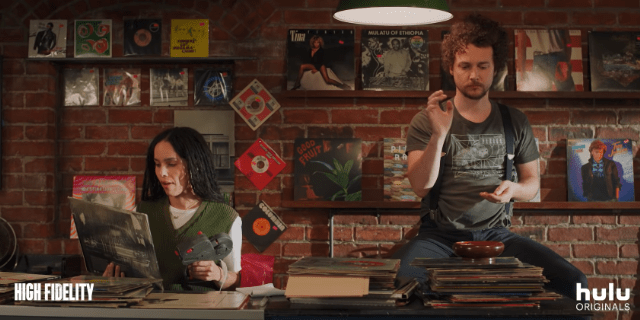
Zoey’s Extraordinary Playlist is a jukebox musical series set in a neon-pink San Francisco starring Jane Levy, formerly of the criminally-forgotten ABC sitcom Suburgatory. High Fidelity is a perpetually night-lit peak TV adaptation of Nick Hornby’s romantic comedy novel of the same name, as well as the 2000 film starring John Cusack. Tonally, it’s hard to find two comedies more different than High Fidelity’s cynical introspection and Zoey’s Extraordinary Playlist’s cheery, worldly optimism.

But seriously. These two shows are the same.

Both shows follow the perspectives of a 20-something female lead living on her own in the city. Both shows force our leads into a love triangle between a soft-spoken, hunky, bearded engaged man and a white-bread, Midwestern-looking nice guy who cares a little too deeply about her. Both leads have a fast-talking, opinionated, plus-sized best friend who exclusively speaks in music references. Both leads have brothers with pregnant wives.

And most importantly, both shows take the stance that music can save lives.

We know High Fidelity believes that because no fewer than three characters say that sentence at some point in the show’s 10-episode first season. Which should be exhausting. But High Fidelity pulls off its portrayal of Brooklyn’s most pedantic and monologue-prone vinyl hunters empathetically enough that it skirts that line.

In this adaptation of High Fidelity as in every adaptation of it, music becomes a character. David Bowie gets more face-time in this series than some of the show’s leads. Multiple characters are told to channel their inner Prince. Too-easy potshots at Creed and Phish reveal more about characters than when they stare directly into the camera and tell you how they feel.

One of the running themes in every version of High Fidelity that I’m aware of is that what you like is more important than what you’re like. But this adaptation blurs that distinction by allowing our lovable snobs to expand on their snobbery. There’s a delightful scene in the back half of the season where a character named Simon launches into a passionate defense of Disco that encapsulates why he likes something by explaining who he is. Scenes like this are the strength of High Fidelity, using music as metaphor to speak to a closed-off character’s inner thoughts.

Of course, that last sentence is actually the premise of Zoey’s Extraordinary Playlist. Log line: One day Zoey wakes up and learns that she can hear other people’s inner thoughts in the form of popular songs. It’s pretty much Eli Stone without the weird hangup on George Michael.

Zoey’s has only aired two episodes so far. But they’ve both landed for me. Because whereas a show like High Fidelity likes to bury its music references in layers upon layers of subtext and rock criticism, Zoey’s references music with all the earnestness of a classic Broadway production.

When a character is cocky, he sings “All I Do Is Win.” When a character is sad, he sings “Mad World.” When characters need help, they sing “Help!” When a character thinks he’s in love, he sings “I Think I Love You.” When a character wants to tell someone that he can see their true colors, he sings “True Colors.” You get the point.

Just like High Fidelity’s unceasing proclamations about the power of music, Zoey’s on-the-nosedness should be exhausting. An interpretative ballet about lonely people who want to fall in love set to Whitney Houston’s “I Wanna Dance With Somebody” is about as on-the-nose as a scene can get. But it also just kind of works.

The strength of Zoey’s Extraordinary Playlist is its perspective. Songs become the clues in its procedural mystery-of-the-week style, with plots A, B and C all being solved by different musical cues. Take the second episode of the show which aired Sunday night. In the A plot, Zoey has to learn to deal with the revelation that her best friend has feelings for her. She knows this because he sings Sucker by Jonas Brothers at her. In the B plot, she has to figure out why her palsy-stricken dad is trying to sing Van Morrison’s Moondance at her mother.

In the pilot episode, I felt myself drawn mostly to the musical numbers. The other scenes were interstitial connective tissue that got me from Tears for Fears to The Partridge Family. By episode two, though, I felt as if the musical numbers were less spectacle and more significant. They weren’t forced or out-of-place. They wove into the narrative of stories the way musical numbers did in two of my favorite shows ever, Flight of the Conchords and Crazy Ex-Girlfriend.

If I haven’t made this clear after about 15 paragraphs, I really like both of these shows. It’s hard for any show to be more up my alley than High Fidelity. Any show that directly calls out my Weezer fandom in the pilot, discusses how Blackstar compares against Bowie’s golden years (pun intended) and has an episode that feature two different songs by The Replacements gets my seal of approval. And Zoey’s is the type of event viewing I haven’t gotten from TV much in the streaming era. It’s a show with a formula built to last but conflict that doesn’t necessarily rely on the formula.

Naturally, High Fidelity is the show that’s probably built to last. Which is a good thing. I think of High Fidelity in the same way I think of timeless stories like King Arthur, Robin Hood, The Hunchback of Notre Dame and La Boheme. High Fidelity is less a singular work and more a standard storytelling template that every generation can and should adapt in different forms. It’s been a book, a movie, a Broadway musical and now it’s a TV show. And it’s a damn good TV show with convincing performances, tight writing and risk-taking plot choices all led by a powerhouse clinic in apathy put on by Zoe Kravitz.

(Side note: It took me three or four episodes to come to terms with Kravitz’s portrayal of Rob. She doesn’t lean into John Cusack’s lethargic and sadsack-y portrayal from the film. She trades that by leaning into how much of an inattentive ass Rob is. At first that was jarring to me. But I came to like it. A lot. It just shows how versatile this story can be. It doesn’t matter what kind of jerk your lead is! He or she can be any type of jerk you want!)

But I hope Zoey’s can survive too. Because now it’s time for me to get exhausting: I genuinely do believe that music is a great healer. And while High Fidelity makes a great argument about how an over-consumption of music can alienate and isolate you from the tasteless hordes, Zoey’s Extraordinary Playlist makes a pretty solid argument about the regenerative qualities of a good bop.

These two shows are endlessly interesting to me. Circumstantially, they’re almost identical. Music-rich explorations into the difficult work-life balances of millennials in the big city don’t come around too often, let alone twice in the same weekend.

But I think it’s best to consider High Fidelity as a yin and Zoey’s Extraordinary Playlist as a yang. For every shoegazing Brookylnite who wants to tell you about how Cyndi Lauper’s Memphis Blues doesn’t suck, there’s a smiling San Franciscan singing Kiki Dee.

So yeah. Maybe music can save lives. Maybe it can’t. But it does make for some compelling television, at least in my book.

MyMusic: The Show That Should’ve Been The Future of Sitcoms

Let’s talk about the best sitcom of this decade that you probably haven’t heard of.

Back in 2012, Google spent $100 million to fund the “YouTube Original Channel Initiative.” Almost a full year before Netflix got into the production game with House of Cards and Orange Is The New Black, Google spent more money than any of us will ever see to try to make YouTube the king of the yet-to-exist streaming wars. 

Google’s attempts to legitimize YouTube as a production platform mostly failed. The Original Channel Initiative was shelved by the end of 2013. By 2015, YouTube Red (now YouTube Premium) proved to be more logical for YouTube. The subscription model favored by ad-based sites like Spotify and Pandora made more sense for YouTube anyway. 

Unfortunately, one of the casualties of this logic was MyMusic. A surreal and bizarre fever dream of a sitcom created by YouTube’s own Fine Bros, MyMusic should’ve been the future of television. And I don’t say that hyperbolically. MyMusic took futurist risks that, if presented in the correct forum, could’ve revolutionized the way we consume and interact with media in the rapidly-revolutionizing future present. 

But that didn’t happen. The show only lasted two seasons before it got the axe, and it’s unlikely to ever return in the full form it existed in from 2012-14. 

So what made MyMusic so different from everything else? Allow me to stop preambling and start advocating for a piece of comedy that was every bit as good as its paradigm-shifting delivery format.

It Begins Again

MyMusic was the most immersive show of the decade. The best term to describe the show is “transmedia,” meaning it was entertainment presented across multiple platforms. There was a way to passively watch the show through its primary format, but there was also a way to actively consume the show through its full scope.

Let’s start with the primary format. On Sunday nights, MyMusic released new episodes of its main show on its YouTube channel. Episodes, which were filmed and scripted in mockumentary format as The Office, Parks and Recreation or Modern Family but set at a music news blog, usually ranged between seven and 12 minutes in length. Every six episodes or so, a series of plots and subplots would resolve themselves and be packaged into “sitcom episodes,” usually running for 30-35 minutes.

The first season lasted 34 episodes with six sitcom episodes. The second season was 24 episodes long with six sitcom episodes. If you’d like to binge the show the way you’d binge a Netflix or Hulu original, you can knock out the 12 sitcom episodes in one rainy afternoon. 

But MyMusic was much deeper than just its narrative. In addition to the main show, which was filmed months in advance, obviously, MyMusic also consisted of a laundry listed of sub-series within the universe of the show. There was The Mosh, a weekly Q&A show with the characters of the show, who would answer questions about the preceding week’s episode and respond to fan mail in character. There was MyMusic News, a weekly news show where characters from the show would analyze and react to the hottest music trends of the week. There was a live variety show, hosted in character by the actors for about an hour every week. There were interviews with musicians. There were full-length podcasts performed and improvised in character. There was a gaming show and a Tumblr reactions show.

And that’s only scratching the surface of how this show existed outside of itself. There was a real MyMusic blog with updates about what was happening in the world of music written in the voices of the characters who would’ve written them. Each character had a Twitter account that was updated frequently in the characters’ voices and would interact with viewers during episodes and during the week between episodes. The characters also had Facebook pages and presences on Tumblr and I’m pretty sure they did Yelp reviews at one point.

If you so chose, you could suspend reality and believe these characters were really people. Sure, you were watching them in a scripted series on Sunday nights. But Monday-Saturday, you could ask them about the scripted series. And in shows like The Mosh and MyMusic News, you could see them react in real-time to the feedback and questions from the fans about the main show. Because in their reality, the show wasn’t pretaped. Everything was live. Even the scripted stuff.

The comparison I always used during my obsession with MyMusic (which came a little after the show had already ended, unfortunately) was that watching MyMusic was like what it would be like if you had a question to ask Sheldon Cooper after an episode of The Big Bang Theory. In the world of MyMusic, not only would you be able to ask Sheldon that question, but he’d be able to respond to you in character and, in doing so, continue the emotional narrative of the show you’re watching. It was like a virtual reality experience in a sense, in that once you’d immersed yourself in the world of MyMusic, you never had to actually leave. You could continue interacting with the show for days and days between episodes and, in effect, become a character in the world you’re watching.

Finally Reunited

Of course, none of this would’ve mattered if MyMusic was boring. But that’s the one word I wouldn’t use to describe the show. Despite its massive overexposure in the form of inundating and invading every sphere of social media imaginable, MyMusic had a sense of humor all its own and used it to create a surrealistic fantasyland. 

Here’s the general premise of the show: MyMusic is a music news blog and production company owned by Indie. Indie has a rule that every employee at the company be identified by the genre of music they identify with. So Indie was Indie. The head of social media was Idol, who adored all things popular and mainstream. Metal ran production. Hip Hop ran marketing. The team of Techno and Dubstep (the latter of whom only spoke in wub-wub noises) handled booking. And the interns are the pop-punk obsessed Scene and the kinda-likes-everything Jim Halpert clone of the series, unaffectionately named Intern 2.

If the show had a theme, it was that “everyone is a poser sometimes.” Characters grew by proving they were more than their one-note characterizations. Indie softened his iconoclastic ways. Idol proved to be witty and savvy and more than her vapid persona. Metal was a family man with a domestic wife and a bratty teenage daughter. And Hip Hop outed himself as a huge nerd who loved cosplay. Nobody is defined by their taste, no matter how easy it is to define someone that way.

Of course, this show thrived by stereotyping its minor characters into the one-note roles it thematically crusaded against. Included in the best minor characters were: News Newsman (a news anchor), Relay Runner (a relay runner), Satan (the devil himself), Scarfman (a pile of scarves), the Rat Protector (a protector of rats), Viking (a viking), Shaman (a shaman who married Viking), The Guess Guy (a guy who always tell people to guess what he’s thinking), Bigfoot (a literal bigfoot who roamed the office), Vampire Temp (a vampire who temped at MyMusic), Murray Spub (a guy who is not a bar) and The Guy Who Pulls Intern 2’s Chair (he’s the guy who pulls Intern 2’s chair). 

The jokes in this show were almost too specific to be understood without a deep understanding of every genre of popular music and culture. The show was just as comfortable referencing Thom Yorke’s spastic dance moves as it was mocking Garth Brooks’ Chris Gaines phase. It was a show just as likely to have characters pray to a pre-fame Avicii as it was to have a character model her office after the 1988 TV special Totally Minnie. It had entire story arcs built around The Patty Duke Show and My Name Is Earl and named characters after members of the band Coal Chamber.

It also involved inexplicable inside jokes. Like a character who is sexually attracted to flow charts having a best friend who is a squirrel. Or how every character in the show had an absurdly-specific superpower they could only use once every 10 years. Or, well, a season-long series of potshots at Chris Daughtry comparing his music to auditory torture. 

Stylistically, the show bore resemblance to its brethren in the mockumentary format like The Office and Parks and Rec. But sense of humor wise, MyMusic was more similar to shows like Unbreakable Kimmy Schmidt or Happy Endings in its joke delivery speed. And it also had remnants of cartoons like The Simpsons and Family Guy in it in the way it relied on one-note side characters and cutaway gags to make the universe feel more lived-in and real.

Saying Goodbye

I think the main reason MyMusic speaks to me so much is how it served as an introduction to so much I love in this world. Many of the actors on the show were YouTube creators or actors who I’d never seen before, and MyMusic exposed me to their creative outputs. Because of MyMusic, I know creators like Jack Douglass and Grace Helbig and Lee Newton and Jarrett Sleeper and so many more creators who dropped in for a cameo or two. 

The show also introduced me to the music of Driftless Pony Club, which I love, and to that band’s lead singer Craig Benzine, who later became my favorite creator on YouTube. And it reintroduced me to the likes of Adam Busch, who I loved on Buffy The Vampire Slayer, and Felicia Day, who starred in Dr. Horrible’s Sing-Along Blog, my favorite piece of media ever made. As well as, you know, keying me in to how The Fine Bros were more than just the REACT kings of YouTube. They were brilliantly clever and absurdist filmmakers willing to push envelopes and take risks with content.

More than that, I think MyMusic can teach you how to create. Anyone can come up with an idea that fits an existing format. But Benny and Rafi Fine synthesized a lot of preexisting formats into a new format entirely. And I believe that had this show been produced on a cable network or a streaming service or on YouTube circa 2017 instead of YouTube circa 2012, it would’ve had the potential to launch a horde of copycats and lookalikes taking advantage of the seductive brilliance of the transmedia format.

It shouldn’t surprise you to learn that I come up with a new idea for a sitcom at least once a month. Sometimes I write them down. Sometimes I flesh out full scripts. Other times, I’ll map out a massive transmedia experience that could exist within a similar framework to MyMusic. Because it really is a great idea if you think about it: If your show never stops creating content, it’s never really off the air. Even while you’re editing and writing new episodes, your characters continue to exist. The less downtime you give your fans, the less likely they are to forget about you and the more likely they are to build bonds with your characters.

Selling someone on MyMusic isn’t just selling someone on a show. It’s selling someone on a concept, and selling someone on the evolving concept of fandom. 

Hopefully I’ve sold you.

Try Real Hard: The Enduring, Heartbreaking Brilliance of You’re The Worst, My Favorite TV Show Ever

The two defining episodes of FX’s romantic comedy series You’re The Worst are mirrors of one another.

First, in Season 2, there’s LCD Soundsystem, a heart-rending portrait of fighting a losing battle against depression. Then there’s season five’s Zero Eggplants, a topsy-turvy romp about inclusion, forgiveness and the inherent selfishness built into chasing happiness. 

At the center of both episodes, there’s a couple we’ve never met before. In LCD Soundsystem, it’s a pair of hip, young parents named Lexi and Rob. On the surface, they appear to be an idealized version of what our protagonists, Gretchen and Jimmy, could be at their best. They’re still fiercely independent. They haven’t succumbed to the life of the “sweater people.” But they also have responsibilities. They have a dog. They have a child. They have jobs they don’t seem to hate. They’re still artsy and adventurous. But they’re grown-ups. Gretchen yearns for their guidance.

In Zero Eggplants, we meet Rachel and Quinn. At this point, Jimmy and Gretchen are engaged. Rachel and Quinn serve the role of “couple friends” that Gretchen is so eager to fill. Like Lexi and Rob before them, Rachel and Quinn are cool in all the ways Jimmy and Gretchen are afraid they aren’t. They like to scam wedding vendors for free swag. Rachel is confident and accepting. Quinn is a sardonic realist. Gretchen yearns for their approval.

In both episodes, Gretchen’s preconceived notions about the couple she’s putting on a pedestal (or, in LCD Soundsystem, stalking) prove to be facades. Rob is bored and unfulfilled by his domestic life. He misses his party days and wants to get a divorce. Rob’s sadness validates Gretchen’s depression and the episode ends on an excruciatingly beautiful shot of Gretchen’s breakdown as directed by series creator Stephen Falk.

Three years later, plenty has changed. Gretchen and Jimmy have won the acceptance of Rachel and Quinn, seemingly breaking the cycle. But now Gretchen fears that very acceptance and sabotages the friendship. (The way she does it involves gaslighting Quinn into believing Jimmy may have raped him. It’s one of the hardest sitcom moments I’ve ever forced myself to endure multiple times.) Then we get a final shot of Gretchen raiding roommate and friend Edgar’s medicine cabinet to steal his prescribed PTSD medication.

Where in LCD Soundsystem, Gretchen was triggered into tears by her depression, in Zero Eggplants she fought to mask it by any and all means necessary.

Constant Horror and Bone-Deep Dissatisfaction

You’re The Worst isn’t just my favorite sitcom of the decade. It’s my favorite television show ever made. Falk’s masterful web of a series seamlessly blended dark humor, high drama, relationship subversions, absurdist diversions and heaping loads of nihilism to create what’s often mislabeled as the quintessential “un-romantic comedy.”

The truth is this show is incredibly romantic. Assuming you’re using the word romantic to mean idyllic. Because at the center of this show, there are two true questions: Do broken people deserve love? And can broken people overcome their flaws to find that love?

If those are the two main questions at the center of the show, the two answers come in thesis statements spoken by our protagonists. The first comes from Gretchen in my favorite episode of the show, the Season 3 premiere episode Try Real Hard. Near the end of the episode, Gretchen synopsizes the show’s purpose in two sentences.

If ‘I love you’ is like a promise,” Gretchen says to Jimmy in the episode’s climactic scene, “it’s just a promise to try real hard. It doesn’t mean you can’t fail.” 

The other thesis statement comes from Jimmy in the series finale, Pancakes. Sitting at a diner dressed in the vestigial reminder of the wedding they’ve abandoned, Jimmy outlines his future with Gretchen. It’s as gentle and sweet as it is discomforting and challenging. 

“Every day, we choose,” Jimmy says. “I don’t want to be with you because I made a promise to be with you. I want to be with you because I want to be with you. So every day we wake up, we look at each other and say ‘Today, again, I choose you. Until maybe one day we don’t.”

There, in two quotes, is the distillation of why I think You’re The Worst is the perfect sitcom for this era. The 2010s were rife with shows about relationships that probably shouldn’t work. In an era where the romantic comedy movie industry bottomed out, TV romantic comedies peaked with shows like Love, Catastrophe, Casual, New Girl and, to a weird extent, Crazy Ex-Girlfriend. 

But none of those shows captured the messiness of relationships quite like You’re The Worst did. Gretchen and Jimmy’s love story is one of the messiest ever filmed. Their love story is one that resulted in multiple fires, a stolen cat, a best-selling novel, a cliff-top abandonment, multiple affairs and enough jealous rage to make Ross Geller look like an enlightened Buddhist monk. Calling You’re The Worst realistic seems like a stretch. It’s also a show that paints Ben Folds to be an alcoholic menace to society and Paul F. Thompkins as an emotionally abusive boss who seeks gratification by forcing his proteges to over-gorge themselves on office snacks.

At its core, though, You’re The Worst is a show that idealizes and advocates for a different type of commitment. People like Gretchen and Jimmy aren’t built to conform to modern standards of love and romance. But they still deserve love. In each other, they’ve found it. Messiness and all.

Fix me, dummy

I have a functioning theory that the five seasons of You’re The Worst can be viewed through the prism of the five stages of grief. That’s not to say the show is about grief. If anything, the show is about a depressive and a narcissist trying to find common ground in each other. But each season of the show mirrors one of the proverbial five stages in theme.

Season 1 functions as a clinic in denial. The whole first season consists of people telling Jimmy and Gretchen that they’re wrong for each other while Jimmy and Gretchen ignore them. In fact, Jimmy and Gretchen’s first date is to a restaurant called “Insouciance,” which is a fancy word for unconcerned indifference. The second Gretchen thinks Jimmy is looking for a commitment, she bails. The season can only end when Jimmy and Gretchen stop denying their magnetism and move in together. 

Season 2 transitions into anger. Given the season’s very explicitly written depression arc, it feels like this stage should be sadness. But we’ll get there. Because I think there’s an underlying anger to the second season. One of the first trigger’s for Gretchen’s depressive episode comes in Born Dead when she lashes out at her old posse for leaving the party life behind. But the main manifestation of anger is Jimmy, who spends the back half of the season festering in a pool of frustration over not being able to “fix” Gretchen. The two can’t move onto the next stage of their relationship until Jimmy abandons his anger and simply acts altruistically, inadvertently “fixing” Gretchen. For the time being.

Season 3 leads to bargaining. In addition to being my favorite season of the series, this one is also the most experimental and layered. The season begins with Gretchen’s negotiation in Try Real Hard and progresses through every main and secondary character making sacrifices for their own happiness. Edgar gives up his medication to be with Dorothy. Lindsay cuckholds Paul for the sake of their marriage. Vernon tries to convince Paul to run away from their families to avoid obligation. And Jimmy and Gretchen? They make every excuse possible to justify their relationship and nearly break up because of it, but the season ends with a proposal. Well, not ends. Unfortunately, there’s another two minutes of the season that ends with Jimmy abandoning Gretchen with no warning or explanation.

Season 4. Now we’re at depression. This season is just downright sad. Jimmy is broken and defeated by the realization that he’s not as elite as he thought he was. Gretchen’s depression becomes an escapist nightmare in the episode Not A Great Bet, where she overdoses on manic enthusiasm, nearly commits statutory rape and sulks away from her hometown without meeting her brother’s child. And the relationships keep taking hits. In Worldstar!, Jimmy and Gretchen both want to reconcile but the episode ends with Jimmy having sex with another woman while Gretchen watches and self-pleasures. One episode later, Gretchen has sex with her boyfriend’s ex-wife. It’s only when Jimmy finally fights for Gretchen instead of letting circumstances dictate their sadness that their relationship is rekindled.

Season 5, finally, is about acceptance. Not accepting grief, mind you. Accepting yourself and accepting those around you. Gretchen has a great monologue in the penultimate episode We Were Having Such A Nice Day where she confirms this theory, telling Jimmy unconditional acceptance is all she ever wanted. But it’s more than that. The season is about Edgar accepting himself and finally gaining Jimmy’s respect. It’s about Lindsay and Paul growing separately until they reach a point where they can accept their love for one another. It’s about Becca accepting her love for Vernon and her need to be maternal. And most importantly, it’s about Jimmy and Gretchen accepting that they’ll never have a normal relationship. Their relationship only reaches the point it’s supposed to when they finally accept that they can’t conform to the normal constraints society expects.

On Intransigence

The first episode of Season 5 is titled “The Intransigence of Love.” Like standout one-off episodes Twenty-Two, The Seventh Layer and the aforementioned Not A Great Bet before it, The Intransigence of Love is a character episode that contributes virtually nothing to the plot of the show. It’s a spoof of 90s rom-coms that centers on Jimmy and Gretchen telling elaborate lies about their love story to avoid confronting the true messiness of their relationship.

But there’s also something uniquely satisfying about beginning the final season with an episode that describes love as intransigent. Intransigence means inflexible, uncompromising, disagreeable. And so too is Jimmy and Gretchen’s love story for most of the series. The two keep running into walls because their love was intransigent. 

Where the show ends, that intransigence becomes an asset. Jimmy is incapable of change, a fact Gretchen calls him out for in Bachelor/Bachelorette Party Sunday Funday. Gretchen is famously resistant to love and support, a fact her mother calls her out on in We Were Having Such A Nice Day. Jimmy’s rigidity and Gretchen’s fear mix into a cocktail for a hopeless relationship.

That’s not what happens though. They answer the central question of the show by continuing to choose one another. In our glimpse into their future, we see this doesn’t go perfectly. Gretchen still continues to cry uncontrollably in bed even when she and Jimmy’s child is crying right next to her. And in her final moments of the series, Gretchen lets Jimmy know she’ll always be a risk to walk in front of a moving train without warning.

Jimmy says he’ll move on quick.

I didn’t. I don’t think I’ll ever move on from this show. It’s whip-smart and devastatingly modern and just so darn funny. If loving this show is like a promise, it’s just a promise to try real hard. It doesn’t mean I can’t miss it forever.

Greatest Hits: A Crazy Ex-Girlfriend Retrospective

Nothing makes me laugh more than a silly song. The relationship between comedy and music has always been my favorite one, and the one that has defined my life more than any other.

My favorite piece of media ever filmed is Dr. Horrible’s Sing-Along Blog, the 2008 musical superhero mini-movie written and directed by Joss Whedon. I rewatch it at least three times a year.

My favorite movie ever is John Carney’s 2016 masterpiece Sing Street. It’s a comedy about a kid in Ireland in the 1980s who starts a band. I listen to the soundtrack all the time and rewatch the movie once or twice a year.

If someone asked me what the greatest song ever written was, I’d probably tell them it’s “Issues (Think About It)” by Flight of the Conchords. If someone asked me who my childhood heroes were, I’d tell them Andy, Jorma and Akiva from The Lonely Island. The comedy special I think about more than any other is Bo Burnham’s Make Happy, a melancholy blend of comedy, performance art, therapy and music. 

In the 2010s, Crazy Ex-Girlfriend earwormed its way into my soul. 

This decade was full of sitcoms that changed my perception of the world. But I don’t think there was another show that challenged my belief system and understanding of humanity like Crazy Ex-Girlfriend did. Not just in the way that it made me more compassionate and understanding, but also in the way that it taught me truths about myself that I didn’t yet know.

But enough about the sappy stuff. Let’s talk about songs.

Ranking all the 130 or so songs in the Crazy Ex-Girlfriend catalogue would take too long. (And I’m pretty sure Vulture already did it.) So I’ve decided to pick 20 CXG songs and make my version of a greatest hits record.

Keep in mind, these aren’t necessarily my 20 favorite songs. And they’re definitely not 20 songs that tell the story of the show. I’ve just picked 20 songs (five from each season) that I think do a good job of showcasing the talents and strengths of this wonderful, wonderful show. 

Some of them are heartfelt. Some of them are plot-heavy. Some of them are parodies. But they all work. And all of them have incredible laugh-out-loud moments that still make me giggle after dozens of listens. 

So here it is. A Crazy Ex-Girlfriend Greatest Hits Album, listed chronologically based on when they aired:

Track 1: Feeling Kinda Naughty (Season 1, Episode 2)

Whenever I try to explain the sense of humor of this show to anyone, this is where I start. Parodying I Kissed A Girl in 2015 should’ve already been well-tried territory. But Rachel Bloom pulls it off with deeply disturbing lyrics that all my poor friends recoil at when I play this for them because they never see it coming.

Locking a girl in your basement. Stealing her baby teeth. Taking measurements of her body so a surgeon can transform you into her clone. All in the name of “feeling kinda naughty.” If the two songs in the pilot (West Covina and The Sexy Getting Ready Song) were a thesis statement about the topics and themes the show would attack, Feeling Kinda Naughty is the proof that comedy wouldn’t get in the way of those themes. They can coexist. And they did.

Track 2: Settle For Me (Season 1, Episode 4)

Settle For Me is a difficult song to write about for me. I’m attracted to this one for the jokes. And with lines like “If he’s your broken condom, I’m Plan B,” Settle For Me might contain the best wordplay of any song in the show.

But I also think of this song as one of the most manipulative in the show. I’m not #TeamGreg (more on why later), so when I hear him singing about how Rebecca should lower her expectations to settle for him, I feel genuine frustration. First off, don’t tell her what to do. Second off, don’t expect everyone else to conform to your expectations.

I think I feel so much frustration with this song because some of my least proud moments have come when I thought like Greg. I can relate to his character for all the wrong reasons.

That shame is another reason why I get so much pleasure out of this song, though. Settle For Me packs itself with jokes, but also with a deeper twinge of awareness of the selfishness that comes with trying to make someone fall in love with you.

Track 3: What’ll It Be (Season 1, Episode 6)

After three paragraphs of ritualistically shaming Greg, now I’m back on his side. Because What’ll It Be — Crazy Ex-Girlfriend’s pitch perfect parody of Piano Man — is a remarkable achievement. 

At its core, Piano Man is a song about arrogance. The whole ‘Man, what are you doing here?’ vibe of the song reeks of ego. And Greg’s ego takes centerstage in this one. But this time, we sympathize with Greg’s ego. He feels trapped. He wants to leave but he can’t. He’s unhappy and he feels like there’s no way out of it. 

Santino Fontana’s performance is magnificent. He’s smug. He’s smarmy. He’s all sorts of arrogant. But he’s also pitiable and soft and you can’t help but yearn along with him. This song rules.

Track 4: You Stupid Bitch (Season 1, Episode 11)

You Stupid Bitch is probably the most painful song in the series. Rebecca’s self-indulgent self-loathing marks the turning point in the series (along with “The Villain In My Own Story,” which comes four episodes later). This song is when it becomes evident that Rebecca’s actions will have repercussions, and that Rebecca’s move to West Covina wasn’t as whimsical as it might’ve first appeared to be.  

It still pains me so much to hear Rebecca smile through the line “Yeah, you guys know this one” at the top of the song. She’s singing about shaming herself into a spiral of self defeat. She’s singing about the weight of her actions feeling like being crushed by a boulder. She calls herself a bitch and a slut and horrible and stupid and dumb and ugly and fat and simple. And the worst part is when she says she deserves all of it.

It’s a song about self-hate, a feeling I think we’re all ashamed to say we can relate to. But Crazy Ex-Girlfriend made such an artful and compelling ode to this feeling. And it’s the song that turned this show for me from something I mindlessly enjoyed into something I was deeply invested in.

Track 5: Oh My God I Think I Like You (Season 1, Episode 17)

It’s nearly impossible for me to choose just one song from this episode. I Gave You A UTI might be the pound-for-pound most joyful song in the show. But ultimately, I’m gonna pick Oh My God I Think I Like You. And not just because it reeks of influence from my girl Carly Rae Jepsen. Also because this song reeks of the tone Rachel Bloom thrived on before Crazy Ex-Girlfriend was ever a thing.

The sweet, bubblegum vibe of the song juxtaposed against the raunchy, oversexualized lyrics are funny. But Crazy Ex-Girlfriend already traversed that territory with the aforementioned Feeling Kinda Naughty. What this song adds is heart. It’s both sweet and tragic when you hear a lyric like “But as my body’s getting ruined, like, really trashed, I only wanna look in your eyes.” 

Then there’s the bridge. “Are there condoms that can prevent these feelings? Is there spermicidal lubricant that can kill the fluttering in my heart? Is there an IDU that can stop the image of you and me getting married on a hillside surrounded by ducks and then we get into the rowboat… Oh My God I Think I Like You.”

I don’t talk much (or enough) about acting or direction. I mostly focus on the songs and lyrics. But Rachel’s performance on that last line as she’s having her head pushed down the front of a fridge but conveys all that meaning in her eyes? Man, that’s just great. Great for comedy and great for, to quote this song, the feels.

Track 6: The Math of Love Triangles (Season 2, Episode 3)

This song says nothing about the show and it doesn’t need to. The Math of Love Triangles is a spot-on parody of Marilyn Monroe with the most surprising and genuinely impressive vocal performance Rachel Bloom pulls off in the show. 

It’s three minutes of sex jokes and triangle puns. There’s not much else I can add. It’s a masterpiece of songwriting and set designing and choreography and testing the limits of my memory of my 10th grade trigonometry lessons. This song was as funny on Crazy Ex-Girlfriend as it would’ve been on SNL or as a Robin Sparkles bit in How I Met Your Mother. It’s just a straight-up funny song. No need to overthink it.

Track 7: We Tapped That Ass (Season 2, Episode 4)

When it comes to songs that bang, the first half of Season 2 feels like Crazy Ex-Girlfriend’s peak. This most evident in the first 20 minutes of Season 2, Episode 4 when we get Greg’s heart-wrenching goodbye song “It Was a Shit Show,” followed closely by Josh and Greg going all dream-ghost-adjacent with We Tapped That Ass.

It’s pretty clear at this point that my musical theater knowledge isn’t all that extensive. Nor is my knowledge of classic musical cinema. But even I got this reference. And I laughed my way through it. It’s crass. Sometimes the humor borders on immature. But it also radiates joy in a way only a song performed by Santino Fontana and Vinny Rodriguez could. 

The wordplay is fresh. The dancing is mesmerizing. And there’s an underlying hint of self-loathing reminiscent of You Stupid Bitch layered throughout the song since Rebecca is the one imagining this whole thing. It’s a phenomenal song, and a fitting farewell for Greg. For now.

Track 8: You Go First (Season 2, Episode 7)

If I’m ranking my personal favorite songs in the series, this is probably in second place. You Go First is an obvious parody of 80s female power ballads by acts like Heart and Bonnie Tyler. And it just works so, so well. 

You Go First might be the most passive aggressive song ever written. Performing an entire song about wanting to reconcile with your friend, but only after she reconciles with you is a masterstroke of making fun of how dumb the human condition really is. The whole bit about rehearsing an “Oh, no no no, please” response to an apology feels way too real. 

Then there are the billowing curtains. The ever-growing mullets. The acrobatic dancer straight out of an Olivia Newton-John video. Paula’s dope-ass leg kick. This is the most aesthetically hilarious song in the series, and it’s a song that I think might read as funny to people who haven’t even seen the show. It just works. 

Track 9: Santa Ana Winds (Season 2, Episode 11)

It’s hard to call this one song. Santa Ana Winds is a running gag throughout an entire episode that you can composite into one song. And if you do, you get one of the best bits in the whole show. 

A Jersey Boys spoof about a natural phenomenon native to the west coast is too specific of a joke. It shouldn’t work. But it does. It works really, really well. Pair in some science jargon reminiscent of the math puns in Triangles and a harrowing throwback to You Stupid Bitch and you get yourself an earwormy pop song that also reveals so much about Rebecca and the self-defeat that she’s layering on top of her self-hatred. 

Track 10: Let’s Have Intercourse (Season 2, Episode 11)

Two songs from the same episode? That must be a darn good episode. (It is.) 

Let’s Have Intercourse has ruined Ed Sheeran for me. Not just Thinking Out Loud. But all of Ed Sheeran’s work. This song is such an eviscerating takedown of Sheeran’s vibe that I can’t listen to his music anymore. (Fine, Castle On The Hill is ok.)

Every joke in this song lands. From the bit about Nathaniel acknowledging Rebecca’s intellect and demeaning her appearance in the same sentence to “you could use the exercise” to rhyming unfortunate with “contortion it” to wondering about nipples. All the jokes land. What an introduction for Scott Michael Foster as the best comedic force in the show’s later seasons.

Track 11: Let’s Generalize About Men (Season 3, Episode 1)

I don’t like using terms as prosaic and oversimplified as “best” or “favorite.” (Says the guy who devoted six months of his life to ranking the 50 best sitcom episodes of the 2010s.) But yeah. Let’s Generalize About Men. It’s the best. It’s my favorite. No questions.

It’s bright. It’s colorful. It’s dripping with hairspray and irony. In the live concert retrospective for the series, Rachel Bloom described this song as simultaneously feminist and anti-feminist. It reminds me a lot of TGS Hates Women, the episode of 30 Rock where Cristin Milioti guest stars as an over-sexualized Barbie doll of a woman who Liz tries to change, but unwittingly reveals her disguise and exposes her to a stalker. It’s well meaning in all the wrong ways

Let’s Generalize About Men also has some of my favorite vocal performances in the series. Especially Vella Lovell. She just feels like she belongs in a Pointer Sisters or Weather Girls song. Not to mention Gabrielle Ruiz’s growly growl. It’s just so damn perfect.

Track 12: I Go To The Zoo (Season 3, Episode 3)

Confession time: I’m #TeamNathaniel. Reformed frat bro with a conscience is such a phenomenally specific and poignant trope to lean on, and the show did it so well. Especially in Season 4. But you can see the seeds of it in Season 3, especially with this song where he drops the hardened facade and sings about his love for fishies and cheetahs and kangaroos and monkeys whose eyes look like his.

Based on the colors and beat, this song is probably a spoof of Hotline Bling. But it always felt to me like a takeoff on musicians like Jason Derulo and Flo Rida, guys who constantly brag about the money and women and parties they’re around. It comments on the emptiness of the over-commercialized pop and hip hop industries much in the same way that Lorde’s Royals did a few years before. With a few built in jokes about bottle-feeding panda cubs.

Track 13: A Diagnosis (Season 3, Episode 6)

In a lot of ways, I think Season 3, Episode 6 is a second pilot for Crazy Ex-Girlfriend. Two episodes before, with “Josh’s Ex-Girlfriend Is Crazy,” the arc of the first two seasons ended. The following episode, “I Never Want To See Josh Again,” functions as an interlude as the characters cope with denial. Then the show reboots itself with “Josh Is Irrelevant.”

If we’re assuming Josh Is Irrelevant is a second pilot, then A Diagnosis serves the function that West Covina did in the original pilot. Rebecca’s got a new plan for how to feel better, a new lavish musical theater number to explain it and a new iconic dress to mark her mood. (Is it a coincidence that the dress in West Covina is blue, the color of depression, and the dress in A Diagnosis is yellow, the color of the sun? Probably not.) The only difference? West Covina was about finding validation in others. A Diagnosis marks the beginning of Rebecca’s difficult and complicated journey to self-discovery.

Sure, this song has jokes. The bit about hearing voices makes me chuckle, and the jab at naturopathic medicine is funny. But this song is more than jokes. It’s a fresh start. It’s a new lease on a show that got incredibly dark so that the sun could rise again. It’s such an important song for the series, and it’s one that gives me hope.

Track 14: Without Love, You Can Save The World (Season 3, Episode 9)

Full disclosure: Without Love, You Can Save The World came out a whopping three days after the beginning of a hard breakup that took me about two months to get over. So I leaned on this song pretty hard when it first dropped, and I’ll always have some sentimental connection to it because of that.

But also, this song is just really clever. “Forget who you did, think about what you can do” is such an awesome thesis statement. The entire cast rocks it in this song. And I still have major beef with the Spotify version of this song not including the best line: It’s an asexual utopia! 

Honestly, I love a good full-cast song. I think this is the first one I’ve included so far. But as the show neared its end, it added in a few great full-cast ditties. Can’t wait to talk about all those.

Track 15: Nothing Is Ever Anyone’s Fault (Season 3, Episode 13)

Picking a fifth song from Season 3 was probably the hardest choice for this list. I probably should’ve gone with The End of the Movie from Josh’s Ex-Girlfriend Is Crazy. But in my last album binge before I started writing this, I rediscovered this gem from the Season 3 finale.

Nothing Is Ever Anyone’s Fault is one of the simpler, more straightforward songs in the series. It’s about denial. Rebecca and Nathaniel are denying culpability for any of the bad things they’ve ever done because they have traumatic backstories. In five words: Psychology is a great excuse. 

Is the Hitler bit a little overused? Maybe. But calling the big bang the ultimate bad father and blaming it for the entirety of human suffering is a darn-near perfect way to lampoon delusion. There were funnier songs in Season 3 I could’ve picked (The Moment Is Me, Buttload of Cats, etc.). And there were more ambitious and catchy songs (First Penis I Saw, This Session Is Gonna Be Different, etc.). But this song is a perfect ending to the complicated and powerful third season of this complicated and powerful show.

Track 16: No One Else Is Singing My Song (Season 4, Episode 1)

Another personal connection: This episode and song debuted on a day where I moved to a new city where I didn’t know anyone. For the second time in four months. I was stressed. I was scared. I was lonely. This song almost made it better.

There’s a website called The Dictionary Of Obscure Sorrows that aims to make new words and definitions for feelings that we all have but don’t have words for. (I learned about it through a YouTube review of an episode of Buffy The Vampire Slayer. Yay, television!) One of those words is “sonder,” which the DOOS defines as “the realization that each random passerby is living a life as vivid and complex as your own.” 

This song, bitingly sarcastic as it may be, led to me accepting the truth of sonder. If you ever feel alone, scared, beaten or tired, it’s easy to sing this tune. It often feels like we’re the only people going through our sorrows. But we obviously aren’t. Everyone is experiencing something.

That’s the beauty of this song. “Maybe while I’m singing my song, someone else is singing along.” That’s it. That’s the whole value of this song. It makes me feel all the right emotions.

Track 17: Don’t Be A Lawyer (Season 4, Episode 3)

Now for something completely different.

Heading into Crazy Ex-Girlfriend’s fourth season, I was afraid the show had ran out of genres to parody. Then I heard Don’t Be A Lawyer and realized I was so, so wrong. This pastiche of every new jack swing cliche is one of the better genre parodies the show ever did. And unlike songs like Settle For Me or You Go First, Don’t Be A Lawyer comes from a genre that isn’t often parodied. So all the vocal and choreographic cliches being pointed out seemed like original jokes rather than retreads.

The bow on the whole song is the great line where Jim sings “there are so many other professions that won’t turn you into Jeff Sessions.” This show rarely went topical or political, but when it did the jokes landed hard. Even if that line won’t age super well, in 2018 it was perfect.

Track 18: Trapped In A Car With Someone You Don’t Want To Be Trapped In A Car With (Season 4, Episode 6)

By sheer coincidence, I think I’ve picked almost all of the songs with the longest titles in the show. Weird.

Anyway. Of course I’m going to pick the never-ending song that manages to parody three different phases of the Beach Boys’ career in one ever-shifting song. They nail the Fun, Fun Fun era. They nail the Pet Sounds era. And they absolutely slay the Kokomo era. 

The lighting, sets, dancing, vocal harmonies and barking-dog sound effects were all on point. And using the Beach Boys as the backdrop for a road trip song is just meta in all the right ways. The first (indescribable) instant I heard this song, I knew I’d love it. And I was right.

Track 19: I Hate Everything But You (Season 4, Episode 12)

I’ll be brief with this explanation. Skylar Astin rocks doing a Bruce Springsteen impression. Instead of explaining why this song is good, here’s just a list of all the words in the song that make me laugh when they’re growled in a Bruce voice:

Hour, bling, everything, shampoo, “the wave,” Caddyshack, true, done.

Track 20: Love’s Not A Game (Season 4, Episode 16)

The last completely original song in the series is also the best ensemble number in the show. Everyone gets a moment, from Mrs. Hernandez to Sunil to Jim and Tim and George and our beloved Father Brah. And every joke works. 

It’s a little weird to me that most of the jokes come at the expense of Josh, positive ones and negative ones. But that’s a small gripe for a song that otherwise rules. The colors alone are enough to entrap you like a siren’s call. But then you look closer and see the inside jokes scribbled on the betting boards. And you notice the irony of WhiJo leading the callback to Group Mind. 

I like Eleven O’Clock. It was a fitting and proper send off for a show I obviously love. But this was the real goodbye song for me. It’s fun. It’s vibrant. It’s funny. It’s biting. And it sums up just about everything I love about musical comedy. Like Crazy Ex-Girlfriend as a whole, I guess.

Please Don’t Yell At Me: A Defense of the How I Met Your Mother Finale

“I don’t spend a lot of time thinking ‘What if?’ I guess that’s happiness.”

That’s a line that didn’t make it into Last Forever Part 2, the final episode of How I Met Your Mother. There’s a deleted scene that takes place about six or seven years in the future. Ted and Robin are having lunch. They’re reconnecting after a few years of not seeing each other. Robin brings up the old pact they made, that if neither of them is married by the time they’re 40 they’ll marry each other. But Ted isn’t interested. He’s in love. 

I’ve got a theory as to why this scene didn’t make it into the final cut of the finale. For one, it’s a little too on-the-nose. But beyond that, I think including this scene would’ve deprived Ted of the opportunity to end the series with a moment befitting his most defining character trait.

Great characters, no matter what genre of fiction they come from, make choices. Oftentimes when you’re bored watching a work of fiction, it’s because things are happening to characters. The exhilaration we feel from a great moment almost always comes when a character makes a choice. Memorable moments aren’t telegraphed. Memorable moments aren’t accidents. They happen when characters we love make tough decisions.

There’s a lot I can say about Ted Mosby the character. A lot of which negative. A lot of that because I think he and I are dangerously similar. But one thing no one can say about Ted Mosby is that he’s afraid to take risks. When Ted Mosby makes a choice, he goes to every possible extreme to make that choice. He doesn’t just choose; he plunges.

Which is one reason why I don’t think this scene works. If Robin was the one who opened the door, that would’ve robbed Ted of his stupid, giant, romantic gesture. He needed to come to the realization on his own. He needed to initiate the reunion. He needed to be 100 percent sure that he made the choice to follow his instincts and do what he thought was right.

In the version of Last Forever Part 2 that aired, Ted made that choice.

He made the right choice.

Defending a TV Episode Everyone Hates

In this long, glorious decade of sitcoms, I don’t think there’s been any single episode that has drawn more criticism than Last Forever Part 2. On IMDB, How I Met Your Mother’s finale has a rating of 5.6 out of 10. That’s the lowest rated episode of the show. Lower even than the disastrous misstep that is Bedtime Stories. To put that in perspective, 5.6 is also the rating of the episode of Two And A Half Men that replaces Charlie Sheen with Ashton Kutcher. That’s the company Last Forever Part 2 is in.

And here’s the thing: I understand why all these years later people are still frustrated with the way HIMYM ended. The finale feels both abrupt and drawn out. After a season that spend upwards of 20 episodes fixating on one weekend, we get one hour to explain about 11 years. We get one sentence of dialogue explaining Tracy’s death, but we get a full season of back-and-forth between Ted and some random lady on a bus bench. The entire episode is fixated with “not missing the big moments,” but all we ever see is characters we love sitting around and talking about big moments. We never actually see the big moments, save for a brief glimpse at Ted and Tracy’s wedding that’s drowned out by voiceover.

Most importantly, there’s Ted’s choice. I understand why a fan might be frustrated by the series ending with Ted going after Robin one more time. We spent nine years listening to the most dramatic, romantic and convoluted love story ever told, only to have the show end with a relationship we had spent nine years being told could never happen.

As I said, I understand if you think this way. But I don’t. I think Last Forever Part 2 is more than just an ending to a series I loved. I think it was the right ending. I think any other ending would’ve felt cheap. It would’ve felt fake. Because at the end of the day, How I Met Your Mother was never a show about being happy. It was a show about chasing happiness. It’s only right for a show all about the pursuit ending with one more quest.

Like it or not, How I Met Your Mother was a messy show. There’s a significant quality dip after Season 5. If I’m being honest, three of the five best episodes of How I Met Your Mother that aired this decade came in January of 2010. Girls vs. Suits, Jenkins and The Perfect Week aired back-to-back-to-back as the first three episodes of the decade. The only episodes after those that remotely live up to that standard of quality are The Final Page and How Your Mother Met Me. 

But I don’t call How I Met Your Mother messy as a commentary on its quality. I think the show was messy more in the way that none of its characters were ever perfect. For a show that has often been accused of being a Friends ripoff, I think one major distinction (salute: major distinction) between the two shows is the characters on How I Met Your Mother lack a lot of the polish that the characters on Friends had. Ross and Rachel and Joey’s flaws were played for laughs. Ted and Robin and Barney’s flaws were played for character development.

The characters on Friends aged. The characters on How I Met Your Mother grew up. And I think that’s the main reason a lot of fans hated the finale of How I Met Your Mother. Most great network TV shows don’t ask their characters to grow or change. Chandler was always a smart-aleck. Joey was always horny. Monica was always Type A. Phoebe was always flighty. Ross was always the hopeless romantic. And while Rachel changed a lot on the surface, she was always the one who made rash decisions, whether she was running away from her wedding or getting off a plane to abandon her new career on a new continent.

On HIMYM, the characters grew. That’s what made the finale so hard to watch. We were watching messy people grow out of their early 30s and into true adulthood. It might’ve been rushed, but we got to see Barney graduate from lothario to father. It might’ve been rushed, but we got to see Robin live out her dreams and realize her dreams didn’t make her as happy as she’d hoped. And, most importantly, we got to see Ted in his element, finally being the loving husband and loving father he always wanted to be. 

If the characters in the finale didn’t feel like the characters we’d spent nine years watching, it’s because they weren’t. They grew up. They became actualized versions of themselves. 

Season 9 of How I Met Your Mother is bad. Real bad. It’s the Be Here Now of sitcom seasons. All the hype in the world couldn’t prevent it from being a bloated mess so far up its own butt that it forgot to prioritize substance over style. But all that said, it ends on the right note.

In the moment, I struggled to find the good in the finale. I remember watching the episode as it aired and I couldn’t speak or move or do anything but blink for about five minutes after the show ended. I was shocked. I’d spent a year watching Robin and Barney’s wedding, and they got divorced 30 minutes in. I’d spent nearly a decade rooting for Ted’s happiness, and it lasts about 45 minutes before the woman of his dreams dies.

None of this seemed fair. This wasn’t the happy ending we wanted.

But the point of How I Met Your Mother was never to be happy. To go back to Ted’s quote from that deleted scene, showing Ted when he’s in the throes of happiness isn’t compelling. It might be satisfying in the moment, but it isn’t memorable. And more than that, it isn’t real. 

Real life is messy. Real life takes twists and turns we don’t expect. Most people don’t get their happy ending. And if they do, they only get it for a few fleeting moments. Happiness is elusive. 

But great characters — and by extension, great people — never give up on their quest to be happy. Ted Mosby is the ultimate symbol of that. He’s a hopeless romantic who is never shaken from his belief that true happiness is always one grand gesture away. 

That’s where the show had to end. Not on Ted finding happiness. But on him looking for it. 

Into the Schurniverse: How The Office, Parks and Rec, Brooklyn Nine-Nine and The Good Place Changed My Perceptions About Humanity

Chapter 1

I have a complicated relationship with The Office.

I started watching The Office back in 2008. The show was in the middle of its fifth season on NBC. Around that time, the show started airing in syndication on TBS. For the life of me, I’ll never be able to forget the lame commercials of Office cast members guessing what TBS stands for. (Does it stand for tablespoon? Wouldn’t know. ‘Nard dog doesn’t cook.) I also had a couple friends who were fans of the show who lent me the first two seasons on DVD so I could catch up.

Soon after, watching The Office started factoring into my weekly schedule. Not just Thursdays on NBC. But Tuesdays on TBS, so I could catch up as efficiently as possible. The show had a system of joke delivery unlike anything else I’d discovered up to that point. It was faster than The Big Bang Theory or How I Met Your Mother. But it wasn’t as dense as Arrested Development or Scrubs. It was paced like real life. It felt grounded. It felt comfortable.

The only problem? Right around when I started watching The Office was right around when The Office stopped being worth watching. I know there are staunch defenders of Seasons 6 and 7 of The Office, but the show really took a dip after Season 5. And it took a much more precipitous dip at the start of Season 8. 

Still, without fail, I watched every Thursday night. I never missed an episode. Even when I was in college and could’ve been spending time with friends or making memories, I’d cuddle up on my futon to see what diminishing returns I could get from a show that obviously wasn’t what it used to be. 

When the show ended, my high school friends and I had a watch party. We laughed. We tried to pretend we weren’t crying. We raved about how good the ending was. It was perfect.

And then I stopped watching the show. Never really felt it necessary to do a rewatch. 

And now, six-and-a-half years later, with enough distance from the show to only remember feeling and tone, I kind of resent the show I used to love. 

Chapter 2

I have a complicated relationship with Parks and Recreation too.

I remember watching the first season of the show as it aired. Amy Poehler was the first cast member from my generation of SNL to leave, and I was happy to follow her to primetime. But there was one hitch: The show kinda sucked.

It was too much like The Office. Leslie Knope was a little too similar to Michael Scott. The characters weren’t all that interesting. The narrative didn’t grab me. The jokes felt a little done. By the middle of the second season, I gave up on watching the show. It wasn’t for me.

Then, of course, a funny thing happened: The show got good. And it wasn’t until three or four years later when I admitted I had to catch up. Injecting Adam Scott and Rob Lowe into the show gave it a pick-me-up. Adjusting Leslie Knope’s character from a Michael Scott clone to a caring, selfless, competent, sometimes-stubborn and — most of all — likable character grounded the show into something even more relatable than The Office was. And it didn’t hurt that Aziz Ansari’s stand-up career took off, attracting me back to the show as well.

I started watching the show again with a little more regularity. I never regretted when I did. But I’ve also never brought myself to watch the show in order. I’ll watch reruns when they’re on. But there’s no part of me that wants to revisit those stale, lame first two seasons that I hated while they were on.

With most shows, you’re probably better off if you don’t watch the last couple seasons. Parks and Rec is the opposite. It’s a show I’ll always recommend people to watch, provided they skip to the last few episodes of Season 2 and treat Chris and Ben’s introduction as a pilot. Anything before that? I have no interest in. None at all.

Chapter 3

I have a, you guessed it, complicated relationship with Brooklyn Nine-Nine as well.

Brooklyn Nine-Nine’s pilot premiered on my 19th birthday. I’ll never forget it because I was sexiled. My roommate and his girlfriend were up in my room canoodling. They’d arbitrarily decided to celebrate their one-year anniversary on my birthday. So I was locked out of my room, left to watch Brooklyn Nine-Nine in our common area with two other dudes we lived with who had no interest in staying quiet while I tried to watch my stories.

Growing up, I idolized Andy Samberg. I would memorize every weekend’s SNL Digital Short, song or otherwise, by Monday morning so I could recite the jokes to my friends before school. My sister and I would watch and rewatch his SNL sketches over and over again on Sundays to a point that our parents probably thought we both had a crush on him. 

I liked the pilot of Brooklyn Nine-Nine. I liked most of the first season, actually. But the show never felt like it was mine. I still watch it. I still like it. A lot. It’s one of the funnier sitcoms still airing on network, and the chemistry of the cast has only grown with time.

But whereas The Last Man On Earth, another show starring one of my former SNL heroes, always felt like a show aimed at me, Brooklyn Nine-Nine never did. At first, that was because it was a little too similar to Parks and Recreation, just as Parks and Rec took cues from The Office at first. But then, it was because B99 started to be about so much more.

Brooklyn Nine-Nine isn’t for me and that’s a good thing. I still get a lot of laughs out of the situation comedy aspect of it. And Samberg’s performance is still one of my favorites. But with episodes like Moo Moo, Game Night and He Said, She Said, the show made a statement that it’s more than a situation comedy with a charismatic lead.

I’m extremely happy and proud that a show like Brooklyn Nine-Nine can mean so much to so many people. Every year, I watch the Comic Con panel for B99 and marvel at just how many different kinds of people have been touched by this show being willing to take stands and comment on injustice or taking pride in who you are.

There’s no “but” coming. I truly take joy in getting to experience a show that isn’t necessarily for me. Or, at the very least, isn’t 100 percent for me like so, so many shows were before it. And are after it.

Still, I see myself gravitating toward the episodes of Brooklyn Nine-Nine that have no gravitas. I like the silly. I like the inane. I like the one-liners and the innuendo. And because of that, I’ll always feel like I’m enjoying the show wrong. Or, if not wrong, at least outside the full ability to appreciate it.

Chapter 4

I have a very straightforward relationship with The Good Place: It wrecks me.

I can track the trajectory of my post-graduate life using nothing but panic attacks I had because of The Good Place. No, seriously.

Like The Office, Parks and Rec and Brooklyn Nine-Nine, I wasn’t a huge fan of The Good Place’s first season. I took a break midway through Season 1 and came back to the show about six months later. That’s when I learned that the back half of The Good Place’s first season was a non-stop anxiety ride.

Culminating, of course, in the full-on panic attack that is Michael’s Gambit. The gap between Season 1 and Season 2 was unbearable for me, even if it was only a few weeks for me because of my break.

Season 2 was one of the best seasons of TV I’d ever watched. I had my first (minor) panic attack during Dance Dance Resolution, realizing that no timeline was ever safe in this show. I had another during Leap of Faith when it seemed like Michael was selling out the Soul Squad. I had my biggest one at the end of Rhonda, Diana, Jake and trent when Michael claimed to have solved the trolley problem. And I had a pretty large one at the end of Somewhere Else not knowing what would happen next.

(Full disclosure: I still cry thinking about Somewhere Else. Like, sometimes I’ll be driving and just think about the scene with Michael behind the bar and I’ll start tearing up. It’s a perfect scene. And it was also the closest I ever got to watching an episode of Cheers live and I’ll never be able to articulate why that means so much to me. Anyway…)

Season 3 traded panic for truth. The existential dread disappeared (with the exception of the time Chidi ate peep chili) and it was replaced with hard facts about existence. If Season 1 was about revelations and secrets and Season 2 was about panic and growth, Season 3 was about the battle between accepting reality and fighting for a better reality. By the end of the season, I found myself too invested in the soul squad’s wellbeing to even acknowledge what I was watching was fictional. 

And now we’re in the middle of Season 4. I’ve yelled at the TV. I’ve cried a lot. I’ve screamed “JANET DO SOMETHING” and then watched as Janet did something. I’ve been suspicious of and panicked about every reality the show has presented. And I’ve sobbed just thinking about Chidi’s note.

The Good Place ruined suspension of disbelief for me. It’s too good and too real. 

Chapter 5

There’s an obvious reason why I’m lumping all these shows together. Michael Schur wrote or co-wrote 10 episodes of The Office before creating or co-creating Parks and Recreation, Brooklyn Nine-Nine and The Good Place. His writing defined a generation of network comedy with sharp wit, quick jokes, subtle satire and a staggering, surprising amount of heart.

There’s another reason why I lump these shows together, though. In a way, the thesis statements of these shows serve as tidy metaphors for ways people view humanity. And I think those metaphors articulate why I relate to some of these shows better than others.

Let’s all throw on our Chidi caps and start talking about moral philosophy, shall we?

I view The Office as a pessimistic show. Like Ricky Gervais’ The Office U.K. before it, the American adaptation of The Office tends to take the worldview that life is bleak. In particular, it takes the worldview that working in a passionless job leads to a passionless life. 

I think the best way to describe the ethos of The Office is actually with a quote from Malcolm In The Middle’s Season 2 episode Hal Quits:

  • Francis: “I’m working for a moron.”
  • Lois: “Of course you are, honey. Your boss is an idiot, your co-workers are incompetent and you’re underappreciated. Welcome to the working world.”

If you distill Francis’ frustration and Lois’ resignation into one character, you’d likely get someone resembling Jim Halpert.

We as viewers see The Office through Jim’s eyes. That’s why he spends so much time looking into the camera. He’s our window into their world, the character acknowledging what we’re all thinking. And because Jim usually looks at us when something dumb or frustrating happens, we start to view Jim’s world through a prism colored with stupidity and frustration.

In many ways, I think of Jim as the living embodiment of pessimism. He makes choices, so I don’t want to call him a nihilist. And he doesn’t derive meaning from triviality, so I don’t want to label him an absurdist either. Just a run-of-the-mill pessimist. Guarded. Negative. Resigned to the idea that the world is what it is and no matter of effort on his part will change that.

I don’t want to make rash generational generalizations, but this is why I’m so surprised my generation has embraced The Office so much. The show’s pessimistic attitude toward life seems to run in direct contrast to the prevailing notion that younger millennials are the most optimistic sub-generation in American history. 

According to Nielsen data, viewers streamed more than 52 million minutes of The Office in 2018. That beat the second-most streamed show by almost 40 percent. And it just confuses me why so many people, young people especially, continually flock to a show that takes such a regressive stance about happiness.

Most people my age aren’t Jim Halpert. Most people in their 20s aren’t resigned to work a dead-end job they don’t like because it’s the best they can do. These people, demographically speaking, are more likely to fight and claw and push to make change happen, even if it takes a ton of work.

I guess what I’m saying is, people my age should probably see themselves more in Leslie Knope.

Chapter 6

If I see The Office as a show about pessimism, I see Parks and Recreation as a show about optimism. Whereas The Office seems to believe that people are inherently flawed, Parks and Rec seems to posit that people are inherently good.

Parks and Rec is a show about characters who believe that any action, no matter how small, can make a difference. These characters are ambitious. They’re altruistic. They care about one another. And they have vision. Even Ron Swanson, a paragon of regressive political thought, is a die-hard believer in self-reliance and the ability of people to self-regulate. It’s hard to be a Libertarian if you don’t believe that people are inherently good enough to rule themselves.

There’s a philosophy called optimalism that theorizes the universe exists because existing is better than the alternative. To completely oversimplify a theory I’m not going to pretend I’m an expert on, optimalists believe that failure is something to be accepted because it’s a stepping stone to success. 

We see Leslie try and fail as a councilwoman to get her agenda passed. We see Tom’s businesses and get-rich-quick schemes flounder. We know about the Ice Clown losing his town crown because of Ice Town. But we see these characters continue to fight. Because they believe they can make the world better.

Isn’t that beautiful?

And also isn’t it a little too idyllic for a real-life person to buy into? 

Don’t get me wrong: I’d be stoked to believe in humanity as much as Leslie Knope does. But I don’t think any real person is capable of believing in humanity the way that Leslie Knope does. It’s almost too sweet, too perfect. 

What if there were a way to reconcile optimism and pessimism and meet in the middle? Let’s try Brooklyn Nine-Nine.

Chapter 7

Let’s talk Hobbes.

Unfortunately, I don’t mean Calvin and Hobbes. Though I do have a Calvin and Hobbes compilation book on my bookshelf that I’ll probably read after I get done typing this.

I mean Thomas Hobbes and his theory of the social contract. Effectively, the idea of the social contract is the theory that free individuals have agreed to create institutions to govern human rights for the sake of preserving human rights. This means the establishment of laws, governments, courts and, for the sake of our argument here, police.

Brooklyn Nine-Nine at its heart is a show about people who think the world can be fixed. There are bad people out there, and thanks to the intervention of select good people, bad people can be brought to justice. Characters like Peralta, Santiago and Holt then are people who have bought into Hobbes’ social contract. They believe it is the duty of these man-made institutions to protect and preserve natural law, and they trust that these man-made institutions will do their job.

It’s comforting to believe this. And if you’re someone who works for the government or the military or the police force, you’ve definitely bought into this.

But as a lay person, it’s not really as comforting to ponder the social contract as it is if you’re participating in it. In a way, the preservation of a social contract is the preservation of a protection state. There’s very little self reliance involved in trusting that institutions will take care of you.

Philosophically, B99 often counters the bad with the good. In Moo Moo, when Terry is confronted with profiling, he counters it by doing his job well and trying to defeat prejudice from the inside. In He Said, She Said when Santiago is confronted with sexism and questions of assault and harassment, she and Diaz do what they think is right, even if the effects don’t seem so in the moment.

Brooklyn Nine-Nine deeply believes in the ability of our man-made institutions to regulate us. Which is comforting. It’s nice. It’s optimistic, but it’s also an acknowledgement that there are bad people and that those bad people need to be dealt with.

And then there’s The Good Place. 

Chapter 8

If you want a breakdown of the moral philosophy of The Good Place, I suggest you watch The Good Place. It’s a show about it’s own philosophy. There’s nothing I can say here that the show hasn’t said better.

But the one way I’ll try to condense the message of the show is this: The Office says people are flawed. Parks and Rec says people are good. Brooklyn Nine-Nine says people are flawed, but institutions can protect people from themselves.

The Good Place says people can change.

I don’t know if I’d describe myself as an absurdist, but I definitely relate to absurdism. An absurdist believes that life is inherently devoid of meaning. But he or she also believes it’s human nature to search for meaning in life. Equipped with that knowledge, an absurdist then believes it is up to the individual to define, apply and create meaning in his or her own life. 

Choices, then, are what create meaning in an absurdist worldview. If you aren’t making choices, you’re letting the randomness of the universe dictate your life. But if you are making choices, even if the choices are bad or wrong or hard, you’re creating meaning.

I often think about The Good Place through this lens. In so many ways, it’s a show about choosing to be better, about choosing to grow. The central question of the series becomes: Are people capable of becoming better than who they currently are? 

If we use Eleanor Shellstrop as our guide, I think the answer is yes. When given the chance to get better, she does. As we see toward the end of the second season, she has grown enough internally that she could’ve qualified to enter The Good Place. She chooses against it out of solidarity with her friends, doubly proving her growth in selflessness. 

That said, I think the eternal demon Michael is a better example of human nature than any of the humans are. Eleanor’s growth is the central narrative of the show. But Michael might be the series’ protagonist. I mean, he probably isn’t. But there’s an argument for it. 

No one grows throughout the show quite like Michael. When confronted with a millennium worth of mistakes, Michael resorts to doing the one thing he’d never done before: changing. He first makes a selfish deal with the humans to preserve his own life. Then he grows into being a caring person. He falters and oscillates between his demonity and his humanity across different phases of character. But he eventually becomes human, in a way. In feeling, in emotion. In the ability to care and be selfless and be altruistic. He becomes that by which he’s always been fascinated: man.

Through that lens, The Good Place seems to define our humanity not by who we are, but by what we do and how we perceive ourselves and those around us. And centrally, the good people in The Good Place are those who believe humans are not inherently good or inherently evil. We’re inherently capable of growth.

It’s up to us to seek out that growth. People aren’t born good, but they can be. People aren’t born evil, but they can be. 

Tabula rasa. Blank slate. People are born with the choice to become whatever they want to be, and humanity is capable of reflecting any choice. 

No one is beyond rehabilitation. But that person needs to accept rehabilitation in order to achieve it. 

That’s the philosophy I’m most comfortable believing in. And I think it’s why The Good Place resonated with me so much more than its contemporaries in The Schurniverse. 

I want to get better. I think we all want to get better. And I believe we can.

Everything is fine.

The End: How A Decade of Iconic Television Ended In One Spectacular Season

The funny thing about dividing cultural touchstones into 10-year groups is that sometimes culture doesn’t divide neatly.

Take music, for example. Let It Be and Bridge Over Troubled Water are quintessentially 1960s-sounding albums that were both released in 1970. The 70s were the decade of groovy disco and funk, but Funkytown by Lipps Inc., didn’t top the charts until 1980. Few songs reek of 80s hair metal like Cherry Pie by Warrant, but that song wasn’t released until 1990. 

You get my point. Eras don’t die just because the calendar switches to a new decade. And, just as importantly, eras don’t start at the turn of a decade either. Just think about the decade of television we just had.

At the end of the 2009-10 TV season, the highest rated shows on television included American Idol, Lost, House, Two And A Half Men and Desperate Housewives. The most nominated show at the Emmys that year was Glee. Bret Michaels outlasted Holly Robinson Peete to win The Celebrity Apprentice. Whatever you’ve come to define as TV in the 2010s, it sure as hell hadn’t quite started by 2010.

So what do we define as the major tenets of television in the 2010s? The emergence of streaming platforms as viable alternatives to network or cable is probably the biggest one. But there’s also the migration of high-profile movie actors, writers and directors to television. There’s the reboot fever on network that revived everything from Charlie’s Angels and Hawaii Five-O to The Odd Couple and One Day At a Time. And broadly, there’s the move from conventional and procedural TV storytelling to higher concept and deeply serialized stories. 

Let’s take a look at when the shows that define this era began. The Walking Dead premiered in late 2010. Game of Thrones premiered in early 2011. Homeland premiered a few months after Thrones. American Horror Story started doing whatever the heck it does in 2011 as well. House of Cards and Orange Is The New Black didn’t kick off the streaming revolution until 2013. And it wasn’t until 2015 when both Breaking Bad and Mad Men were off the air, taking half the decade for the most powerful vestiges of the previous era to run their courses.

But of course, I don’t write about high drama. I write about sitcoms. So when did the 2010s begin in the sitcom world? The earliest answer could be in summer 2010 when Louie premiered, debuting the auteur-era of sitcoms that would later be copied, replicated or improved on with the likes of Master of None, Atlanta and Fleabag, among others. A safer answer might be 2012, especially at HBO where Veep and Girls premiered within SEVEN DAYS of one another in April of that year. 

Still, the sitcoms that I think will end up culturally defining the 2010s really started turning up around 2014. Everything from Transparent and You’re the Worst to Broad City and black-ish premiered that year. Netflix’s comedy boom came right after that, with Unbreakable Kimmy Schmidt and Master of None debuting in 2015 and Love coming shortly after in 2016. 

Since I refuse to count Orange Is The New Black as a comedy (because it’s not one), it’s possible to say that the decade that’ll be defined as the binge-watching age didn’t have its first true binge-watch comedies until 2014 and 2015. 

That’s an awfully late start for a decade that is absolutely loaded with memorable sitcom episodes and moments. Sure, plenty of those were holdover moments and episodes from the aughts era of Peak TV. But for the most part, a staggering percentage of the decade’s best moments, seasons, episodes and series are densely packed into the back half of the era.

Another major tenet of the television evolution in the 2010s was a willingness on the parts of networks and creators to end series early. With binge-watching up and attention spans thirstier than ever for compelling storytelling, shows are tighter and shorter than they’ve ever been. Which is why for as late as this era of sitcoms seemed to start, I think it also ended already.

The spring of 2019 was an absolute graveyard for the best sitcoms of the decade. On Jan. 25, Unbreakable Kimmy Schmidt’s final season was released. Crashing (U.S.) came to an end on March 10. Catastrophe’s fourth and final season dropped on Amazon on March 15. Broad City ended on March 28. You’re the Worst ended on April 3. Crazy Ex-Girlfriend ended two flipping days later on April 5. Speechless faced its inevitable cancellation head on with a would-be finale on April 12. Veep kept the ball rolling by ending one month later on May 12. A few days after that on May 16, The Big Bang Theory aired its finale. One day later, the second and final season of Fleabag dropped in the U.S. on May 17. 

That’s 10 shows that I love, all ending within four months of one another. And in almost every case, I knew the end was coming. Especially with You’re the Worst, Broady City and Crazy Ex-Girlfriend, every week was a panic-attack-inducing cry fest as I had to devote three nights a week to shows making highly publicized endings. Heck, the promotions for both Broad City and You’re The Worst centered around hammering the phrase “final season” into commercials as frequently as possible. 

I wasn’t old enough to appreciate the last time something like this happened in May 2004, when Friends and Frasier both said goodbye within one week of one another. Anyone who knows me knows I was an obsessive Friends fan in high school and college, and still count it as one of my favorite shows to this day. And Frasier is my favorite show to watch random episodes of before bed. They’re two of the best four-cam sitcoms ever made, and I probably didn’t even need to qualify that with four-cam. They’re just great shows.

But I think the stretch we had in the spring of 2019, especially the eight-day span that included the endings of You’re the Worst, Crazy Ex-Girlfriend and Broad City, hit harder than even Friends and Frasier’s finales would’ve. Because television is so much more serialized now. And as painful as it still is to see Rachel get on the plane or to see Frasier, uh, get on the plane (never realized that before), neither of those finales ever led to me sitting in the dark for 10 minutes sobbing uncontrollably while listening to The Mountain Goats. 

I don’t want to sound overdramatic, but it honestly felt like I lost a part of myself losing that much great television in the span of weeks. Most of the shows ended happily. But saying goodbye to Rebecca Bunch and Abbi and Ilana and Selina Meyer and Kimmy and Tituss and especially Jimmy and Gretchen felt like the last party I had with my high school friends before we left for college. And even if I had long ago given up on The Big Bang Theory, saying goodbye to Sheldon and Leonard and Penny and the gang kind of felt that way too. 

It’s the feeling where you’ve built up a support system of people you want in your life, and then suddenly all of them are gone and all you’re left with is the lessons you learned along the way. I often say that a sitcom becomes great not when it’s at its funniest, but when the characters on the show become people you want to welcome into your home every week. Streaming complicates that relationship, of course. But I think that still holds, even with shows we only binge once a year. 

The beauty of television is that you give yourself years, sometimes a decade, to get to know a character’s life story. Unfortunately for me, dozens of those life stories ended in a short span earlier this year. In my book, that’s the end of an era. But that might be a little single-minded. Shows like The Good Place, Barry, GLOW and The Marvelous Ms. Maisel will surely carry this decade into the next one.

Still, it’s hard not to appreciate the finality of a decade actually ended in its own decade. Even if it meant a couple months of internal torment.